Bangladesh 2026 Elections and Gen Z Role in Post Hasina Politics
Source:Indian Express ↗
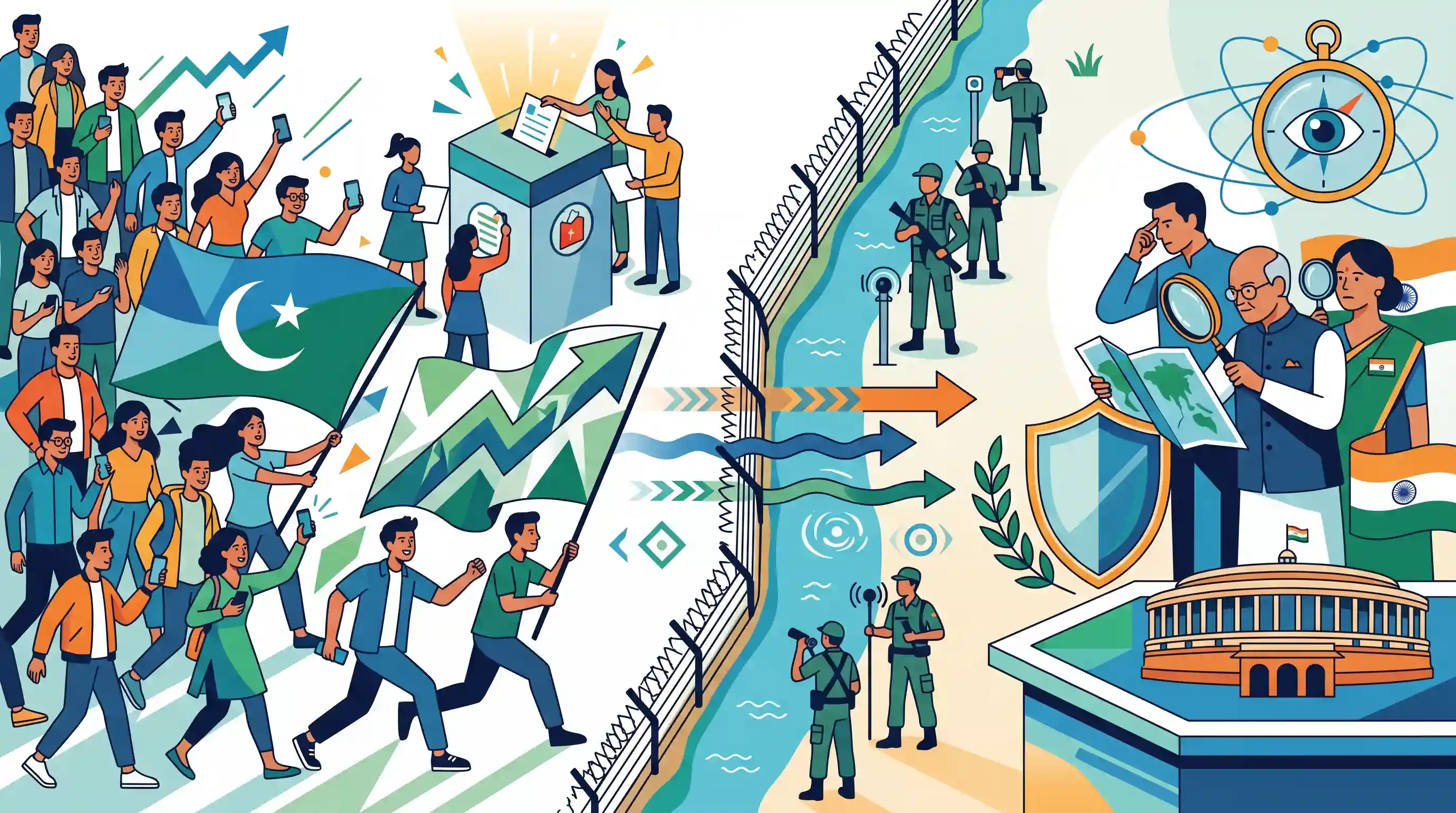
Why It Matters
Bangladesh is India's most critical eastern neighbor. A change in regime, especially with the surging influence of Jamaat-e-Islami, poses direct challenges to India's internal security and the 'Neighborhood First' policy, making it vital for GS-2 (IR) and GS-3 (Border Security).
Summary
The article discusses the evolving political landscape in Bangladesh ahead of its crucial 2026 elections, the first since the ouster of Sheikh Hasina. With Gen Z voters acting as a critical pivot, the electoral battle is shaping up as a fierce contest between the Bangladesh Nationalist Party (BNP) and a surging Jamaat-e-Islami. This competitive democratic process has profound implications for regional stability, India's neighborhood diplomacy, and cross-border security dynamics.
Key Points
- Bangladesh's upcoming 2026 election is poised to be its most competitive in years, marking a critical democratic transition post-Sheikh Hasina.
- Gen Z voters, who played a central role in recent political upheavals, are emerging as a decisive demographic in shaping the new government.
- The political vacuum has intensified the electoral rivalry between the mainstream Bangladesh Nationalist Party (BNP) and a resurgent Jamaat-e-Islami.
- The shifting political landscape and potential rise of right-wing elements hold significant implications for regional stability and India's border security.
Important Terms
Bangladesh Nationalist Party (BNP)

A major center-right political party in Bangladesh that won a landslide victory in the 2026 elections. Led by Tarique Rahman, it emphasizes "Bangladesh first" nationalism and economic reform.
UPSC context
GS Paper II: India and its Neighborhood—Relations. Tests understanding of political shifts in neighboring countries and their impact on bilateral ties.
Bangladesh Jamaat-e-Islami
Bangladesh's largest Islamist party, which emerged as the primary opposition in 2026. Its registration was restored in 2025 after a decade-long ban under the previous Awami League regime.
UPSC context
GS Paper II: Effect of Policies and Politics of Developing Countries. Focuses on the role of religious-political movements in regional stability.
Interim Government (Bangladesh)
The non-partisan transitional administration led by Nobel Laureate Muhammad Yunus (2024–2026). It was established to oversee constitutional reforms and ensure fair elections following Sheikh Hasina's ouster.
UPSC context
GS Paper II: Governance and Constitution. Analyzes extra-constitutional mechanisms for democratic restoration during crises.
July Uprising (2024)
A massive 2024 student-led movement initially protesting job quotas that evolved into a nationwide uprising, successfully toppling the 15-year authoritarian rule of the Awami League government.
UPSC context
GS Paper II: Role of Youth in Democracy. Examines how social movements can drive systemic political change in South Asia.
July Charter
A comprehensive reform package, approved via referendum in 2026, aimed at decentralizing power. It includes proposals for a bicameral parliament and a two-term limit for the Prime Minister.
UPSC context
GS Paper II: Comparison of the Indian Constitutional Scheme with that of other countries. Focuses on democratic institutional reforms.
National Citizen Party (NCP)
A new political entity formed by student leaders of the 2024 uprising. It advocates for a "second republic" but faced challenges in converting protest momentum into parliamentary seats.
UPSC context
GS Paper II: Political Parties and Pressure Groups. Tests knowledge of emerging political actors and their influence on democratic processes.
Prelims Trap
"The BIMSTEC Secretariat is headquartered in New Delhi as part of India's Act East policy."
The BIMSTEC Secretariat is actually located in Dhaka, Bangladesh. Political stability in Dhaka directly impacts the functioning of this regional bloc.
Static Concepts Connected
What is the strategic significance of the Siliguri Corridor?
- Geographical choke point: A narrow 22-km strip (Chicken's Neck) in West Bengal connecting mainland India to the Northeastern states.
- Geopolitical vulnerability: Bordered by Nepal, Bangladesh, and Bhutan, making it highly susceptible to regional instability, illegal migration, or hostile incursions.
- Logistics and trade: It serves as the critical, almost exclusive land route for military logistics and civilian trade to the Northeast.
What distinguishes BIMSTEC from SAARC in India's neighborhood policy?
- Member composition: BIMSTEC (Bay of Bengal Initiative) excludes Pakistan, bypassing the frequent bilateral deadlocks that often paralyze SAARC initiatives.
- Geographic focus: Headquartered in Dhaka, Bangladesh, it acts as a bridge connecting South Asia with Southeast Asia (Myanmar, Thailand).
- Policy alignment: Serves as the primary institutional vehicle for India's "Neighborhood First" and "Act East" policies simultaneously.
Cross-Topic Patterns
Demographic dividend vs political unrest
High youth unemployment and digital mobilization are turning Gen Z from passive voters into disruptive political forces across South Asia, linking demographic economics to political stability.
Border porosity and internal security
Post-Hasina political vacuums risk emboldening extremist elements like Jamaat-e-Islami, directly tying India's neighborhood diplomacy to counter-insurgency and migration challenges in the Northeast.

Expect a Mains 2026 question linking political transitions in India's neighborhood (Bangladesh/Sri Lanka) to border security challenges.
Linked PYQs · 3
Linked PYQs · 3
- 2022MainsGS2
India is an age-old friend of Sri Lanka.’ Discuss India's role in the recent crisis in Sri Lanka in the light of the preceding statement.
- 2015MainsGS2
Project 'Mausam' is considered a unique foreign policy initiative of the Indian Government to improve relationship with its neighbours. Does the project have a strategic dimension? Discuss.
- 2020MainsGS3
For effective border area management, discuss the steps required to be taken to deny local support to militants and also suggest ways to manage favourable perception among locals.
