Bangladesh Realignment with China and Pakistan and Strategic Risks
Source:Indian Express ↗
Why It Matters
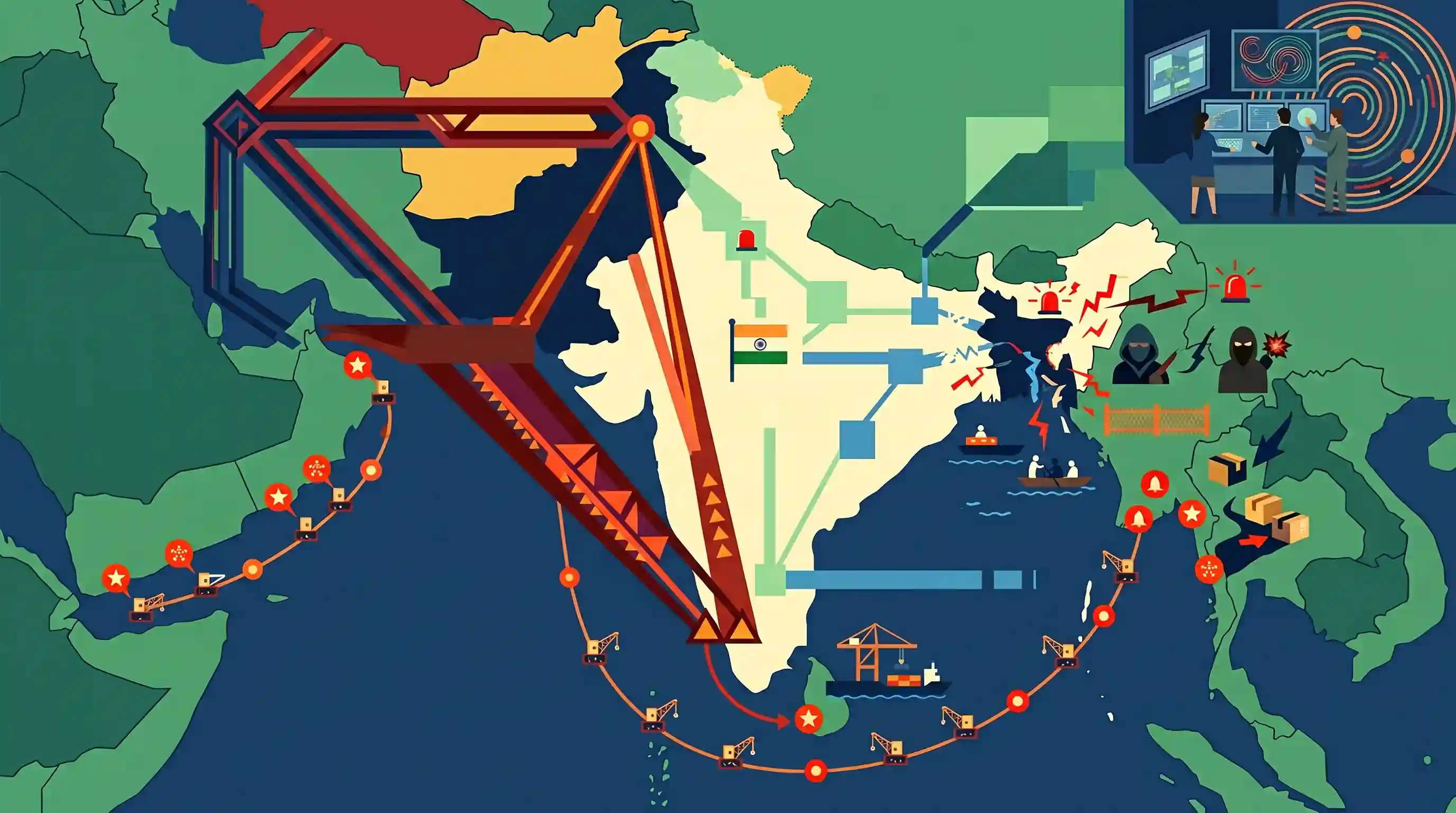
A strategic pivot by Bangladesh towards China and Pakistan directly threatens India's regional supremacy, undermines the Neighborhood First policy, and creates immediate security vulnerabilities on India's eastern flank. Understanding this dynamic is crucial for analyzing India's foreign policy and border management challenges.
Summary
The article analyzes the concerning geopolitical trend of Bangladesh drawing closer to Pakistan and China, warning of the strategic implications for India. A shift in Bangladesh's foreign policy challenges India's "Neighborhood First" approach and raises fears of a Chinese "string of pearls" encirclement in South Asia. Furthermore, stronger Dhaka-Islamabad-Beijing ties threaten to introduce new security vulnerabilities along India's eastern border, ranging from cross-border terrorism to illegal migration. The piece emphasizes the urgent need for New Delhi to adopt a proactive and nuanced diplomatic strategy to retain its influence and secure its regional interests.
Key Points
- Bangladesh is showing signs of developing closer diplomatic and strategic ties with Pakistan and China, signaling a potential shift away from India's sphere of influence.
- This realignment exacerbates India's fears of strategic encirclement in South Asia and the Indian Ocean, commonly referred to as the 'string of pearls' strategy by China.
- An increased presence of Pakistan and China in Bangladesh poses direct security threats along India's long and porous eastern border, potentially complicating counter-terrorism efforts and transborder crime management.
- India must urgently recalibrate its "Neighborhood First" policy, leveraging economic cooperation, soft power, and robust diplomacy to prevent the complete alienation of its eastern neighbor.
Important Terms
Neighborhood First Policy

India's core foreign policy framework prioritizing stable, consultative, and non-reciprocal relations with immediate neighbors to enhance regional connectivity, trade, and security against external influences.
UPSC context
GS Paper II: International Relations. Tests India's strategic leadership and regional integration efforts.
String of Pearls
A geopolitical theory describing China's network of commercial and military facilities in the Indian Ocean (e.g., Gwadar, Chittagong) intended to encircle India and secure sea lanes.
UPSC context
GS Paper II: Security and International Relations. Focuses on maritime security and Chinese expansionism.
Necklace of Diamonds
India’s strategic counter-encirclement strategy involving a network of military bases and diplomatic partnerships (e.g., Changi, Duqm) to balance China's influence in the Indian Ocean.
UPSC context
GS Paper II: International Relations. Essential for questions on maritime strategy.
SAARC
An eight-member regional organization for South Asian cooperation. It has remained largely paralyzed since 2016 due to India-Pakistan tensions, leading India to seek alternative platforms.
UPSC context
GS Paper II: Regional Groupings. Evaluates challenges to multilateralism in South Asia.
BIMSTEC
A regional grouping of seven Bay of Bengal nations. It serves as a functional bridge between South and Southeast Asia and India’s preferred alternative to SAARC.
UPSC context
GS Paper II: Regional Groupings. Key for connectivity and Bay of Bengal diplomacy.
Siliguri Corridor
A narrow 22-km strip of land in West Bengal (the 'Chicken’s Neck') connecting mainland India to its Northeast, representing a critical strategic vulnerability in any regional conflict.
UPSC context
GS Paper III: Internal Security. Vital for territorial integrity and border management questions.
Act East Policy
A diplomatic strategy launched in 2014 to proactively engage with the Asia-Pacific region, focusing on economic integration, security cooperation, and historical ties with Southeast Asian nations.
UPSC context
GS Paper II: Foreign Policy. Tests India’s expanded role in the Indo-Pacific.
Prelims Trap
The 'String of Pearls' is an officially declared maritime security initiative under China's Belt and Road Initiative.
'String of Pearls' is a geopolitical theory coined by US defense contractors (Booz Allen Hamilton) in 2004, not an official Chinese government policy.
Static Concepts Connected
What are the primary internal security challenges along the India-Bangladesh border?
- Riverine Terrain: Highly porous, shifting river courses (e.g., Brahmaputra) make physical fencing impossible in several stretches, complicating border management.
- Transnational Crime: Dense populations up to the zero-line facilitate rampant cattle smuggling, Fake Indian Currency Notes (FICN) infiltration, and human trafficking.
- Insurgency Logistics: Historical use of border areas as safe havens and arms transit routes for North-East insurgent groups, a threat amplified by political instability.
How does the Gujral Doctrine influence India's 'Neighbourhood First' policy?
- Non-Reciprocity: India offers asymmetric concessions to smaller neighbors like Bangladesh without expecting equal returns, aiming to build long-term trust.
- Non-Interference: Strict adherence to non-interference in internal affairs, which becomes challenging yet crucial amidst Bangladesh's domestic political shifts.
- Territorial Sanctity: A mutual commitment ensuring no South Asian nation's territory is used against the security interests of another.
Cross-Topic Patterns
Siliguri Corridor Vulnerability
A hostile Dhaka-Beijing nexus amplifies the "Chicken's Neck" vulnerability, linking diplomatic failures directly to North-East internal security and potential insurgency revival.
Teesta River Hydropolitics
Stalled Teesta water-sharing agreements push Bangladesh toward Chinese infrastructure funding for river basin management, merging Himalayan geography with strategic encirclement.

Expect a 2026 Mains question linking India's 'Neighbourhood First' setbacks to emerging internal security vulnerabilities in the North-East.
Linked PYQs · 3
Linked PYQs · 3
- 2011MainsGS2
Critically examine the security and strategic implications of the so-called 'string of pearls' theory for India.
- 2020MainsGS3
Analyze internal security threats and transborder crimes along Myanmar, Bangladesh and Pakistan borders including Line of Control (LoC). Also discuss the role played by various security forces in this regard.
- 2014MainsGS3
How does illegal transborder migration pose a threat to India's security? Discuss the strategies to curb this, bringing out the factors which give impetus to such migration.
