Ethical Integration of Artificial Intelligence and Empathy
Source:The Hindu ↗
Why It Matters
As AI and digital governance expand, civil servants face the ethical challenge of ensuring administration remains empathetic and citizen-centric. This article provides a conceptual framework for integrating technology without losing the essential human values of compassion and emotional intelligence.
Summary
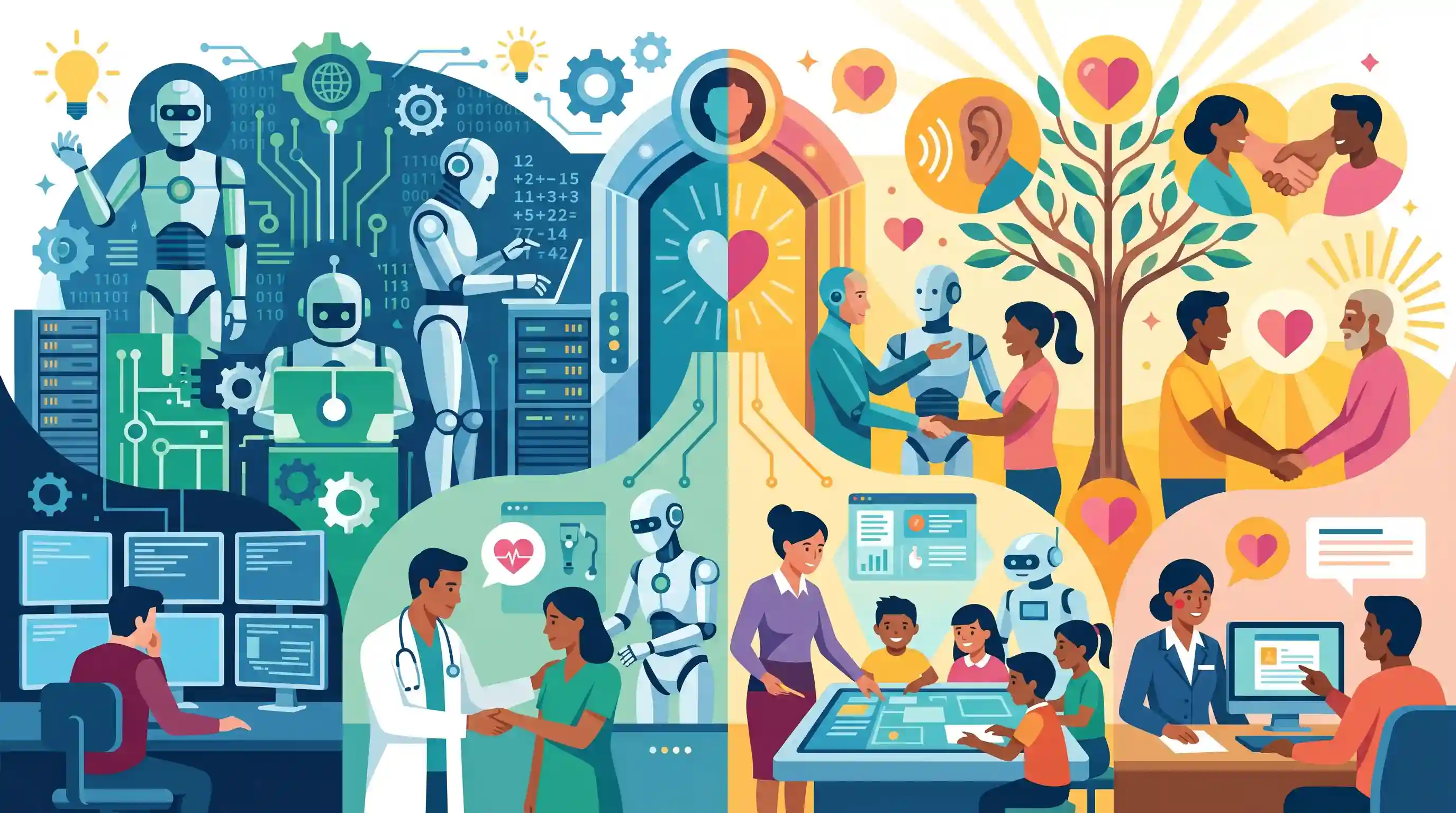
The article explores the critical need to balance rapid technological innovation ('high tech') with fundamental human qualities ('high touch') such as empathy, compassion, and interpersonal connection. It argues that while artificial intelligence and digital tools bring immense efficiency to sectors like healthcare, education, and administration, they cannot replace the nuance of human interaction. Over-dependence on technology risks creating dehumanized and alienated experiences. Therefore, as automation handles increasingly complex tasks, emotional intelligence and ethical human-centric approaches become paramount. The piece advocates for a synergy where technology serves as a powerful enabler, but human empathy remains at the core of service delivery and societal relationships.
Key Points
- The concept of 'high tech, high touch' highlights the necessity of balancing rapid technological advancements (like AI and automation) with essential human qualities such as empathy, compassion, and personal connection.
- While technology drives unprecedented efficiency in fields like healthcare, education, and governance, an over-reliance on it risks dehumanizing service delivery and alienating individuals.
- As machines increasingly handle routine and complex tasks, distinctly human skills—particularly emotional intelligence and compassionate communication—become irreplaceable and more vital than ever.
- A synergistic approach is required where technology acts as an enabler, but human-centric values guide ethical decision-making and ensure holistic well-being.
- In public administration, e-governance initiatives must overcome biases toward mere technological integration by incorporating user-centric, empathetic designs that maintain the 'human touch'.
Prelims Trap
AI integration in e-governance eliminates all administrative biases and guarantees complete objectivity.
AI models inherit and often amplify historical human biases present in their training data. Furthermore, rigid objectivity without emotional intelligence can lead to inequitable outcomes.
Static Concepts Connected
What are the core components of Emotional Intelligence (Daniel Goleman's model)?
- Self-awareness: The ability to recognize and understand your moods, emotions, and drives, as well as their effect on others.
- Self-regulation: The propensity to suspend judgment, control disruptive impulses, and think before acting.
- Empathy: The ability to understand the emotional makeup of other people and treat them according to their emotional reactions.
- Social skill: Proficiency in managing relationships, building networks, and finding common ground.
What are the key stages of E-governance evolution (Gartner's model)?
- Information Phase: Basic online presence where governments provide one-way static information to the public.
- Interaction Phase: Two-way communication allowing basic inquiries, downloading forms, or email contact.
- Transaction Phase: Citizens can complete entire tasks online, such as paying taxes or renewing licenses.
- Transformation Phase: Seamless, integrated government services across all departments, focusing on personalized, user-centric delivery.
Cross-Topic Patterns
AI Ethics + GS4 Case Studies
The 'high tech, high touch' paradigm applies directly to GS4 case studies contrasting rule-based technological denial of welfare with the need for empathetic, discretionary human intervention.
Digital Divide + Social Justice linkages
Over-reliance on digital governance without 'high touch' grievance redressal marginalizes the technologically illiterate, linking deeply with GS2 vulnerabilities (e.g., Aadhaar authentication failures in PDS).

Expect a 2026 GS4 Mains case study asking you to evaluate a scenario where AI-driven governance clashes with compassionate public service.
Linked PYQs · 5
Linked PYQs · 5
- 2024MainsGS4
The application of Artificial Intelligence as a dependable source of input for administrative rational decision-making is a debatable issue. Critically examine the statement from the ethical point of view.
- 2022MainsGS4
Apart from intellectual competency and moral qualities, empathy and compassion are some of the other vital attributes that facilitate the civil servants to be more competent in tackling the crucial issues or taking critical decisions. Explain with suitable illustrations.
- 2017MainsGS4
How will you apply emotional intelligence in administrative practices?
- 2021MainsEssay
The process of self-discovery has now been technologically outsourced.
- 2025MainsGS2
e-governance projects have a built-in bias towards technology and back-end integration than user-centric designs. Examine.
