CCMB Identifies Bacterial Cell Wall Vulnerability for Antibiotics
Source:The Hindu ↗
Why It Matters
Understanding the mechanisms of bacterial cell wall synthesis and its vulnerabilities is crucial for developing next-generation antibiotics. This is highly relevant for GS-3 (Science & Technology) as Antimicrobial Resistance (AMR) is a pressing global health and security threat.
Summary
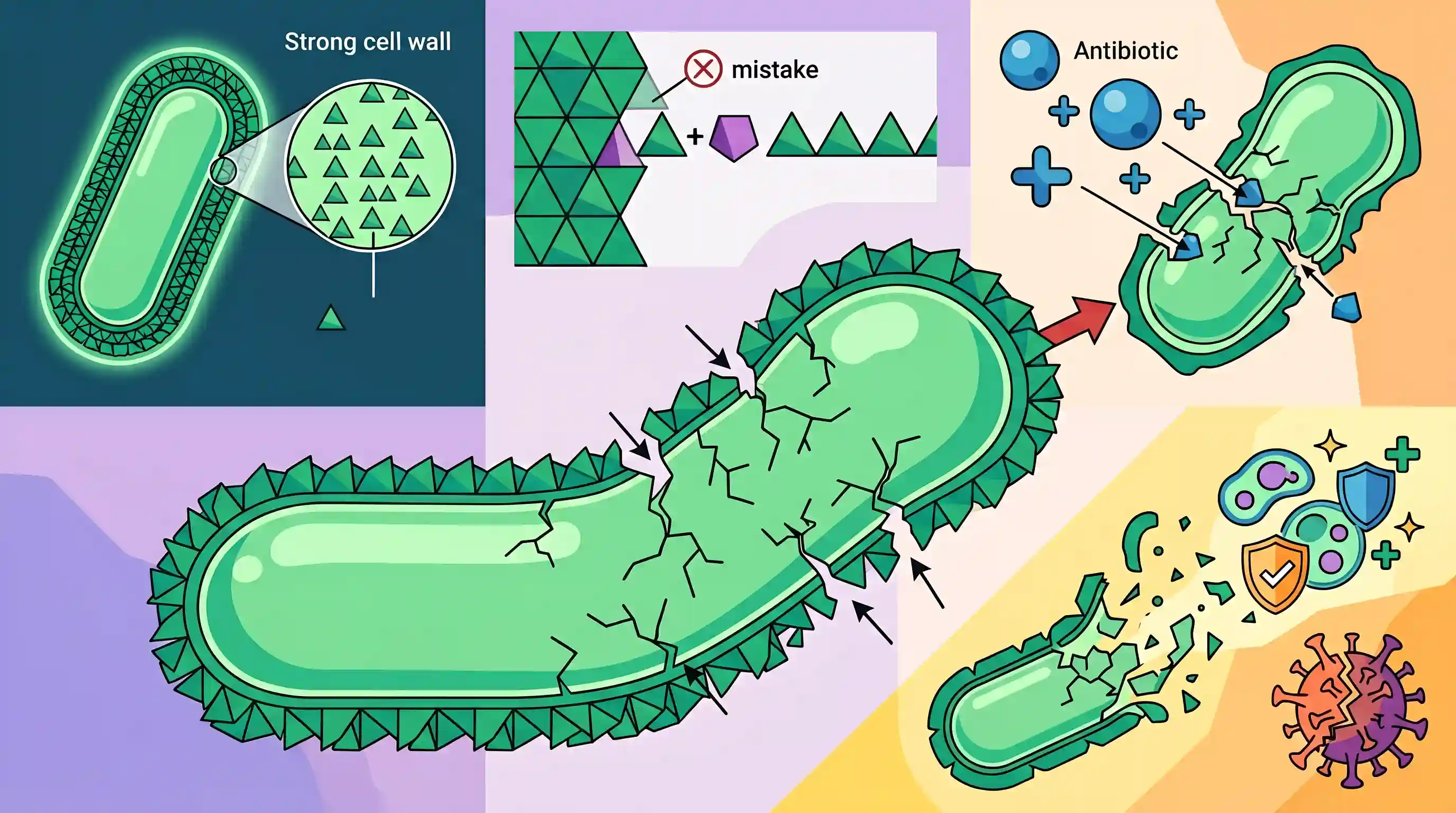
Researchers at the CSIR-Centre for Cellular and Molecular Biology (CCMB) have identified a structural vulnerability in bacterial cell walls that could pave the way for novel antibiotic strategies. The study reveals that bacteria occasionally incorporate the amino acid glycine instead of L-alanine while synthesizing their unique peptidoglycan cell walls. This error weakens the cell wall, increasing the bacteria's susceptibility to antibiotics. Exploiting this vulnerability holds promise for developing better treatments for bacterial infections and addressing the global challenge of antimicrobial resistance.
Key Points
- Bacterial cell walls are primarily composed of a unique substance called peptidoglycan, which is absent in humans and serves as a major target for antibiotics.
- Scientists at CSIR-CCMB discovered that bacteria occasionally make structural errors during cell wall synthesis by using the amino acid glycine instead of the correct L-alanine.
- The substitution of glycine for L-alanine weakens the bacterial cell wall.
- This structural vulnerability increases the bacteria's susceptibility to antibiotics, offering a potential new pathway to combat antimicrobial resistance (AMR) and improve human health.
Important Terms
CSIR-Centre for Cellular and Molecular Biology (CCMB)

A premier Indian research laboratory in Hyderabad specializing in modern biology, genomics, and biotechnology under the Council of Scientific and Industrial Research (CSIR).
UPSC context
GS Paper 3 (Science & Technology); tests knowledge of premier national R&D institutions and their contributions to healthcare and innovation.
Peptidoglycan
A unique polymer of sugars and amino acids forming a mesh-like layer in bacterial cell walls, providing structural strength and protection against osmotic pressure.
UPSC context
GS Paper 3 (S&T/Microbiology); fundamental concept for understanding how specific classes of antibiotics target and destroy pathogenic bacteria.
Antimicrobial Resistance (AMR)
The process where microorganisms evolve to withstand the drugs once effective against them, rendering standard treatments ineffective and increasing the risk of disease spread.
UPSC context
GS Paper 2 (Health) and GS Paper 3 (S&T); a critical global public health threat frequently featured in mains and prelims.
Peptidoglycan Editing Factor (PgeF)
A bacterial enzyme identified by CCMB scientists that acts as a "proofreader" to remove incorrect amino acids during cell wall synthesis, ensuring bacterial structural integrity.
UPSC context
GS Paper 3 (S&T/Biotechnology); represents cutting-edge Indian research that provides novel targets for overcoming antibiotic resistance.
LACC1
A human enzyme linked to autoinflammatory diseases; CCMB research suggests it is a homologue to bacterial PgeF, potentially bridging microbial and human biology.
UPSC context
GS Paper 3 (S&T/Healthcare); tests the application of molecular biology in understanding and treating chronic human inflammatory conditions.
Prelims Trap
"Broad-spectrum antibiotics targeting peptidoglycan synthesis can inadvertently damage human or animal cells."
Animal and human cells completely lack cell walls and peptidoglycan. This makes peptidoglycan a highly specific, safe target for antibiotics without harming human tissues.
Static Concepts Connected
What are the primary cell wall compositions across different biological kingdoms?
- Bacteria: Composed primarily of peptidoglycan (murein), a complex polymer of sugars and amino acids.
- Plants: Composed predominantly of cellulose, hemicellulose, and pectin.
- Fungi: Made of chitin, a tough, nitrogen-containing polysaccharide.
- Animals: Completely lack cell walls; they possess only a flexible, lipid-bilayer cell membrane.
How do bacteria naturally develop Antimicrobial Resistance (AMR)?
- Target modification: Mutating the structure of the cellular target (like the cell wall) so the antibiotic can no longer effectively bind.
- Efflux pumps: Developing specialized membrane proteins that actively pump the antibiotic out of the cell before it can act.
- Gene transfer: Acquiring resistance genes from other bacteria through horizontal gene transfer, often via plasmids.
Cross-Topic Patterns
AMR & the One Health Approach
Innovations in tackling AMR must be paired with the One Health strategy, addressing antibiotic overuse in poultry and livestock which breeds cross-species resistant strains.
CSIR's role in applied pharma
CCMB's foundational microbiological research demonstrates how autonomous R&D institutions under CSIR directly feed into National Health Policy goals and indigenous drug development.

Expect a multi-statement Prelims question mixing basic cytology (peptidoglycan vs cellulose) with AMR mechanisms and antibiotic targeting.
Linked PYQs · 3
Linked PYQs · 3
- 2019PrelimsGS1
Which of the following are the reasons for the occurrence of multi-drug resistance in microbial pathogens in India? 1. Genetic predisposition of some people 2. Taking incorrect doses of antibiotics to cure diseases 3. Using antibiotics in livestock farming 4. Multiple chronic diseases in some people Select the correct answer using the code given below.
- 2014MainsGS3
Can overuse and free availability of antibiotics without Doctor's prescription, be contributors to the emergence of drug-resistant diseases in India? What are the available mechanisms for monitoring and control? Critically discuss the various issues involved.
- 2022PrelimsGS1
Consider the following statements: 1. Biofilms can form on medical implants within human tissues. 2. Biofilms can form on food and food processing surfaces. 3. Biofilms can exhibit antibiotic resistance. Which of the statements given above are correct?
