August Inflation Data and RBI Monetary Policy Rate Outlook
Source:Indian Express ↗
हे का महत्त्वाचे आहे
Understanding inflation dynamics and the RBI's monetary policy decisions is crucial for aspirants studying macroeconomic stabilization, central banking, and inclusive growth in GS Paper III.
सारांश
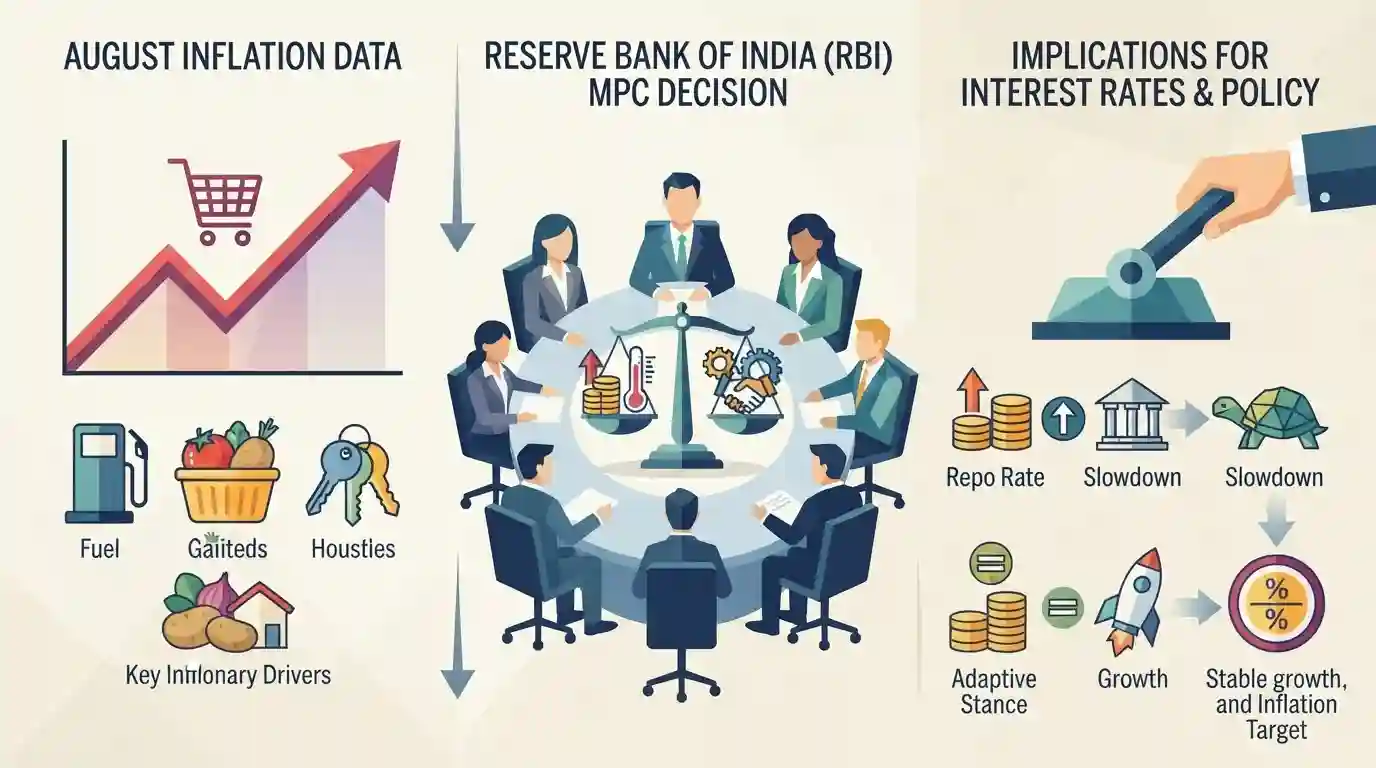
The article discusses August inflation figures and their direct implications for the Reserve Bank of India's Monetary Policy Committee upcoming interest rate and monetary policy decisions.
मुख्य मुद्दे
- August inflation data shapes expectations for the upcoming Reserve Bank of India (RBI) Monetary Policy Committee (MPC) interest rate decisions.
- Inflation trends directly influence monetary policy tools, repo rate modifications, and broader macroeconomic stability in India.
- Balancing economic growth objectives with retail inflation targets remains a core mandate for the RBI's MPC.
महत्त्वाच्या संज्ञा
Reserve Bank of India

India's central banking institution, established under the RBI Act of 1934, responsible for regulating the issue of bank notes, maintaining monetary stability, and managing the country's currency and credit system.
UPSC context
UPSC GS Paper III (Indian Economy). Tests knowledge of central banking functions, monetary policy, and financial sector regulation.
Monetary Policy Committee
A statutory body entrusted with fixing the benchmark interest rate (repo rate) to contain inflation within the target level while keeping in mind the objective of growth.
UPSC context
UPSC GS Paper III (Indian Economy). Tests institutional frameworks for inflation targeting and monetary policy formulation.
पूर्वपरीक्षा सापळा
Food items carry a significantly higher weightage in the Wholesale Price Index compared to the Consumer Price Index.
Aspirants often confuse the WPI and CPI baskets; food has a much heavier weight in CPI, making retail inflation highly vulnerable to food shocks.
संबंधित स्थिर संकल्पना
What is the statutory framework and tolerance band governing the RBI Monetary Policy Committee?
- Statutory Basis: Established under Section 45ZB of the amended RBI Act 1934 as a six-member body.
- Inflation Target: Mandated to maintain CPI headline inflation at 4% with a tolerance band of +/- 2% (2% to 6%).
- Accountability Clause: Required to submit a formal report to the Central Government if inflation persists outside the band for three consecutive quarters.
आंतर-विषय नमुने
Inflation Targeting Meets Fiscal Responsibility
Inflation targeting under the MPC framework intersects with fiscal deficit targets and government borrowing costs under the FRBM Act.
Food Inflation and Monetary Policy Transmission
High food weight in CPI links agricultural supply shocks directly to monetary policy tightening and rural demand slowdowns.

Expect a multi-statement statement on the RBI Act's statutory inflation tolerance band and the failure reporting mechanism to the Centre.
संबंधित PYQ · 3
संबंधित PYQ · 3
- 2024MainsGS3
What are the causes of persistent high food inflation in India? Comment on the effectiveness of the monetary policy of the RBI to control this type of inflation.
- 2022PrelimsGS1
In India, which one of the following is responsible for maintaining price stability by controlling inflation?
- 2020PrelimsGS1
Consider the following statements: 1. The weightage of food in Consumer Price Index (CPI) is higher than that in Wholesale Price Index (WPI). 2. The WPI does not capture changes in the prices of services, which CPI does. 3. Reserve Bank of India has now adopted WPI as its key measure of inflation and to decide on changing the key policy rates. Which of the statements given above is/are correct?
