India stance on climate equity and development at COP31
Source:The Hindu ↗
Why It Matters
Essential for understanding India's negotiating positions, climate equity, and principles of CBDR-RC in international climate summits.
Summary
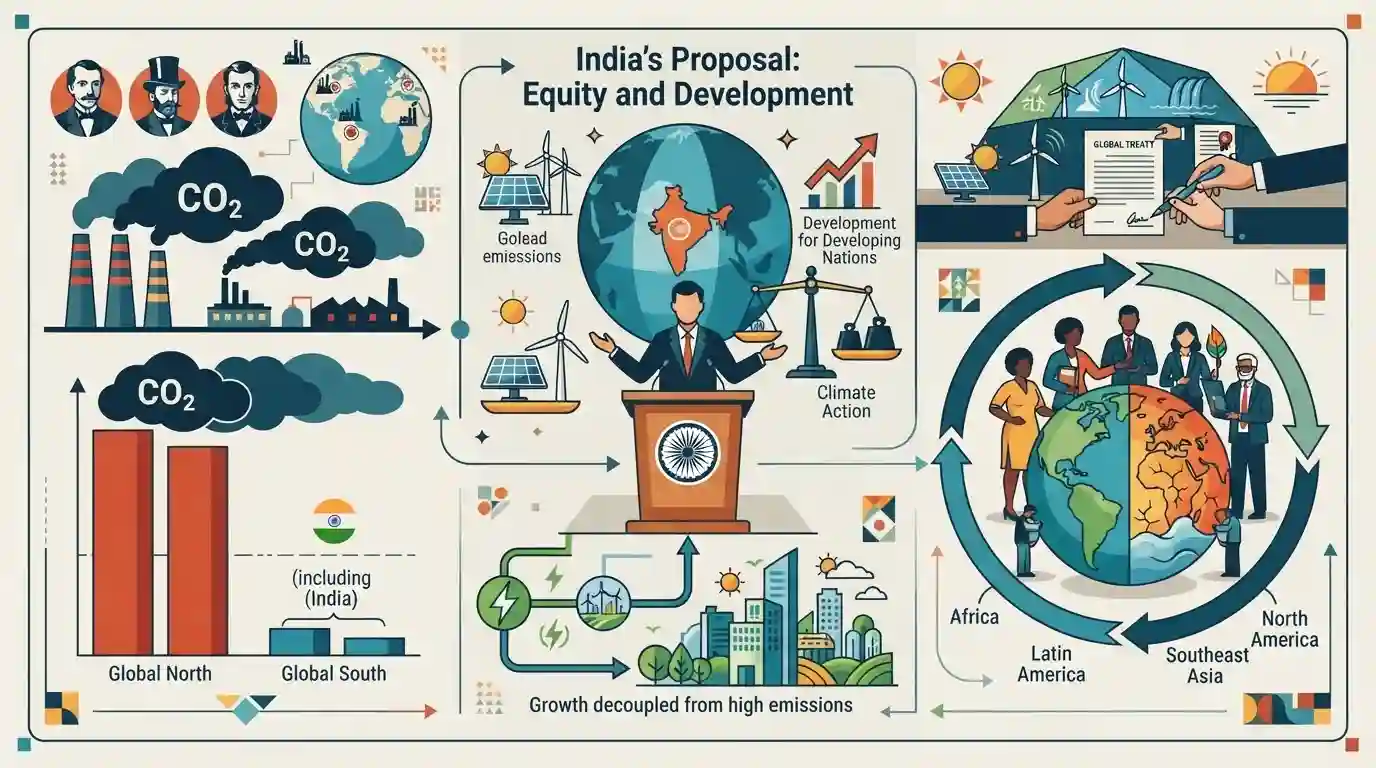
The article discusses India's stance at international climate negotiations regarding equity, historical carbon responsibility, and the right to development for developing nations on a warming planet.
Key Points
- India raised crucial questions regarding climate equity and development space for developing nations at international climate fora.
- The debate centers on balancing global emission reduction targets with the developmental imperatives of the Global South.
- Historical responsibility and differentiated responsibilities remain core pillars of India's climate negotiation stance.
Important Terms
COP31

The supreme decision-making body of the United Nations Framework Convention on Climate Change (UNFCCC), responsible for reviewing global climate action and negotiating binding emission reduction targets annually.
UPSC context
GS Paper III (Environment & Climate Change). Important for international climate negotiations, India's negotiating stance, equity, and climate justice.
Paris Agreement
A legally binding international treaty on climate change adopted at COP21 in Paris, aiming to limit global warming to well below 2°C, preferably 1.5°C, relative to pre-industrial levels.
UPSC context
GS Paper III (Environment & Climate Change). Tests global climate governance, NDCs, and accountability frameworks for developing vs developed nations.
UNFCCC
An international environmental treaty adopted in 1992 to stabilize greenhouse gas concentrations in the atmosphere at a level that would prevent dangerous anthropogenic interference with the climate system.
UPSC context
GS Paper III (Environment & Climate Change). The foundational treaty governing global climate diplomacy, CBDR-RC principles, and annual COP summits.
Prelims Trap
Common But Differentiated Responsibilities (CBDR) exempts developing nations entirely from emission reduction targets.
CBDR-RC does not exempt developing nations from all climate action; rather, it conditions their commitments on national capabilities and historical responsibility, alongside financial and technical support from developed countries.
Static Concepts Connected
What are the core principles governing international climate change negotiations under the UNFCCC framework?
- Historical Responsibility:: Historical polluters bear the primary burden for accumulated greenhouse gases in the atmosphere.
- CBDR-RC Principle:: States have shared obligations to protect the global environment, but differentiated capabilities and responsibilities dictate their commitments.
- Financial Transfer:: Developed countries are mandated to provide new and additional financial resources and tech transfer to developing nations.
Cross-Topic Patterns
Climate Equity and South-South Geopolitics
UNFCCC negotiation blocks like BASIC and LMDCs illustrate how India coordinates with China and other emerging economies to defend development space against Western mitigation pressure.
Climate Diplomacy meets Trade Protectionism
CBAM and unilateral carbon border taxes imposed by the EU directly clash with India's insistence on historical responsibility and equity at COP summits.

Expect a statement-based question pairing CBAM, CBDR-RC, and historical responsibility in the Prelims or Ethics paper.
Linked PYQs · 2
Linked PYQs · 2
- 2025MainsGS3
Write a review on India's climate commitments under the Paris Agreement (2015) and mention how these have been further strengthened in COP26 (2021). In this direction, how has the first Nationally Determined Contribution intended by India been updated in 2022?
- 2020MainsGS3
Explain intra-generational and inter-generational issues of equity from the perspective of inclusive growth and sustainable development.
