Urban planning inequalities and housing challenges in Chandigarh
Source:Indian Express ↗
Why It Matters
Chandigarh is India's premier example of a planned city post-independence. Analyzing its successes and failures is crucial for UPSC aspirants to understand the complexities of urbanization, spatial inequality, and the socio-economic impacts of master planning on the urban poor.
Summary
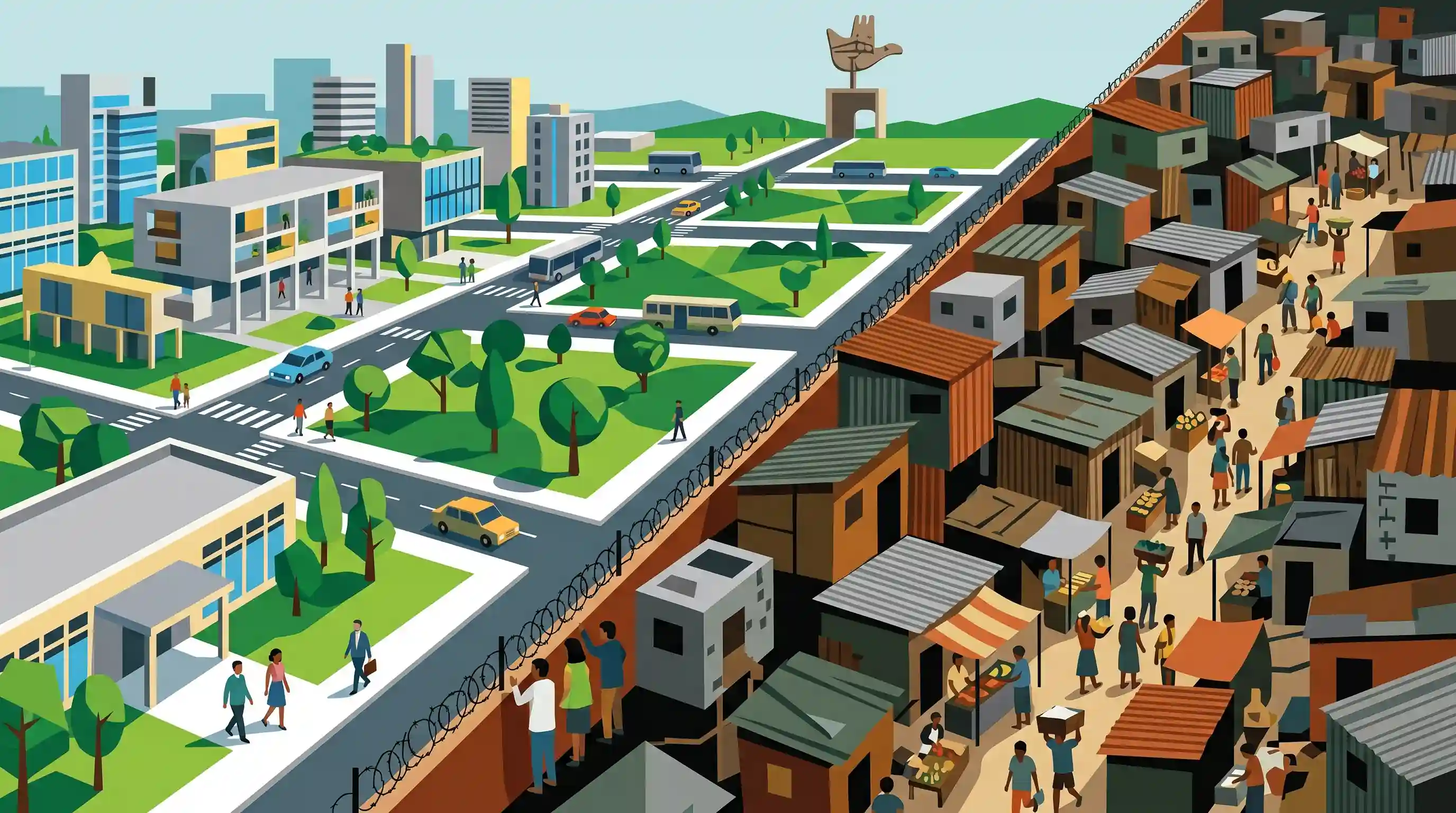
The article reflects on Chandigarh's legacy 75 years after its inception, contrasting its celebrated status as a meticulously planned modern city designed by Le Corbusier with the stark reality of its spatial and economic inequalities. It highlights how the city's master plan inherently marginalized the urban poor and informal workers, leading to a dichotomy between the affluent, planned sectors and the neglected, informal settlements on the periphery. This "tale of two cities" serves as a critique of exclusionary urban planning in India and underscores the need for more inclusive, equitable urban development policies.
Key Points
- Chandigarh stands as a symbol of modernist urban planning in India, yet its 75-year legacy reveals stark socio-economic disparities.
- The original master plan, largely envisioned by Le Corbusier, catered to the administrative elite and middle classes, neglecting the housing needs of the urban poor and informal workforce.
- This exclusionary approach to planning has resulted in the proliferation of slums, unauthorized colonies, and informal settlements on the city's periphery.
- Chandigarh's development highlights a broader trend in Indian urbanization where formal urban spaces often segregate and marginalize lower-income groups.
- Addressing urban inequality requires inclusive city planning, affordable housing policies, and a focus on distributive justice rather than just aesthetic modernization.
Prelims Trap
Planned cities like Chandigarh successfully prevented informal settlements through strict zoning laws.
Aspirants often assume strictly planned cities lack slums. However, rigid modernist zoning actually caused peripheral informal settlements by ignoring affordable housing for the informal labor force.
Static Concepts Connected
How does the 74th Amendment Act address urban planning?
- District Planning Committee: Article 243ZD mandates DPCs to consolidate plans prepared by both Panchayats and Municipalities within a district.
- Metropolitan Planning Committee: Article 243ZE requires MPCs for metropolitan areas to prepare comprehensive draft development plans.
- Twelfth Schedule: Lists 'Urban planning including town planning' and 'Regulation of land-use' as core functional items for Municipalities.
What drives the proliferation of peripheral slums in Indian cities?
- Exclusionary Zoning: Rigid master plans prioritize elite housing and commercial zones, failing to allocate affordable space for the informal workforce.
- Distress Migration: Unplanned influx of distressed agricultural laborers seeking economic opportunities outpaces the creation of formal, low-cost housing.
- Land Tenure Deficit: Lack of secure property rights and unaffordable urban real estate pushes the urban poor to occupy marginal, unregularised peripheral lands.
Cross-Topic Patterns
Smart Cities Mission & Spatial Inequality
The Area-Based Development (ABD) approach in the Smart Cities Mission is often critiqued for creating "islands of excellence" while ignoring peripheral slums, directly echoing Chandigarh's historic exclusionary zoning.
Informal Sector's Right to the City
Links GS1 (Urbanization) with GS3 (Employment). The informal workforce sustains urban economies but faces spatial marginalization, making street-vendor acts and slum rehabilitation deeply interconnected.

Mains 2026 GS1 could directly ask to critically evaluate post-independence "planned cities" (Chandigarh/Amaravati) vs spatial inequality.
Linked PYQs · 3
Linked PYQs · 3
- 2025MainsGS1
How does smart city in India, address the issues of urban poverty and distributive justice?
- 2023MainsGS1
Does urbanization lead to more segregation and/or marginalization of the poor in Indian metropolises?
- 2025MainsGS2
Inequality in the ownership pattern of resources is one of the major causes of poverty. Discuss in the context of 'paradox of poverty'.
