NGT applies polluter pays principle to Kadambrayar river pollution
Source:The Hindu ↗
Why It Matters
The case highlights the practical application of the 'polluter pays principle' in environmental jurisprudence and underscores severe infrastructural deficits in urban wastewater management, making it a relevant case study for GS-3 (Environment) and GS-2 (Role of quasi-judicial bodies like NGT).
Summary
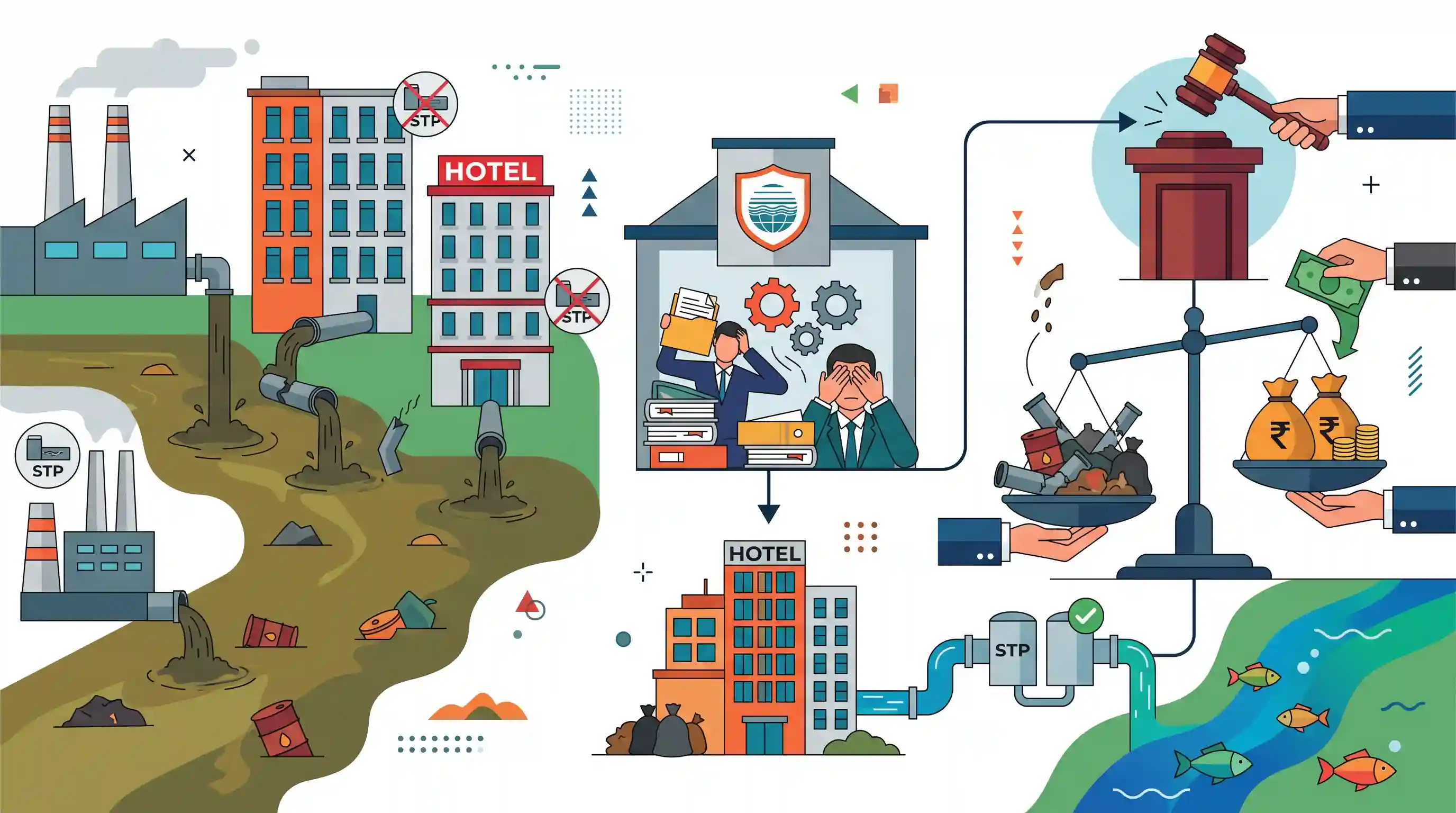
The National Green Tribunal (NGT) has ordered the Kerala State Pollution Control Board (PCB) to levy environmental compensation against individuals and establishments polluting the Kadambrayar river in Ernakulam. Invoking the 'polluter pays principle,' the compensation will be tied to the quantum of waste generated. Reports by local authorities revealed widespread unauthorized discharge of untreated wastewater from industries, apartments, and hotels that completely lack adequate sewage treatment plants, reflecting critical gaps in urban waste governance.
Key Points
- The NGT Southern Bench has directed the Kerala PCB to impose environmental compensation on those polluting the Kadambrayar river based on the 'polluter pays principle'.
- A survey by the Local Self-Government Department identified unauthorized wastewater discharge from industrial units, apartments, hotels, and illegal pipelines into the river.
- PCB inspections revealed that violating establishments lacked mandatory facilities, including adequate sewage treatment plants, to process untreated wastewater before discharge.
- The tribunal ordered the PCB to calculate compensation specifically based on the volume of waste generated by each violator and ensure compliance with the action taken report.
Important Terms
National Green Tribunal (NGT)

A specialized statutory body established under the NGT Act 2010 for the effective and expeditious disposal of cases related to environmental protection and forest conservation.
UPSC context
GS II/III: Statutory bodies and environmental governance; tests the mechanism for specialized environmental adjudication.
Polluter Pays Principle
An environmental policy rule where those responsible for pollution bear the costs of management, cleanup, and damage restoration rather than the general public.
UPSC context
GS III: Environment; core concept for sustainable development and internalizing environmental externalities.
Kerala State Pollution Control Board (PCB)
A statutory regulatory authority responsible for enforcing environmental laws, monitoring pollution, and granting 'Consent to Operate' to industries within the state of Kerala.
UPSC context
GS II/III: State-level regulatory enforcement and the role of SPCBs in pollution control.
Local Self-Government Department (LSGD)
The state department overseeing Panchayats and Municipalities, which are constitutionally mandated to manage waste, sanitation, and public health at the grassroots level.
UPSC context
GS II: Governance; tests local-level implementation of national waste management rules and decentralization.
Prelims Trap
"State Pollution Control Boards were established under the umbrella Environment (Protection) Act, 1986."
SPCBs and the CPCB were originally constituted under the Water (Prevention and Control of Pollution) Act, 1974, not the EPA 1986, though they enforce both.
Static Concepts Connected
What mandatory principles govern NGT rulings under Section 20 of the NGT Act?
- Polluter Pays: The financial burden of environmental restoration and pollution control must fall on those who cause the pollution.
- Precautionary Principle: Lack of absolute scientific certainty shall not be used as a reason for postponing measures to prevent environmental degradation.
- Sustainable Development: The NGT must balance the need for economic and industrial growth with environmental protection for current and future generations.
What is the statutory framework governing State Pollution Control Boards (SPCBs)?
- Water Act 1974: SPCBs were originally created under this statute to regulate wastewater discharge and restore the wholesomeness of water bodies.
- Mandatory Consents: Industries and municipalities must secure prior 'Consent to Establish' (CTE) and 'Consent to Operate' (CTO) from SPCBs before discharging effluents.
- Expanded Mandate: Though formed under the Water Act, SPCBs were later entrusted with enforcing the Air Act (1981) and Environment (Protection) Act (1986).
Cross-Topic Patterns
Urban Waste & Local Governance Gaps
Highlights the GS2/GS3 intersection where weak Local Self-Government capacity in enforcing STPs leads directly to severe riverine pollution, mirroring the Brahmapuram waste crisis.
Tribunal Flexibility vs. Statutory Lethargy
The NGT leverages its flexibility (guided by natural justice, not the CPC) to force lethargic state regulatory bodies (SPCBs) into compliance using the 'Polluter Pays' principle.

Expect a Prelims 2026 multi-statement question contrasting NGT's statutory principles (Polluter Pays) with the origin acts of CPCB/SPCBs.
Linked PYQs · 3
Linked PYQs · 3
- 2024MainsGS3
Industrial pollution of river water is a significant environmental issue in India. Discuss the various mitigation measures to deal with this problem and also the government's initiatives in this regard.
- 2016MainsGS2
What is a quasi-judicial body? Explain with the help of concrete examples.
- 2018PrelimsGS1
How is the National Green Tribunal (NGT) different from the Central Pollution Control Board (CPCB)? 1. The NGT has been established by an Act whereas the CPCB has been created by an executive order of the Government. 2. The NGT provides environmental justice and helps reduce the burden of litigation in the higher courts whereas the CPCB promotes cleanliness of streams and wells, and aims to improve the quality of air in the country. Which of the statements given above is/are correct?
