Intermediary liability and artificial intelligence content regulation
Source:Indian Express ↗
Why It Matters
This article signals a significant government policy shift aimed at diluting the 'Safe Harbour' protection for tech platforms under the IT Act. It touches upon crucial contemporary governance and security issues like AI ethics (deepfakes), child online safety, and fair compensation for original content creators—core themes highly relevant for GS-3 (Science & Technology, Cyber Security) and GS-2 (Governance, Policy Interventions).
Summary
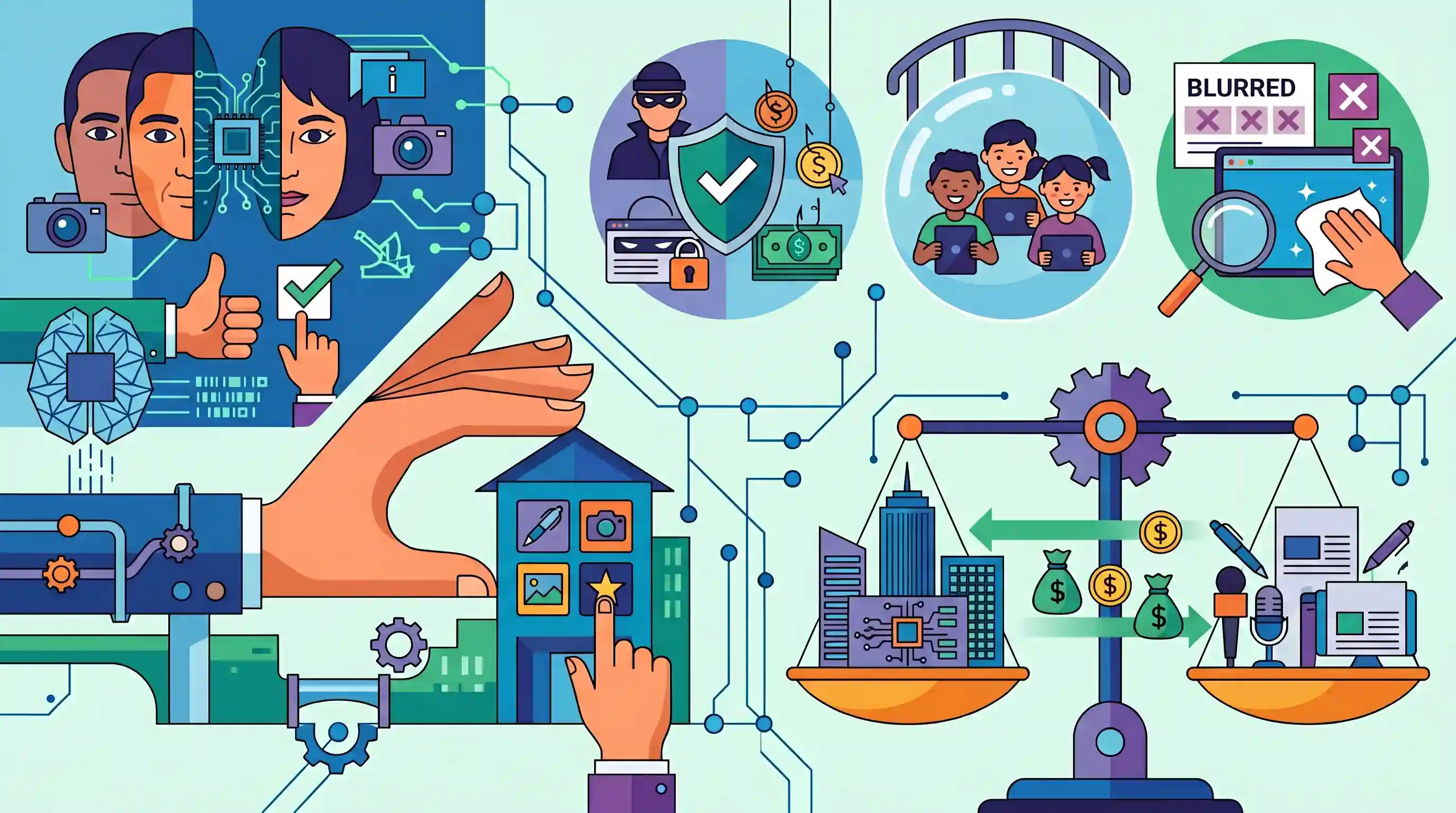
Addressing the Digital News Publishers Association (DNPA) Conclave, Union IT Minister Ashwini Vaishnaw underscored the pressing need for digital platforms to assume greater accountability for the content they host, urging a shift from mere 'intermediary' status to responsible publishers. He highlighted critical concerns regarding the proliferation of deepfakes and AI-generated synthetic content, advocating for mandatory user consent in AI processing. Furthermore, he outlined four key pillars for a safer digital ecosystem: combating online fraud, ensuring the safety of children in the digital era, preventing the spread of obscenity, and promoting an equitable revenue-sharing model between major tech platforms and digital news creators to sustain quality journalism.
Key Points
- The IT Minister advocated for a reassessment of the traditional 'safe harbour' intermediary status, demanding that digital platforms assume proactive responsibility for the content they host rather than acting merely as conduits.
- The rapid spread of deepfakes and AI-generated misinformation is flagged as a major societal risk, prompting government demands for mandatory user consent mechanisms before synthetic AI content can be published.
- A robust digital safety framework must prioritize the online protection of children, alongside combating rising cyber fraud and the unchecked spread of obscenity.
- The government emphasized the need for equitable revenue-sharing arrangements between Big Tech platforms and digital news publishers, warning that legislative or regulatory interventions could follow if voluntary compliance is not achieved.
Important Terms
Safe Harbour Principle

Legal immunity under Section 79 of the IT Act, 2000, protecting online platforms (intermediaries) from liability for third-party content, provided they follow 'due diligence' requirements.
UPSC context
GS Paper 2 (Governance) & GS Paper 3 (S&T); crucial for understanding platform accountability and freedom of expression.
Deepfakes
Artificially created or altered audio-visual media, generated using deep learning techniques, that portrays individuals or events with a high degree of realism to deceive viewers.
UPSC context
GS Paper 3 (Science & Tech, Internal Security); tested in the context of misinformation, ethics, and cyber-security challenges.
Information Technology (IT) Rules, 2021
Comprehensive framework regulating social media, OTT, and digital news; mandates grievance redressal, proactive content moderation, and 2026 amendments specifically targeting AI-generated synthetic media.
UPSC context
GS Paper 2 (Polity); essential for topics like digital sovereignty, executive rulemaking, and constitutional rights.
Synthetically Generated Information (SGI)
A formal legal category in the IT Rules for content artificially created or algorithmically altered to appear authentic and indistinguishable from real-world events or individuals.
UPSC context
GS Paper 3 (S&T); specific technical term used in the latest regulatory landscape for AI and deepfakes.
Digital News Publishers Association (DNPA)
An industry organization representing the digital arms of India's major print and television news publishers, advocating for quality journalism and fair revenue sharing from tech giants.
UPSC context
GS Paper 2 (Governance); represents a key stakeholder group in the debate over media sustainability and digital economy regulation.
Intermediary
Entities defined under Section 2(w) of the IT Act that facilitate communication or host/transmit data on behalf of users, including social media platforms, ISPs, and search engines.
UPSC context
GS Paper 3 (Cyber Security); focuses on the evolving legal obligations and liability of Big Tech platforms in India.
Prelims Trap
"The 'Safe Harbour' protection for digital intermediaries in India was completely abolished by the IT Rules, 2021."
Safe Harbour (Section 79 of the IT Act) still exists but is conditional. Platforms only lose this immunity if they fail to observe due diligence mandates under the IT Rules.
Static Concepts Connected
What is the 'Safe Harbour' principle under Indian law?
- Section 79 IT Act: Grants digital intermediaries (like social media platforms) immunity from legal liability for third-party data or content hosted on their networks.
- Conditional Immunity: Protection is revoked if the platform initiates transmission, selects the receiver, modifies the content, or fails to follow due diligence under IT Rules.
How is deepfake technology currently addressed in Indian law?
- IT Act 2000: Addressed via Section 66D (cheating by personation using a computer resource) and Section 67 (transmitting obscene material in electronic form).
- Bhartiya Nyaya Sanhita: Provisions concerning defamation, forgery, and spreading false information can be invoked against deepfake creators to ensure penal accountability.
Cross-Topic Patterns
News Revenue Sharing & Competition Law
The push for equitable revenue sharing between Big Tech and news publishers directly connects IT Ministry policies with the Competition Commission of India's (CCI) anti-monopoly actions in digital markets.
DPDP Act 2023 & AI Data Harvesting
The demand for mandatory user consent in AI processing tests how the newly enacted DPDP Act, 2023 will govern web scraping and data harvesting for training Large Language Models (LLMs).

Dilution of 'Safe Harbour' (Sec 79) + deepfake regulation + Big Tech revenue sharing is highly likely to form a GS3 Mains question in 2026.
Linked PYQs · 5
Linked PYQs · 5
- 2024MainsGS3
Social media and encrypting messaging services pose a serious security challenge. What measures have been adopted at various levels to address the security implications of social media? Also suggest any other remedies to address the problem.
- 2013MainsGS3
What are social networking sites and what security implications do these sites present ?
- 2025MainsGS2
The National Commission for Protection of Child Rights has to address the challenges faced by children in the digital era. Examine the existing policies and suggest measures the Commission can initiate to tackle the issue.
- 2023MainsGS3
Introduce the concept of Artificial Intelligence (AI). How does Al help clinical diagnosis? Do you perceive any threat to privacy of the individual in the use of Al in healthcare?
- 2020MainsGS3
Discuss different types of cyber crimes and measures required to be taken to fight the menace.
