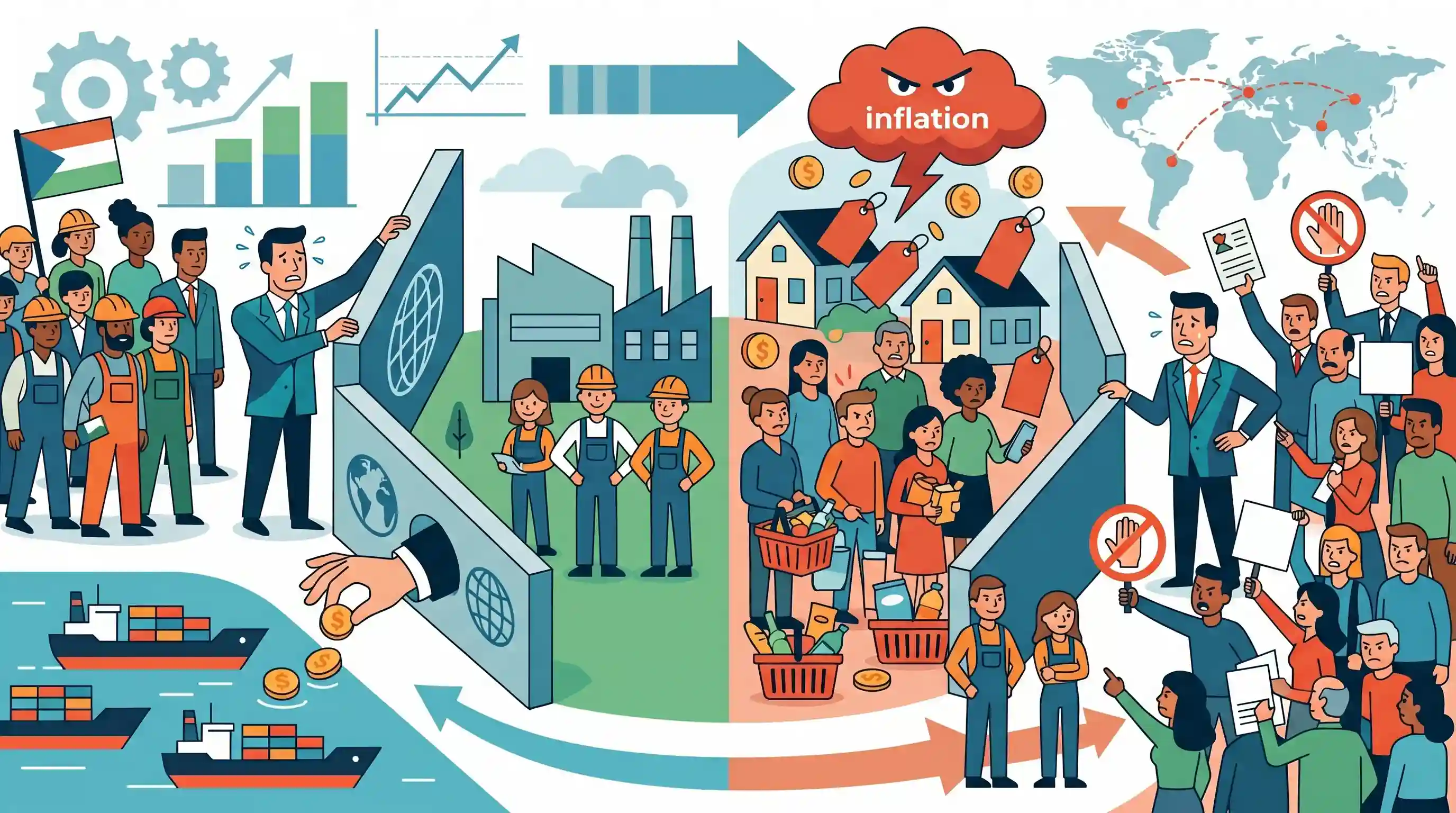
Political economy of trade protectionism and democratic voter backlash
Source:Indian Express ↗
Why It Matters
Provides crucial insights into the intersection of democratic politics and macroeconomic policy, explaining why nations adopt protectionist measures and how the resultant inflation acts as a political counterweight. Valuable for GS-3 answers on trade dynamics and protectionism.
Summary
The article explores the political economy of international trade, positing that while democratic pressures have fueled the recent surge in protectionist tariffs, these same democratic forces will eventually trigger a backlash against them. Although politicians use tariffs to appease domestic workers and protect local industries from globalization, tariffs ultimately act as indirect taxes on consumers, leading to inflation and increased living costs. The author argues that because the economic pain of higher prices affects a much larger segment of the electorate than those who benefit from protected jobs, voters will eventually use the democratic process to penalize leaders advocating for sustained trade barriers.
Key Points
- Tariffs and protectionist policies are often rationalised in democracies as necessary tools to shield domestic manufacturing jobs from foreign competition.
- Political leaders leverage economic nationalism to appeal to specific worker constituencies who feel disenfranchised by free trade and globalisation.
- Economically, tariffs function as indirect taxes on domestic consumers, driving up the prices of everyday goods and contributing to broader inflation.
- The widespread economic burden of increased living costs will eventually alienate a significantly larger voter base (consumers) than the concentrated group of workers protected by such tariffs.
- Democracy acts as a self-correcting mechanism; the adverse macroeconomic impacts of sustained protectionism will inevitably generate political backlash against the leaders who implemented them.
Prelims Trap
"Import tariffs are direct taxes paid by foreign countries to the domestic government."
Tariffs are indirect taxes collected at the border. The economic burden (incidence) almost entirely falls on domestic consumers through higher prices, not the foreign entity.
Static Concepts Connected
What is the macroeconomic impact of import tariffs on the domestic economy?
- Consumer Surplus: Declines, as domestic consumers face higher retail prices for both imported goods and domestically produced substitutes.
- Producer Surplus: Increases for domestic manufacturers, as they face reduced foreign competition and gain the ability to raise prices.
- Deadweight Loss: Created due to market inefficiencies, as domestic production replaces cheaper, more efficient foreign production, leading to overall welfare loss.
How do protectionist trade barriers contribute to domestic inflation?
- Cost-Push Effect: Higher tariffs on intermediate goods (raw materials, components) increase domestic manufacturing costs, leading directly to cost-push inflation.
- Reduced Competition: Reduced foreign competition gives domestic firms greater pricing power, allowing them to hike retail prices without losing market share.
Cross-Topic Patterns
Protectionism & Deglobalisation
The political shift toward tariffs explains the stagnation of the WTO's dispute settlement mechanism and the rise of bilateral FTAs focused on localized supply chains.
Concentrated vs Diffused Costs
This illustrates the "Mancur Olson collective action problem"—a few domestic workers lobby hard for tariffs, while millions of unorganized consumers silently bear the diffused inflation cost.

Expect a 2026 Prelims statement linking import tariffs directly to cost-push inflation, indirect taxation, and consumer surplus reduction.
Linked PYQs · 2
Linked PYQs · 2
- 2025MainsGS3
What are the challenges before the Indian economy when the world is moving away from free trade and multilateralism to protectionism and bilateralism? How can these challenges be met?
- 2018MainsGS3
How would the recent phenomena of protectionism and currency manipulations in world trade affect macroeconomic stability of India?
