Erosion of civil service accountability and vigilance bodies
Source:Indian Express ↗
Why It Matters
The statements by a prominent whistleblower IAS officer provide a practical perspective on the theoretical concepts of civil service neutrality, accountability, and the challenges faced by upright officers. This is highly relevant for GS Paper 4 (Ethics and Public Administration) and GS Paper 2 (Governance and Role of Civil Services).
Summary
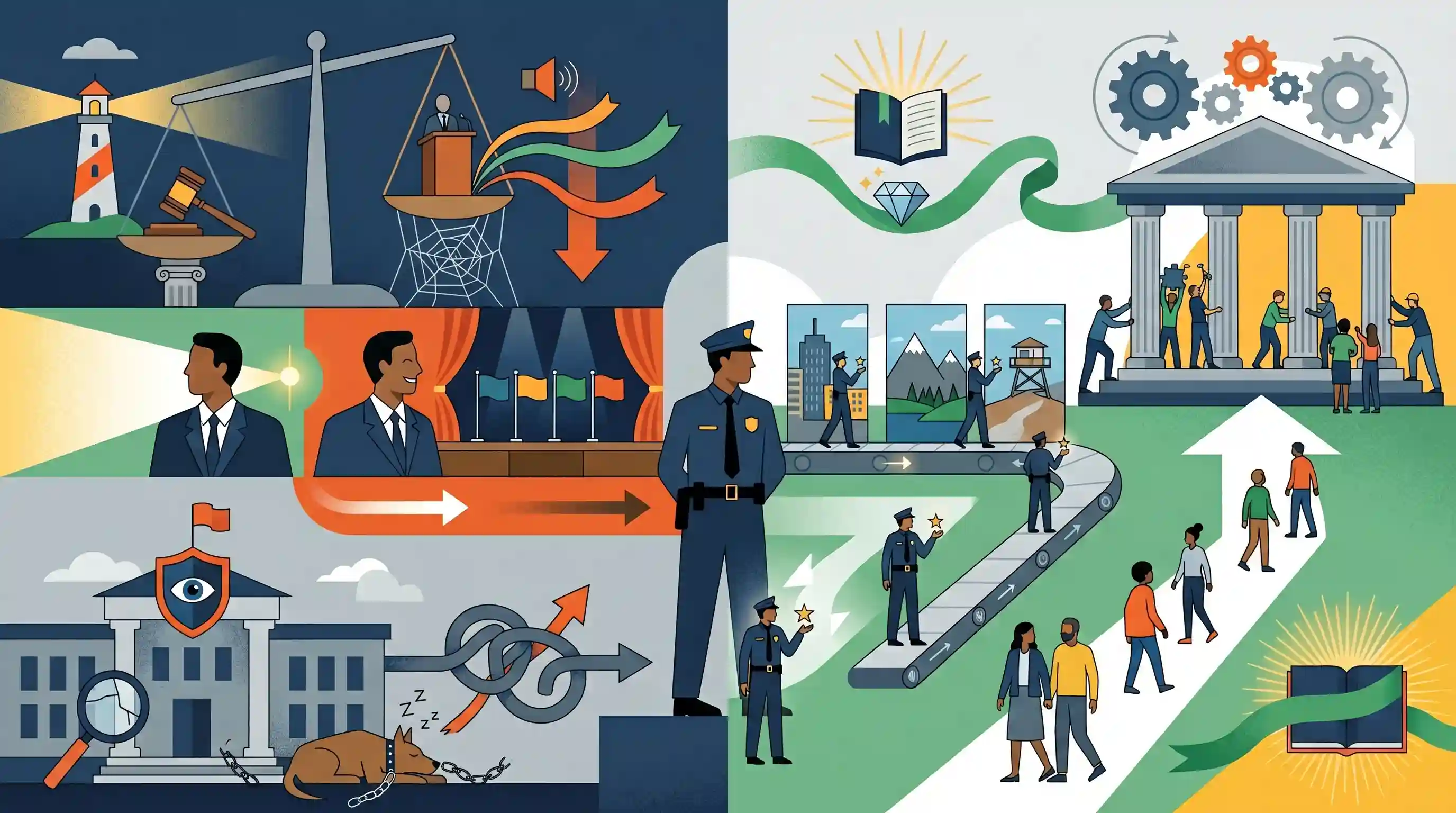
In a recent interview, senior Haryana-cadre IAS officer Ashok Khemka highlighted the erosion of accountability and political neutrality within the civil services. He observed that officers no longer fear being held accountable for their actions when governments change, a deterrence that previously checked political partisanship and malafide actions. Khemka also criticized the state's Vigilance Bureau, stating it has lost its "sting" and fails to function as an independent anti-corruption watchdog. His remarks draw attention to systemic issues such as the frequent transfer of honest officers, the weakening of institutional anti-corruption frameworks, and the urgent need for civil service reforms to uphold democratic governance.
Key Points
- Senior IAS officer Ashok Khemka highlights a growing lack of accountability among civil servants, noting that the fear of being held accountable after a change in government has diminished.
- He points out that anti-corruption bodies like the Vigilance Bureau have become ineffective ("without a sting"), failing to deter corruption or act independently against wrongdoing.
- The frequent transfer of honest civil servants remains a prevalent tool to penalize upright officers who refuse to bend to political or vested interests.
- The article emphasizes the urgent need for institutional reforms to ensure the political neutrality of civil servants and restore the functional autonomy of vigilance mechanisms.
Important Terms
Indian Administrative Service (IAS)

The premier administrative arm of the All India Services, established under Article 312, responsible for policy implementation and providing administrative stability across the Union and States.
UPSC context
GS Paper 2: Role of civil services in a democracy; tests understanding of administrative structures and executive accountability.
State Vigilance Bureau (SVB)
The primary state-level investigative agency (often renamed Anti-Corruption Bureau) tasked with probing corruption, bribery, and misconduct allegations against public servants under the state's jurisdiction.
UPSC context
GS Paper 2: Statutory, regulatory and various quasi-judicial bodies; focuses on institutional frameworks for anti-corruption and oversight.
Political Neutrality
The ethical requirement for civil servants to remain non-partisan, serving the elected government of the day without bias toward any political party or ideology.
UPSC context
GS Paper 4: Public service values and ethics in public administration; essential for maintaining institutional integrity.
Civil Service Accountability
The obligation of public officials to justify their decisions and actions to the public or oversight bodies, accepting liability for misconduct or failure to perform duties.
UPSC context
GS Paper 4: Accountability and ethical governance; tests the ability to evaluate mechanisms that check the abuse of power.
All India Services (Conduct) Rules, 1968
A set of statutory rules notified under the All India Services Act, 1951, prescribing mandatory ethical standards, integrity, and conduct for IAS, IPS, and IFoS officers.
UPSC context
GS Paper 2: Civil services/Governance; GS Paper 4: Ethical codes; provides the legal basis for disciplining civil servants.
Prevention of Corruption Act, 1988
The principal legislative framework in India aimed at combating bribery and criminal misconduct among public servants by prescribing strict offenses, penalties, and investigation procedures.
UPSC context
GS Paper 2: Important aspects of governance, transparency and accountability; the legal backbone for anti-corruption measures.
Prelims Trap
Recommendations of the Civil Services Board regarding IAS officer transfers are legally binding on State Governments.
While the Supreme Court mandated CSBs to prevent arbitrary transfers (TSR Subramanian case), their recommendations are advisory and can be overruled by the Chief Minister.
Static Concepts Connected
What did the Supreme Court mandate in the TSR Subramanian vs UoI (2013) case?
- Civil Services Board: Directed the creation of CSBs at the central and state levels to regulate civil servant transfers and postings.
- Fixed Tenure: Demanded the framing of rules to ensure a minimum fixed tenure for bureaucrats to shield them from political victimization.
- Written Orders: Mandated that civil servants must record oral instructions from superiors or political executives in writing to ensure accountability.
What are the core values governing the conduct of Civil Servants in India?
- Political Neutrality: Serving the elected government with equal loyalty and executing policies impartially, regardless of the ruling party's ideology.
- Impartiality & Objectivity: Acting solely on merit and constitutional principles, without yielding to political, financial, or personal pressures.
- Anonymity: Working behind the scenes without seeking personal public credit or engaging in public political controversies.
Cross-Topic Patterns
Punitive transfers & Whistleblower gaps
The systemic weaponization of transfers against honest officers underscores the institutional gaps in safeguarding internal administrative watchdogs, linking to delays in fully operationalizing the Whistle Blowers Protection Act.
GS4 Ethics: Anonymity vs. Whistleblowing
Public statements by serving officers highlight the growing tension between the traditional civil service value of 'anonymity' and the moral necessity of speaking out against systemic corruption.

Expect GS4 case studies in 2026 to feature 'punitive transfers' of upright officers and the ethical dilemma of navigating oral orders.
Linked PYQs · 5
Linked PYQs · 5
- 2022MainsGS4
Whistle-blower, who reports corruption and illegal activities, wrongdoing and misconduct to the concerned authorities, runs the risk of being exposed to grave danger, physical harm and victimization by the vested interests, accused persons and his team. What policy measures would you suggest to strengthen protection mechanism to safeguard the whistle-blower?
- 2017MainsGS4
Examine the relevance of the following in the context of civil service: Transparency, Accountability, Fairness and justice, Courage of conviction, Spirit of service.
- 2024MainsGS2
The Doctrine of Democratic Governance makes it necessary that the public perception of the integrity and commitment of civil servants becomes absolutely positive. Discuss.
- 2020MainsGS2
Institutional quality is a crucial driver of economic performance". In this context suggest reforms in Civil Service for strengthening democracy.
- 2019MainsGS4
"Non-performance of duty by a public servant is a form of corruption". Do you agree with this view? Justify your answer.
