Unregulated Peptide Therapy Trends Raise Public Health Concerns
Source:The Hindu ↗
Why It Matters
It highlights the intersection of rapidly advancing biotechnology and public health regulation. This is highly relevant for GS3 (Awareness in Biotechnology) and GS2 (Issues relating to Health, regulatory bodies, and governance).
Summary
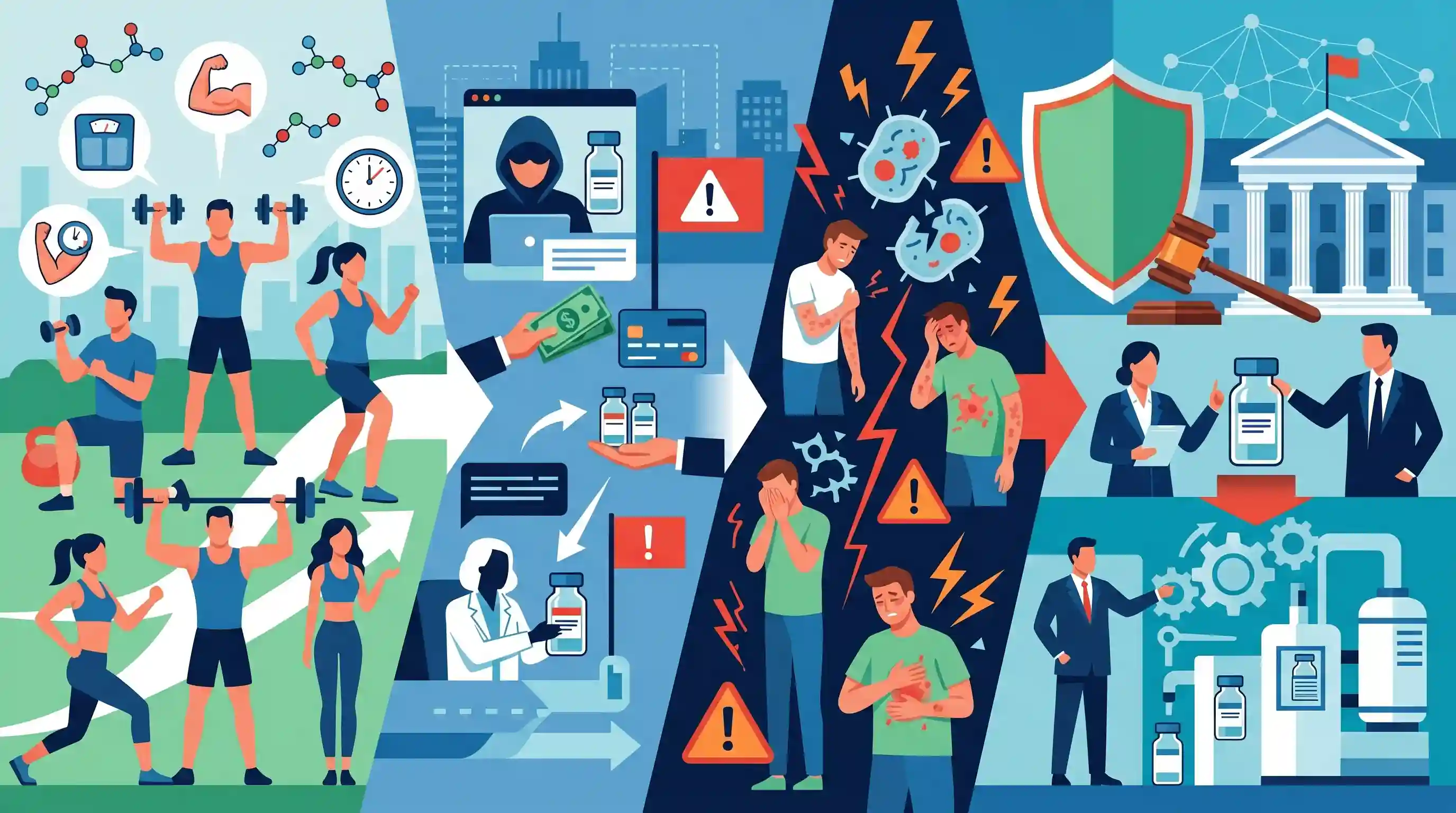
Peptide therapy, which uses short chains of amino acids to target specific cellular functions, is rapidly gaining popularity as a wellness trend for weight loss, anti-aging, and muscle recovery. However, health experts and researchers are raising alarms over its largely unregulated and off-label use. The article highlights the dangers of procuring synthetic peptides from the gray market, where products bypass rigorous clinical trials. Medical professionals warn about potentially severe side effects and immune reactions, emphasizing the urgent need for stringent pharmaceutical regulations to manage this emerging biotechnology and protect public health.
Key Points
- Peptides are short chains of amino acids that function as vital signaling molecules in the human body; their therapeutic applications are increasingly being sought for wellness, anti-aging, and bodybuilding.
- The surge in peptide therapy includes the widespread off-label use of drugs (such as GLP-1 agonists) originally designed for chronic conditions like diabetes, now utilized for rapid weight loss.
- Medical experts caution against unregulated peptide use, citing risks of severe immune reactions, hormonal imbalances, and potential toxicity from impure or synthetic products.
- A significant regulatory gap exists, as many unapproved peptides are sold online disguised as 'research chemicals' or supplements, bypassing stringent pharmaceutical oversight and clinical trials.
- This trend underscores an urgent need for drug regulatory bodies to modernize frameworks to manage the commercialization of emerging biotechnology and curb dangerous self-medication practices.
Important Terms
Central Drugs Standard Control Organisation (CDSCO)

India's national regulatory body for pharmaceuticals, cosmetics, and medical devices. Operating under the Ministry of Health, it oversees drug approvals, clinical trial regulations, and quality standards for imports and exports.
UPSC context
Relevant for GS Paper II (Regulatory Bodies) and GS Paper III (Public Health/Pharma); tests knowledge of India's drug governance.
Peptide Therapy
Medical treatment using synthetic or natural short-chain amino acids to mimic signaling molecules in the body. While popular for weight loss and recovery, many are regulated as prescription-only drugs.
UPSC context
Relevant for GS Paper III (Biotechnology); tests understanding of emerging biotech applications and their regulatory challenges in the wellness industry.
New Drugs and Clinical Trials Rules, 2019
The regulatory framework notified in 2019 to streamline drug approvals and ensure ethical conduct in human research. It includes provisions for accelerated approvals and mandatory compensation for trial-related injuries.
UPSC context
GS Paper II (Government Policies) and GS Paper III (S&T); tests knowledge of clinical research reforms and ease of doing business.
Off-label Drug Use
The practice of prescribing an approved medication for an indication, dosage, or patient population for which it has not received formal regulatory clearance. It raises significant safety and ethical concerns.
UPSC context
GS Paper II (Health/Ethics); tests awareness of medical ethics and regulatory gaps in the misuse of lifestyle drugs.
Drugs Controller General of India (DCGI)
The head of the CDSCO responsible for final approvals of new drugs and clinical trials in India. The DCGI ensures uniform enforcement of the Drugs and Cosmetics Act.
UPSC context
Relevant for GS Paper II (Statutory/Executive Bodies); tests understanding of the executive hierarchy in India's pharmaceutical regulation.
Clinical Trials
Systematic research studies on human participants designed to evaluate the safety and efficacy of new drugs or therapies. Bypassing these via unregulated markets poses severe public health risks.
UPSC context
GS Paper III (Science & Technology/Biotechnology); tests understanding of the drug development lifecycle and ethical standards in medical research.
Prelims Trap
Peptides are large, complex proteins consisting of hundreds of amino acids.
Peptides are actually short chains of amino acids (typically fewer than 50). UPSC frequently swaps basic biological definitions like peptides vs. proteins to trick aspirants.
Static Concepts Connected
What are the core structural differences between peptides and proteins?
- Chain Length: Peptides are short chains of fewer than 50 amino acids, whereas proteins are long, complex chains of hundreds of amino acids.
- 3D Structure: Proteins fold into intricate three-dimensional shapes crucial for their function, while peptides have much simpler structures.
How does India regulate biological drugs and off-label usage?
- Governing Law: Biologics are regulated by CDSCO under the Drugs and Cosmetics Act, 1940, requiring strict trial data and specialized manufacturing licenses.
- Off-Label Use: Prescribing approved drugs for unapproved uses (off-label) is common clinical practice but loosely regulated, creating safety vulnerabilities.
Cross-Topic Patterns
Biologics and India's NCD burden
The off-label use of GLP-1 diabetes drugs for obesity directly links to India's rising metabolic disorder burden, tracked under the national NCD control program.
E-pharmacy regulations and gray markets
The online sale of synthetic peptides disguised as 'research chemicals' mirrors broader regulatory gaps in India's pending and delayed e-pharmacy draft rules.

Expect a 2026 Sci-Tech question distinguishing peptides from proteins, or a statement on off-label drug regulation under CDSCO.
Linked PYQs · 3
Linked PYQs · 3
- 2024PrelimsGS1
With reference to monoclonal antibodies, often mentioned in news, consider the following statements : I. They are man-made proteins. II. They stimulate immunological function due to their ability to bind to specific antigens. III. They are used in treating viral infections like that of Nipah virus. Which of the statements given above are correct?
- 2014MainsGS3
Can overuse and free availability of antibiotics without Doctor's prescription, be contributors to the emergence of drug-resistant diseases in India? What are the available mechanisms for monitoring and control? Critically discuss the various issues involved.
- 2021MainsGS3
What are the research and developmental achievements in applied biotechnology? How will these achievements help to uplift the poorer sections of the society?
