RBI Opens Special Dollar Window for PSU Oil Firms Amid Price Rise
Source:The Hindu ↗
ఇది ఎందుకు ముఖ్యం
This article highlights critical central banking interventions in managing macroeconomic stability, foreign exchange reserves, and currency depreciation pressures arising from global energy price shocks—a vital concept for GS3 Economy and Monetary Policy.
సారాంశం
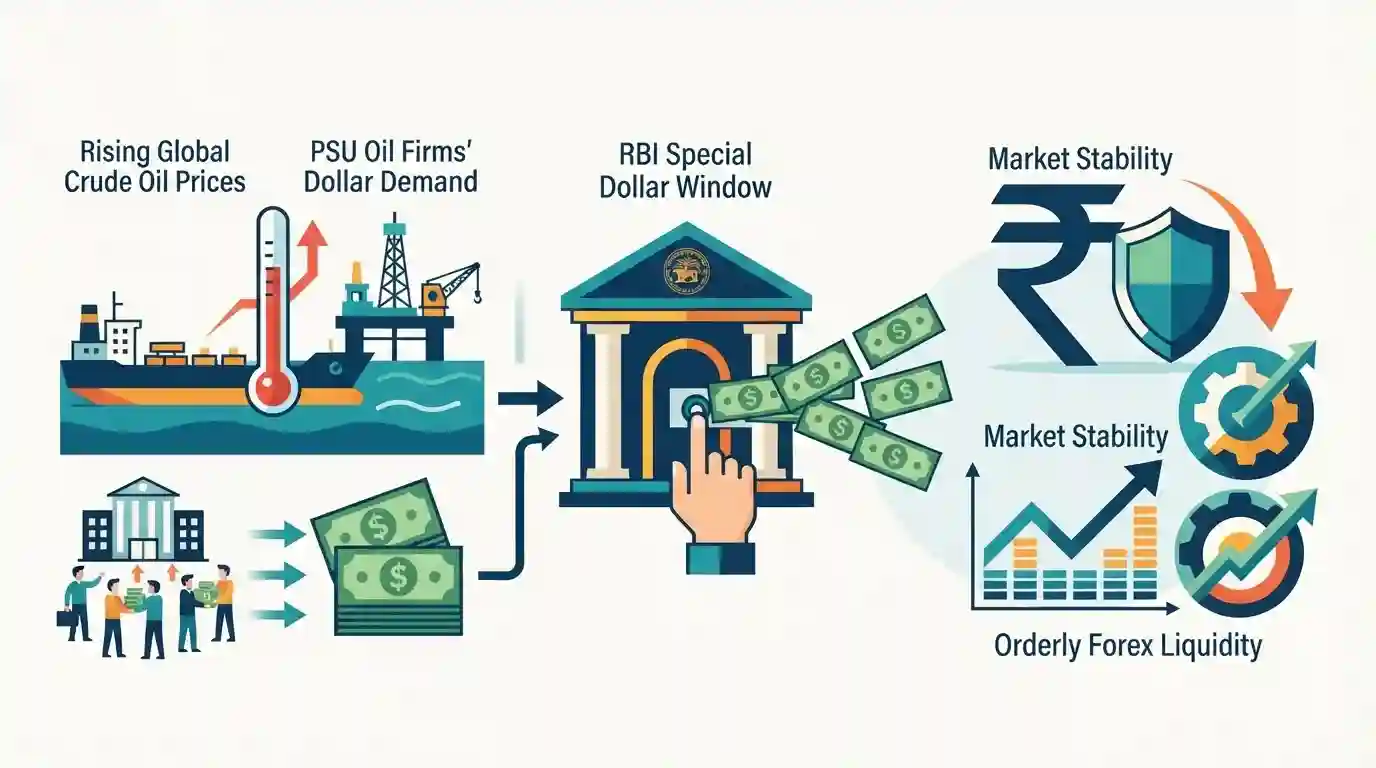
In response to rising global crude oil prices increasing the daily dollar demand of Public Sector Undertaking (PSU) oil firms, the Reserve Bank of India (RBI) has established a special dollar window. This policy action aims to minimize volatility in the foreign exchange market, protect the Indian rupee from depreciation pressure, and ensure orderly functioning of forex liquidity management.
ముఖ్య అంశాలు
- The Reserve Bank of India (RBI) has opened a special dollar window to assist Public Sector Undertaking (PSU) oil marketing companies in meeting their daily foreign exchange requirements.
- This intervention aims to ease pressure on the domestic foreign exchange market amid rising global crude oil prices, which typically elevate dollar demand.
- By directly catering to bulk dollar buyers outside the open market, the central bank helps mitigate sharp volatility in the rupee-dollar exchange rate and preserves forex reserves stability.
- Such measures reflect the proactive role of central banks in managing external sector shocks and macroeconomic stability during geopolitical or energy supply disruptions.
ముఖ్యమైన పదాలు
Reserve Bank of India

India’s central banking institution, which controls the monetary policy of the Indian rupee, regulates the banking system, and manages foreign exchange reserves to ensure financial stability.
UPSC context
Crucial for UPSC GS Paper III (Indian Economy); tests understanding of central banking functions, monetary policy, and forex management.
Public Sector Undertakings
State-owned enterprises in India where the majority stake (51% or more) is held by the central government or a state government.
UPSC context
Important for UPSC GS Paper III; tests knowledge of industrial policy, public sector reforms, and resource mobilization.
అనుసంధానమైన స్థిర భావనలు
What are the primary instruments used by the RBI to manage exchange rate volatility in India?
- Spot & Forward Operations: Direct intervention by buying or selling US dollars in the spot and forward foreign exchange markets to curb sharp depreciation or appreciation.
- Special Dollar Windows: Opening dedicated dollar windows for bulk institutional buyers like PSU oil marketing companies to prevent open market liquidity shocks.
- Monetary Policy & Capital Controls: Deploying monetary policy tools and regulating non-resident deposit schemes to influence capital flows and overall exchange rate stability.
అంతర-అంశ నమూనాలు
Oil price shocks and Current Account Deficit
High crude import bills directly widen India's Current Account Deficit (CAD), straining foreign exchange reserves and forcing RBI interventions like special dollar windows.

RBI special dollar windows for OMCs + exchange rate management will likely appear as a statement-based question in Prelims.
అనుసంధాన PYQలు · 3
అనుసంధాన PYQలు · 3
- 2022PrelimsGS1
In India, which one of the following is responsible for maintaining price stability by controlling inflation?
- 2025PrelimsGS1
Which of the following are the sources of income for the Reserve Bank of India? I. Buying and selling Government bonds II. Buying and selling foreign currency III. Pension fund management IV. Lending to private companies V. Printing and distributing currency notes Select the correct answer using the code given below.
- 2023PrelimsGS1
Which one of the following activities of the Reserve Bank of India is considered to be part of 'sterilization'?
