Climate Risk Insurance Pricing and Disaster Vulnerability in India
Source:The Hindu ↗
ఇది ఎందుకు ముఖ్యం
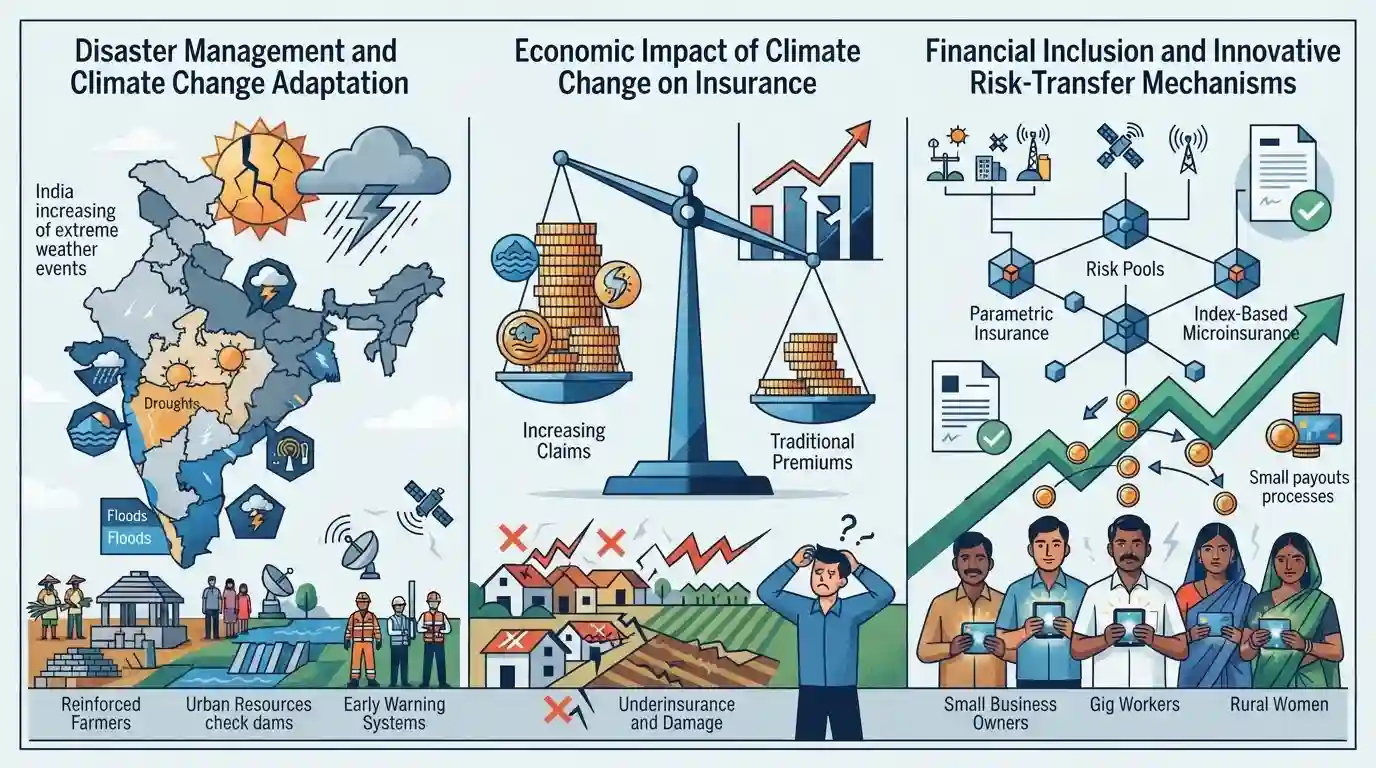
With rising climate volatility, economic losses from natural disasters are mounting in India. Understanding how to balance risk-reflective pricing with financial protection for vulnerable populations is vital for sustainable development and disaster resilience under GS3.
సారాంశం
The article highlights the growing challenge of predicting and insuring against climate-induced catastrophes in India. As extreme weather events become more frequent and severe, traditional insurance models struggle, leading to higher pricing and protection gaps. The piece emphasizes the urgent need for India to price climate risks accurately while ensuring that vulnerable and marginalized populations are not left unprotected, calling for innovative risk-transfer mechanisms and proactive policy interventions.
ముఖ్య అంశాలు
- Climate change is increasing the frequency and unpredictability of natural disasters in India, posing severe financial and economic risks.
- Insurance penetration against climate catastrophe remains low in India, leaving vulnerable populations unprotected.
- Pricing climate risks accurately is essential for financial sustainability, but it must be balanced with inclusive coverage and safety nets to protect the poor.
- Innovative financial mechanisms, public-private partnerships (PPPs), and parametric insurance are needed to enhance disaster resilience and climate adaptation.
ముఖ్యమైన పదాలు
Insurance Regulatory and Development Authority of India (IRDAI)

A statutory regulatory body established to protect policyholders' interests and regulate, promote, and ensure orderly growth of the insurance industry in India.
UPSC context
Important for GS Paper III (Economy / Financial Inclusion / Disaster Management); tests regulatory mechanisms for managing climate and catastrophe risks in insurance.
అనుసంధానమైన స్థిర భావనలు
What are the key mechanisms and institutional frameworks for disaster risk financing and insurance in India?
- Statutory Funds: National Disaster Response Fund (NDRF) and State Disaster Response Funds (SDRF) provide statutory fiscal cushions for immediate relief operations.
- Parametric Model: Parametric insurance triggers payouts based on pre-defined index thresholds rather than post-disaster loss assessments, eliminating lengthy verification delays.
- Basis Risk Challenge: Basis risk represents the mismatch between index-based trigger events and the actual localized financial or physical loss suffered by an insured party.
- IRDAI Mandate: IRDAI regulates insurance penetration norms, promoting composite licenses and specialized climate risk pools for micro-insurance segments.
అంతర-అంశ నమూనాలు
Agriculture Credit vs. Climate Catastrophes
Climate shocks devastate rural incomes and crop yields, directly straining priority sector lending targets, institutional agricultural credit repayment, and non-performing asset levels in rural cooperative and commercial banks.
Disaster Management Act vs. Fiscal Risk Pooling
The NDMA framework and State Disaster Management Authorities must integrate actuarial risk pricing and parametric risk pools to reduce reliance on discretionary post-disaster ex gratia relief.

Climate risk financing + parametric insurance + IRDAI reforms will feature in a multi-statement Prelims question on fiscal resilience.
అనుసంధాన PYQలు · 2
అనుసంధాన PYQలు · 2
- 2024MainsGS3
Flooding in urban areas is an emerging climate-induced disaster. Discuss the causes of this disaster. Mention the features of two such major floods in the last two decades in India. Describe the policies and frameworks in India that aim at tackling such floods.
- 2017MainsGS3
'Climate change' is a global problem. How India will be affected by climate change? How Himalayan and coastal states of India will be affected by climate change?
