Indigenous Messaging Apps and Challenges of Digital Sovereignty
Source:Indian Express ↗
Why It Matters
This topic is crucial for UPSC aspirants as it bridges the concepts of technological self-reliance, digital sovereignty, and internal security challenges posed by foreign social media platforms, areas explicitly mentioned in the GS3 syllabus.
Summary
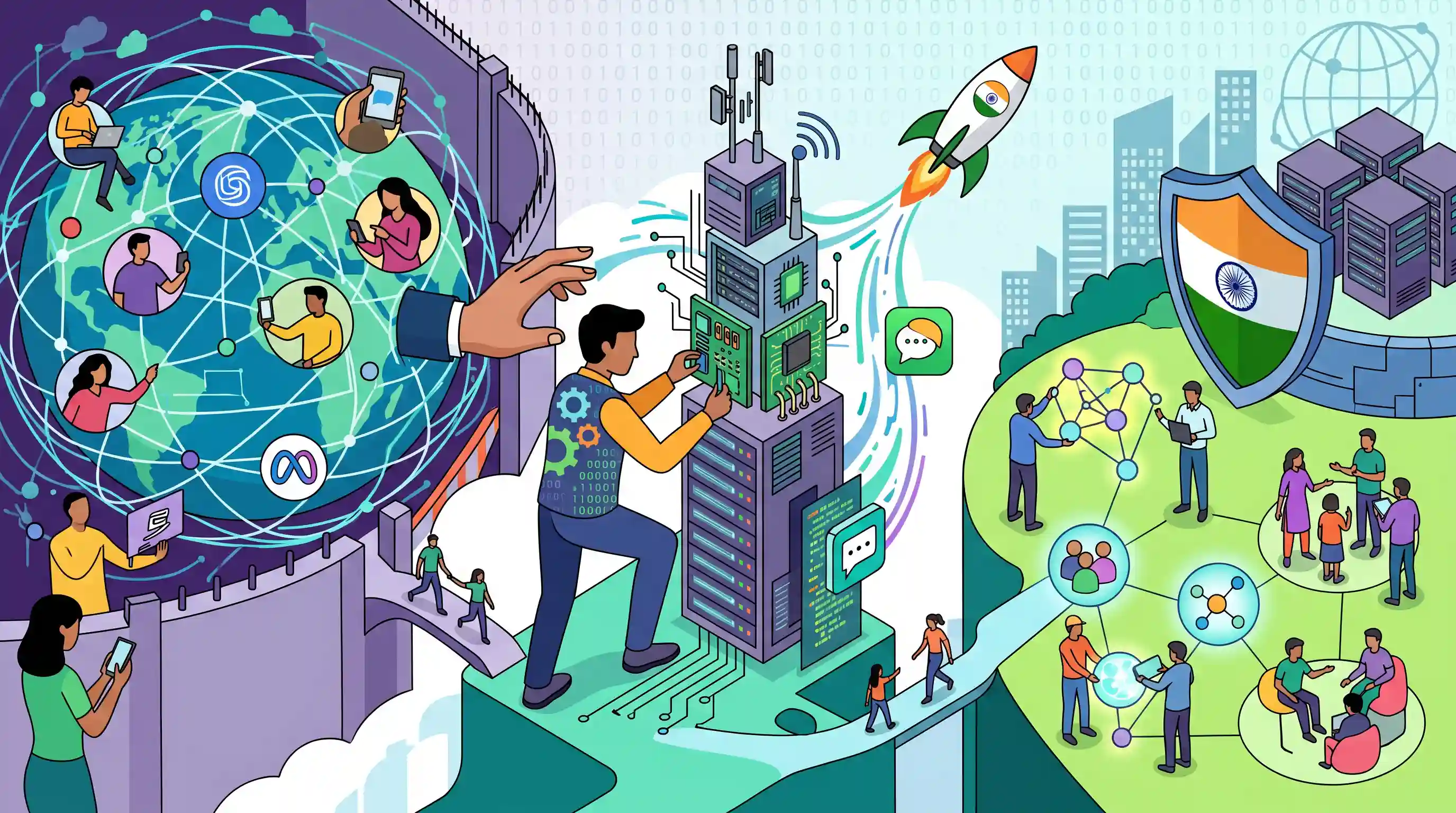
The article discusses the launch of Zoho's Arattai, an indigenous alternative to WhatsApp, framing it within the broader context of India's pursuit of technological self-reliance (Atmanirbhar Bharat). It argues that while Indian developers possess the technical engineering skills to build sophisticated applications, establishing a global tech platform requires mastering the "social grammar"—the complex dynamics of network effects, user behavior, and community trust. The piece underscores the challenge of overcoming the entrenched social monopolies of foreign digital giants and highlights the strategic importance of developing domestic alternatives for data sovereignty and national security.
Key Points
- Arattai, developed by India's Zoho Corporation, represents the push for domestic alternatives to global messaging platforms like WhatsApp in the wake of data privacy concerns.
- While India has demonstrated robust technical capability and engineering talent, building global consumer tech platforms requires mastering "social grammar" (user behavior, community building, and network effects).
- Indigenous tech ecosystems struggle to break the monopoly of established global giants because user lock-in is driven by social ties rather than just technical features.
- Achieving true technological self-reliance (Atmanirbhar Bharat) necessitates shifting focus from purely B2B IT services to globally adopted, user-centric software products.
- Data sovereignty and digital security are key drivers for fostering indigenous communication networks to mitigate risks associated with foreign-controlled platforms.
Important Terms
Atmanirbhar Bharat

A flagship government vision aimed at making India self-reliant across five pillars: Economy, Infrastructure, System, Vibrant Demography, and Demand. It emphasizes local manufacturing and reducing strategic dependencies on foreign imports.
UPSC context
GS III (Economy/S&T); tests knowledge of industrial policy, self-sufficiency missions, and reducing external dependencies in critical sectors.
Data Sovereignty
The principle that digital data is subject to the laws and jurisdiction of the country where it is collected. It ensures national control over information for security and privacy.
UPSC context
GS III (Cyber Security); critical for discussing data protection laws, privacy rights, and the geopolitical implications of foreign-controlled data.
Indigenisation of Technology
The process of designing, developing, and manufacturing technological solutions within a country using domestic resources to achieve strategic autonomy and reduce reliance on foreign technology transfers.
UPSC context
GS III (Science & Tech); a direct syllabus keyword testing Indian advancements and the transition from "Make in India" to indigenous R&D.
Network Effect
A phenomenon in the digital economy where a service becomes more valuable to existing users as more people join, often leading to market monopolies for established platforms.
UPSC context
GS III (Economy/IT); helps explain economic barriers faced by domestic startups when competing against entrenched global digital giants.
Digital Infrastructure
The foundational digital systems, including broadband, cloud services, and software platforms, that enable the delivery of public services and economic activities in a digital nation.
UPSC context
GS III (Infrastructure); relevant for questions on digital public goods, e-governance, and the bridging of the digital divide.
Prelims Trap
Arattai is an open-source messaging application developed by MeitY to ensure digital data sovereignty.
Arattai is a private initiative developed by the Indian software MNC Zoho Corporation, not a government-built or state-owned platform like NIC's Sandes.
Static Concepts Connected
What is the core difference between Data Localization and Data Sovereignty?
- Data Localization: Mandating the physical storage and processing of digital data within a country's geographical borders.
- Data Sovereignty: The legal principle asserting that digital data is entirely subject to the laws and governance structures of the nation where it is generated and collected.
- DPDP Act 2023: India's framework regulates data processing and allows conditional cross-border transfers, establishing sovereignty without relying solely on strict localization mandates.
How does the government promote indigenous alternatives to foreign communication platforms?
- App Innovation Challenge: A joint MeitY and NITI Aayog program to identify, support, and scale Indian tech entrepreneurs building globally competitive applications.
- Sandes Platform: An indigenous, open-source instant messaging system developed by the National Informatics Centre (NIC) for secure government and citizen communication.
- Digital Public Goods: Developing open digital public infrastructure (like ONDC and UPI) to democratize networks and break the proprietary lock-in of global tech giants.
Cross-Topic Patterns
Data Sovereignty vs. Free Trade
India's data sovereignty push frequently clashes with digital trade chapters in FTAs and WTO e-commerce negotiations, where developed nations advocate for unrestricted cross-border data flows.
Big Tech Monopolies and Competition Law
The Competition Commission of India (CCI) increasingly scrutinizes 'network effects', recognizing that data monopolies act as anti-competitive structural barriers preventing indigenous tech platforms from gaining scale.

Expect a 2026 GS3 Mains question on the 'network effect' barriers limiting India's transition from IT services to global software products.
Linked PYQs · 4
Linked PYQs · 4
- 2024MainsGS3
Social media and encrypting messaging services pose a serious security challenge. What measures have been adopted at various levels to address the security implications of social media? Also suggest any other remedies to address the problem.
- 2023MainsGS3
What is the status of digitalization in the Indian economy? Examine the problems faced in this regard and suggest improvements.
- 2022PrelimsGS1
With reference to Web 3.0, consider the following statements: 1. Web 3.0 technology enables people to control their own data. 2. In Web 3.0 world, there can be blockchain based social networks. 3. Web 3.0 is operated by users collectively rather than a corporation. Which of the statements given above are correct?
- 2017MainsGS2
Examine the scope of Fundamental Rights in the light of the latest judgement of the Supreme Court on Right to Privacy.
