Apple Shifts iPhone Manufacturing To India To Mitigate US Tariffs
Source:The Hindu ↗
Why It Matters
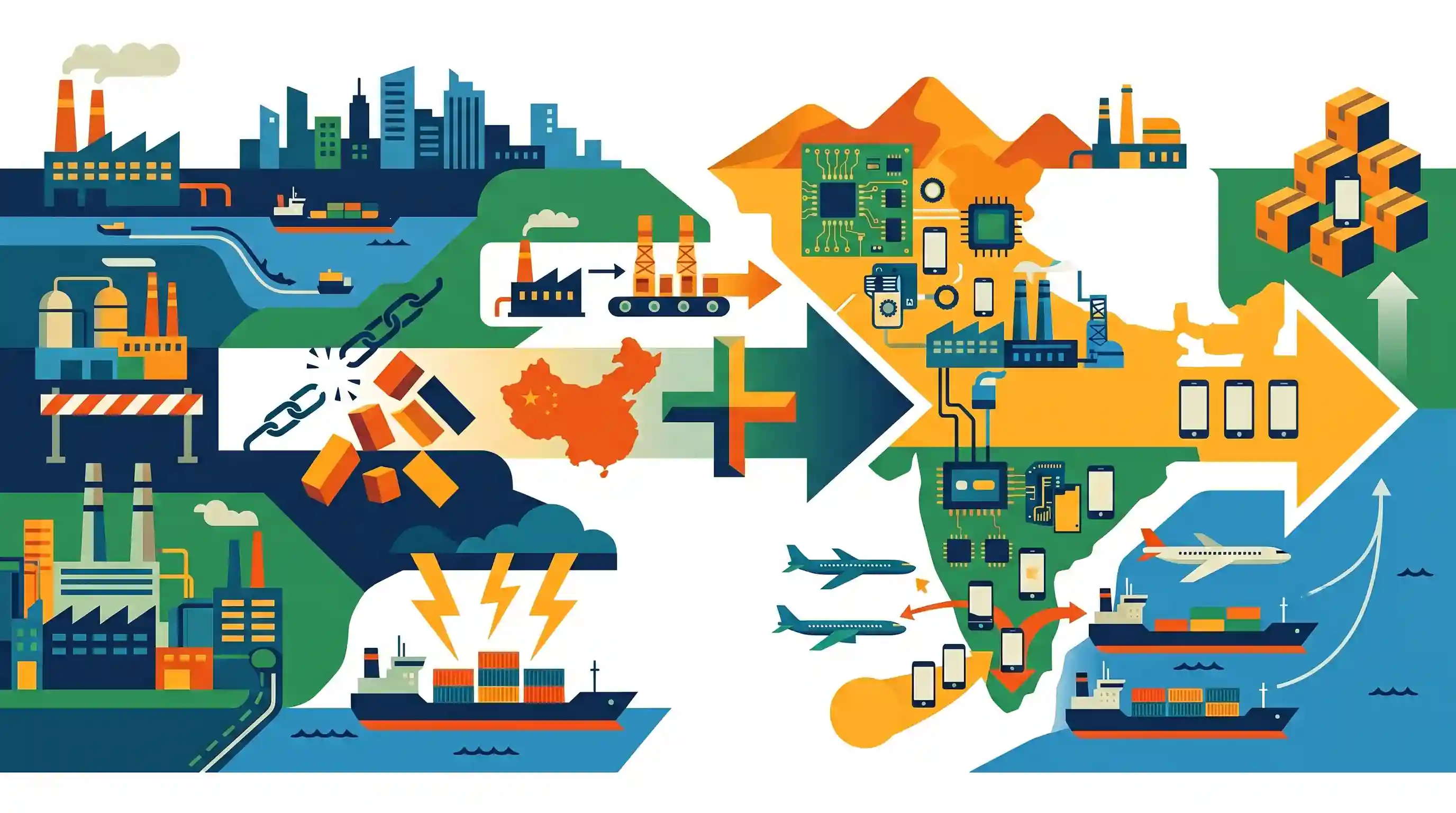
Apple's manufacturing shift exemplifies the real-world impact of geopolitical trade tensions on global supply chains and highlights India's strategic opportunity to establish itself as a dominant global hub for electronics manufacturing and exports.
Summary
Apple is accelerating its efforts to shift the manufacturing of US-bound iPhones from China to India, aiming to produce the majority of these devices in India by the end of 2026. This strategic move is driven by the need to navigate the ongoing US-China trade war and the threat of steep US tariffs on Chinese goods, which contrast with the significantly lower duties on Indian imports. Apple is working closely with contract manufacturers Foxconn and Tata to ramp up production, having already shipped a record $2 billion worth of iPhones from India to the US in a single month. This development underscores India's successful emergence as a critical alternative manufacturing hub under the global 'China Plus One' strategy.
Key Points
- Apple plans to manufacture the majority of its US-bound iPhones in India by the end of 2026 to avoid potential US tariffs on Chinese imports.
- The company is holding urgent talks with Indian contract manufacturers Foxconn and Tata to facilitate this shift.
- The move accelerates Apple's diversification away from China amid the US-China trade war, where Chinese imports face significantly higher tariffs compared to Indian imports.
- Apple shipped a record $2 billion worth of iPhones from India to the US in March, highlighting India's growing role in global electronics manufacturing.
Important Terms
China Plus One Strategy

A business approach where companies reduce over-reliance on China by diversifying manufacturing and supply chains into alternative countries like India to mitigate geopolitical and supply-chain risks.
UPSC context
GS Paper 2/3: Significant for India's emergence as a manufacturing hub and its role in global supply chain resilience.
Production Linked Incentive (PLI) Scheme
A flagship government initiative providing financial incentives to companies based on incremental sales of products manufactured in domestic units, aiming to boost local production and exports.
UPSC context
GS Paper 3: Crucial for topics on industrial policy, 'Atmanirbhar Bharat', and enhancing manufacturing's share in GDP.
Global Value Chains (GVCs)
The international network of production where different stages of a product's creation are spread across various countries, with each stage adding specific value to the final good.
UPSC context
GS Paper 3: Tests understanding of trade interconnectedness, export competitiveness, and India's integration into the global economy.
Make in India
A strategic initiative launched in 2014 to transform India into a global manufacturing powerhouse by facilitating investment, fostering innovation, and building world-class infrastructure.
UPSC context
GS Paper 3: Core topic for Indian Economy, manufacturing sector reforms, and employment generation strategies.
Protectionism
The economic policy of restricting imports from other countries through methods such as high tariffs or quotas to protect domestic industries from foreign competition.
UPSC context
GS Paper 2: Relevant for analyzing the impact of developed-country policies (e.g., US tariffs) on India's trade interests.
Tariffs
Customs duties on imported goods, often used as a tool in trade wars to make foreign products more expensive and discourage their import.
UPSC context
GS Paper 3: Important for understanding trade policy, fiscal measures, and their effect on domestic price levels.
Prelims Trap
"India's PLI scheme has eliminated electronic component imports, achieving full self-reliance."
India currently dominates terminal assembly (like iPhones) but still relies heavily on imported intermediate components from China. Deep value addition remains low.
Static Concepts Connected
How does the PLI Scheme for Large Scale Electronics work?
- Incremental incentive: Provides an incentive of 4% to 6% on incremental sales of goods manufactured domestically over a base year.
- Target sectors: Focuses heavily on mobile phones and specified electronic components, aiming to integrate India deeply into Global Value Chains.
- Performance-linked: Disbursements are post-production, requiring companies to meet stringent annual thresholds for incremental investment and sales.
What is the Supply Chain Resilience Initiative (SCRI)?
- Core Trilateral: A trilateral effort initiated by India, Japan, and Australia focusing on the Indo-Pacific region.
- Strategic objective: Aims to counter China's supply chain dominance by diversifying supply risks and attracting FDI to alternate hubs.
- Mechanisms: Operates through sharing best practices on supply chain resilience and organizing joint investment promotion events.
Cross-Topic Patterns
Friend-shoring and WTO fragmentation
US-China trade wars signify a shift from WTO-led free trade to geopolitical friend-shoring, benefiting India's FDI but raising concerns over global trade fragmentation and rising consumer costs.
Terminal assembly vs. value addition
While India hits record mobile export figures, it masks a surging import dependency on China for critical intermediate components, highlighting the challenge of achieving deep domestic value addition.

Mains GS3 2026 will likely test 'China Plus One' success via PLI electronics against the constraint of low domestic value addition.
Linked PYQs · 2
Linked PYQs · 2
- 2025MainsGS3
What are the challenges before the Indian economy when the world is moving away from free trade and multilateralism to protectionism and bilateralism? How can these challenges be met?
- 2025MainsGS3
Discuss the rationale of the Production Linked Incentive (PLI) scheme. What are its achievements? In what way can the functioning and outcomes of the scheme be improved?
