Biochemical Role of Antioxidants and Human Health Nutrition
Source:The Hindu ↗
Why It Matters
Nutrition, vitamins, and cellular biology are standard elements of the UPSC Prelims General Science syllabus. A clear understanding of how antioxidants and free radicals function biochemically is necessary for tackling everyday science questions and understanding broader public health advisories regarding dietary supplements.
Summary
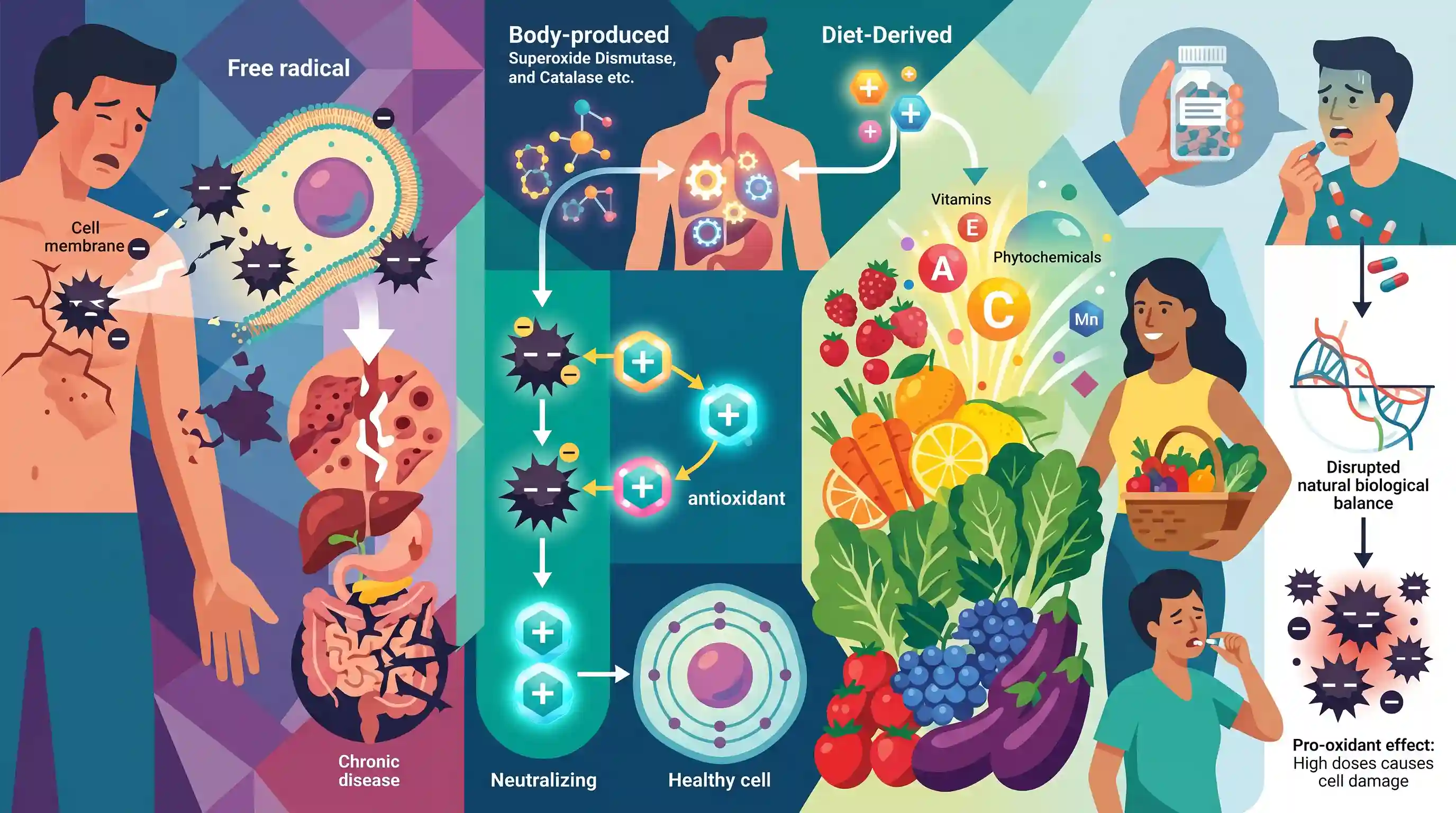
The article details the biochemical mechanisms of antioxidants and their critical role in neutralizing free radicals to prevent oxidative stress and chronic diseases. It categorizes antioxidants into body-produced enzymes and diet-derived vitamins, minerals, and phytochemicals. Emphasizing the dietary concept of 'eating the rainbow', the piece highlights that consuming colorful, antioxidant-rich whole foods is far superior to taking synthetic supplements, which can disrupt natural biological balances and act as pro-oxidants when consumed in high doses.
Key Points
- Antioxidants protect human cells from damage caused by free radicals (oxidants), reducing the risk of chronic conditions like heart disease, cancer, and cognitive decline.
- While the body needs a small amount of oxidants for functions like immune defense and hormone production, excess oxidants cause 'oxidative stress', leading to cellular and DNA damage.
- Antioxidants are classified into endogenous (enzymes produced by the body) and exogenous (dietary sources like vitamins C and E, minerals, and phytochemicals).
- Phytochemicals—such as carotenoids and flavonoids (e.g., anthocyanins)—give plants their vibrant colors and serve as potent antioxidants.
- Health experts strongly recommend acquiring antioxidants from whole foods (like berries, nuts, artichokes, and spices) rather than supplements, as high-dose supplements can interfere with medical treatments or even act as harmful pro-oxidants.
Prelims Trap
Free radicals have no biological utility and exclusively cause cellular damage in the human body.
The human body actually requires low levels of free radicals (oxidants) for crucial physiological functions, including immune system defense (destroying pathogens) and hormone production.
Static Concepts Connected
What is Oxidative Stress and how does the human body defend against it?
- Oxidative Stress: A biological imbalance where free radicals (Reactive Oxygen Species) outnumber antioxidant defenses, leading to cellular and DNA damage.
- Endogenous Defense: The body naturally produces specific enzymes, such as Superoxide Dismutase (SOD) and Catalase, to neutralize harmful free radicals internally.
- Exogenous Defense: Dietary intake of vitamins (like C and E), trace minerals, and plant-based phytochemicals provides external neutralization of oxidants.
What are Phytochemicals and how do they differ from essential vitamins?
- Phytochemicals: Bioactive compounds (e.g., flavonoids, carotenoids) that give plants vibrant colors and act as potent antioxidants and anti-inflammatory agents in humans.
- Not Essential Vitamins: Unlike Vitamins A, C, or E, phytochemicals are secondary metabolites and are not strictly classified as essential nutrients for basic human survival.
- Anthocyanins: A water-soluble subclass of flavonoids responsible for red, purple, and blue pigments in fruits, known for particularly strong antioxidant properties.
Cross-Topic Patterns
Supplementation vs Dietary Diversity
UPSC frequently contrasts synthetic supplementation with natural dietary diversity. This highlights that over-reliance on synthetic antioxidants can paradoxically cause pro-oxidant harm, supporting policies pushing whole foods.
Oxidative Stress and NCD Burden
Oxidative stress is a primary cellular driver for non-communicable diseases (cancer, cardiovascular). This links urban dietary transitions and processed foods directly to India's rising NCD burden.

Expect a statement-based Prelims question distinguishing endogenous vs exogenous antioxidants and the paradoxical pro-oxidant effect.
Linked PYQs · 1
Linked PYQs · 1
- 2011PrelimsGS1
Regular intake of fresh fruits and vegetables is recommended in the diet since they are a good source of antioxidants. How do antioxidants help a person maintain health and promote longevity?
