Antimalarial Agents and Pathogen Targeting for Vector Control
Source:The Hindu ↗
Why It Matters
With insecticide resistance undermining global malaria eradication efforts, novel disease-control mechanisms are critical. This conceptual shift—disabling the pathogen instead of killing the vector—is highly relevant for UPSC GS3 Science and Technology, as well as broader public health governance (GS2).
Summary
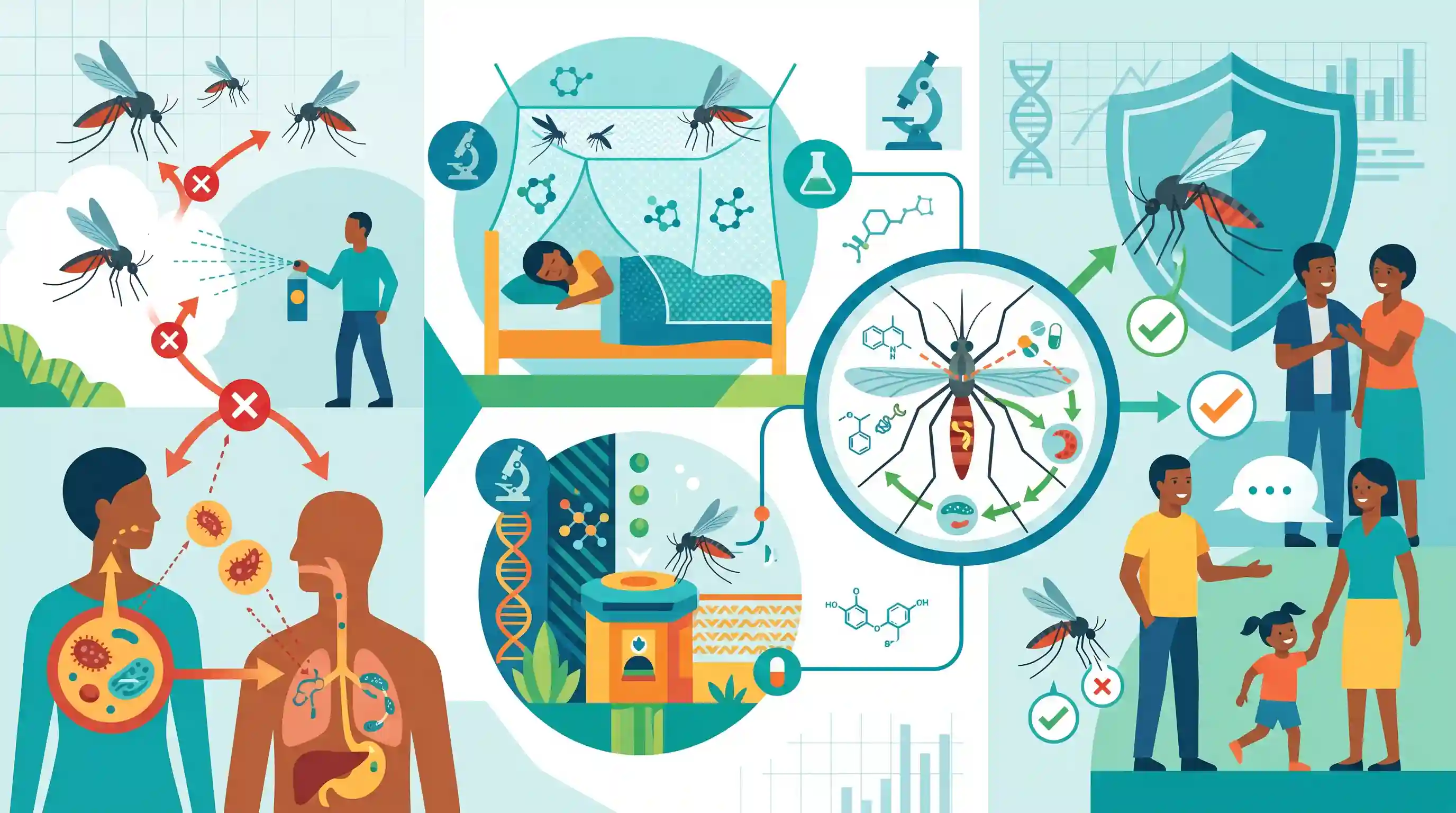
As mosquitoes increasingly develop resistance to traditional insecticides, researchers are exploring a novel strategy to combat malaria: targeting the Plasmodium parasite directly within the mosquito. By exposing mosquitoes to antimalarial agents—such as through coated bed nets or targeted baits—the parasite's development is halted before it can be transmitted to humans. This approach effectively breaks the disease transmission cycle without needing to kill the mosquito, thereby sidestepping the growing challenge of mosquito insecticide resistance and offering a new paradigm for controlling vector-borne diseases.
Key Points
- Rising insecticide resistance in Anopheles mosquitoes is threatening the efficacy of traditional malaria control methods, such as insecticide-treated nets (ITNs) and indoor spraying.
- Instead of attempting to kill the mosquito, researchers are proposing the use of antimalarial agents to directly target the Plasmodium parasite while it is developing inside the mosquito's gut.
- By exposing mosquitoes to these antimalarial drugs (via coated nets or sugar baits), the parasite is neutralized before it can mature and be transmitted to humans.
- This approach completely sidesteps the problem of mosquito insecticide resistance and represents a paradigm shift from vector eradication to pathogen neutralization within the vector.
Prelims Trap
"The new antimalarial bed nets work by overcoming insecticide resistance and killing Anopheles mosquitoes more effectively."
This strategy explicitly does NOT kill the mosquito. It neutralizes the Plasmodium parasite developing inside the vector's gut, shifting the paradigm from 'vector eradication' to 'pathogen blocking'.
Static Concepts Connected
How does the Plasmodium parasite complete its life cycle?
- Primary Host (Vector): Female Anopheles mosquito, where the sexual phase of the parasite's reproduction occurs inside the gut.
- Secondary Host: Humans, where the asexual phase of reproduction occurs (initially infecting liver cells, then multiplying inside red blood cells).
- Transmission cycle: Sporozoites are injected into humans via mosquito bites; gametocytes are later ingested by feeding mosquitoes to complete the cycle.
What are the alternative strategies to traditional insecticide vector control?
- Wolbachia method: Introduces bacteria into Aedes mosquitoes to inhibit the replication of viruses (Dengue, Zika), preventing human transmission without killing the insect.
- Antimalarial exposure: Exposes Anopheles to drugs via baits/nets that neutralize the Plasmodium protozoa inside the gut, leaving the mosquito alive but non-infectious.
Cross-Topic Patterns
India's 2030 Malaria Target
India aims for zero indigenous malaria by 2030. This goal is currently squeezed between vector insecticide resistance and parasite artemisinin resistance, making these transmission-blocking innovations critical.
Wolbachia parallel (Pathogen blocking)
UPSC tested the Wolbachia method in 2023. Both strategies represent a paradigm shift: leaving the mosquito alive but biologically stripping its ability to transmit the pathogen (viral vs. protozoan).

Expect a paired statement question comparing Wolbachia (Aedes/viral) with transmission-blocking antimalarials (Anopheles/protozoan).
Linked PYQs · 3
Linked PYQs · 3
- 2023PrelimsGS1
'Wolbachia method' is sometimes talked about with reference to which one of the following?
- 2014MainsGS3
Can overuse and free availability of antibiotics without Doctor's prescription, be contributors to the emergence of drug-resistant diseases in India? What are the available mechanisms for monitoring and control? Critically discuss the various issues involved.
- 2023PrelimsGS1
Consider the following statements in the context of interventions being undertaken under Anaemia Mukt Bharat Strategy: 1. It provides prophylactic calcium supplementation for pre-school children, adolescents and pregnant women. 2. It runs a campaign for delayed cord clamping at the time of child-birth. 3. It provides for periodic deworming to children and adolescents. 4. It addresses non-nutritional causes of anaemia in endemic pockets with special focus on malaria, hemoglobinopathies and fluorosis. How many of the statements given above are correct?
