AI Vulnerabilities and Cybersecurity Preparedness for India
Source:Indian Express ↗
Why It Matters
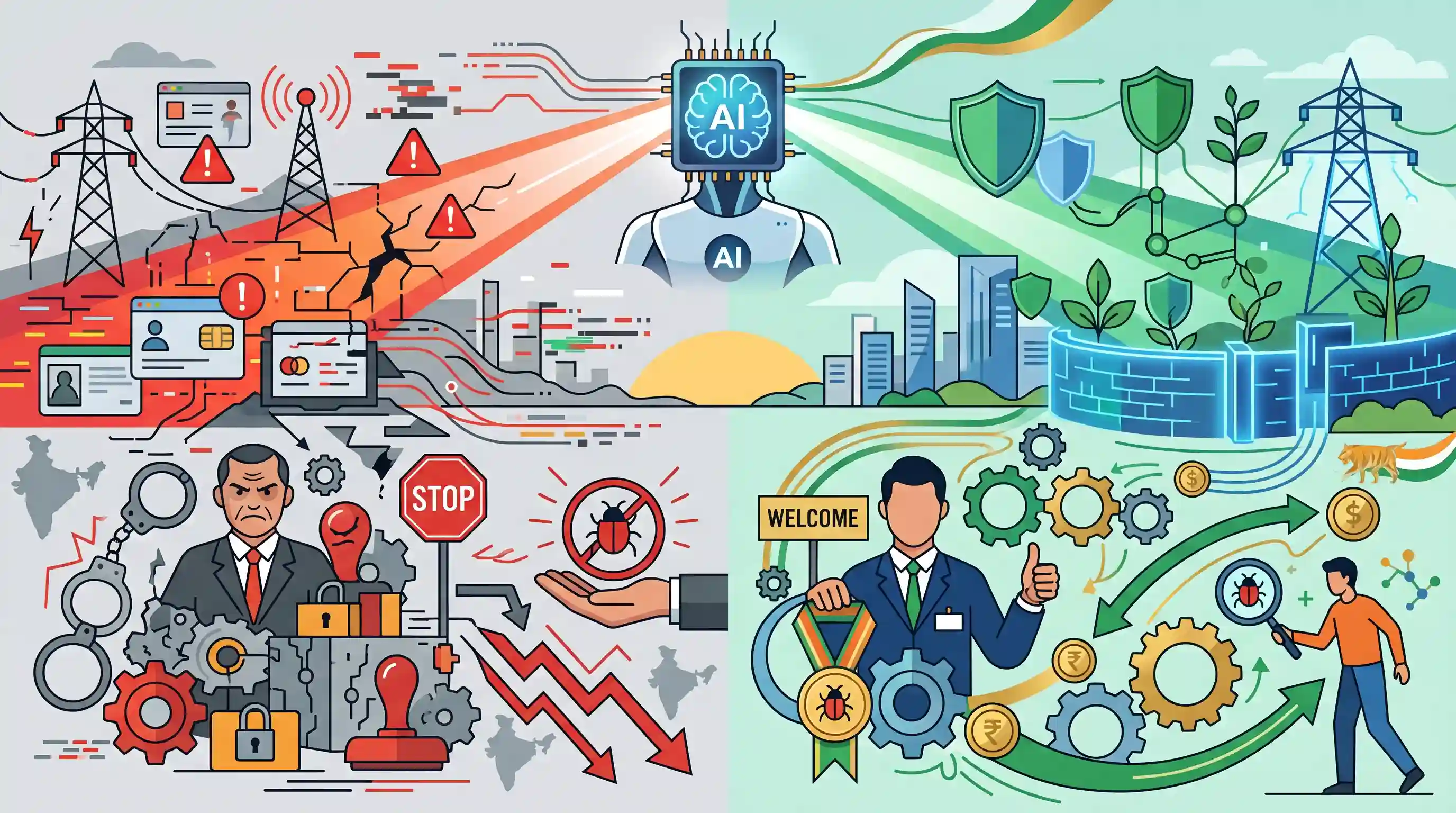
As AI becomes capable of both exploiting and patching vulnerabilities at an industrial scale, understanding its implications on national security, DPI, and the need to overhaul cyber legal frameworks (like CERT-In rules) is highly relevant for GS Paper 3 (Cybersecurity and Technology).
Summary
The article evaluates the cybersecurity implications of Anthropic's new AI model, Claude Mythos, which possesses unprecedented capabilities in identifying software vulnerabilities. Recognizing the dual-use nature of advanced AI, the authors stress that while these capabilities threaten critical infrastructure globally, they also offer tools for robust defense. To prepare for the 'Mythos Era', India must proactively assess the security of its Digital Public Infrastructure (DPI), power, and telecom sectors. The authors advocate for an urgent overhaul of India's cyber legal framework, suggesting that rigid CERT-In reporting mandates and Section 79 Safe Harbour provisions be updated to incentivize proactive vulnerability discovery and remediation, rather than penalizing it.
Key Points
- Anthropic's new AI model, 'Claude Mythos', has shown unprecedented capabilities in identifying and exploiting software vulnerabilities across major platforms.
- Access to the model is heavily restricted and distributed through 'Project Glasswing', a US defence cybersecurity initiative, highlighting its dual-use and supply chain risks.
- India's Digital Public Infrastructure (DPI) and critical sectors (power, telecoms, financial platforms) must urgently assess and build resilience against AI-powered cybersecurity threats.
- The Indian legal framework needs urgent reform: rigid 6-hour CERT-In reporting mandates and conditional Section 79 Safe Harbour rules must shift from penalizing discovery to incentivizing AI-driven remediation.
- Capacity building at institutions like CERT-In and the AI Safety Institute is vital to contextually manage the noise of AI-revealed digital gaps.
Important Terms
Section 79 of Information Technology Act

A provision in India's IT Act, 2000, that grants 'safe harbour' protection to intermediaries, shielding them from liability for user-generated content provided they follow government-mandated due diligence.
UPSC context
GS Paper 2 & 3; crucial for understanding digital intermediary liability, free speech, and the regulatory environment for tech platforms.
CERT-In
The national nodal agency under the Ministry of Electronics and Information Technology (MeitY) responsible for responding to cybersecurity incidents, issuing alerts, and coordinating emergency response measures across India.
UPSC context
GS Paper 3; fundamental for topics on internal security, cybersecurity infrastructure, and institutional frameworks for protecting critical digital assets.
Project Glasswing
Anthropic's controlled-access initiative that provides vetted critical infrastructure partners and security researchers with early access to the Claude Mythos model for defensive cybersecurity and vulnerability remediation.
UPSC context
GS Paper 3; relevant for emerging trends in AI-driven cybersecurity and the 'dual-use' challenge of frontier AI models.
AI Safety Institute
State-backed organizations (e.g., UK, USA, and India's IndiaAI Safety Institute) established to evaluate the safety, ethical risks, and security implications of advanced 'frontier' AI models.
UPSC context
GS Paper 2 & 3; important for global AI governance, international safety standards, and India's national AI strategy.
Trusted Access for Cyber programme
OpenAI's identity-based framework that provides verified cyber defenders with tiered access to advanced AI models (like GPT-5.4-Cyber) specifically for defensive security tasks while mitigating misuse.
UPSC context
GS Paper 3; tests knowledge of international private-sector initiatives in managing AI security risks compared to regulatory frameworks.
Anthropic
An American AI safety and research company that developed the Claude model series; known for prioritizing 'Constitutional AI' and developing models with advanced cybersecurity reasoning capabilities.
UPSC context
GS Paper 3; context for the development of 'frontier' AI and its impact on technological sovereignty and security.
Prelims Trap
Intermediaries enjoy absolute legal immunity from user-generated content under Section 79 of the IT Act.
Section 79 provides conditional, not absolute, Safe Harbour. Immunity applies only if the platform acts as a neutral host and follows due diligence under the IT Rules.
Static Concepts Connected
What are the key statutory provisions for Critical Information Infrastructure (CII) in India?
- Section 70 (IT Act): Defines CII as a computer resource whose incapacitation severely impacts national security, economy, public health, or safety.
- NCIIPC: Designated under Section 70A as the nodal agency specifically for protecting Critical Information Infrastructure.
- CERT-In: Operationalized under Section 70B as the national nodal agency for general cyber security incident response (distinct from NCIIPC).
How does the Safe Harbour principle apply to digital intermediaries in India?
- Conditional Immunity: Grants intermediaries protection against legal liability for third-party data or communication hosted on their platforms.
- Neutral Host: Protection is strictly contingent on the intermediary not initiating, selecting the receiver, or modifying the transmission.
- Revocation clauses: Immunity is revoked if the platform fails to observe due diligence or ignores lawful government/court takedown orders.
Cross-Topic Patterns
DPI vulnerabilities + Sovereign AI push
Securing India's Digital Public Infrastructure (UPI, Aadhaar) against foreign frontier AI models necessitates robust 'Sovereign AI' capacity, directly linking GS-3 tech security to India's digital diplomacy.
Cyber Laws vs. AI velocity
The rigid 6-hour CERT-In reporting mandate penalizes proactive 'red-teaming' (ethical hacking) by AI, exposing a critical regulatory gap between static cyber laws and dynamic AI vulnerability discovery.

Dual-use AI vulnerabilities + CERT-In reporting mandates + IT Act Section 70 will likely form a composite 2026 Prelims question.
Linked PYQs · 3
Linked PYQs · 3
- 2020MainsGS3
Discuss different types of cyber crimes and measures required to be taken to fight the menace.
- 2017MainsGS3
Discuss the potential threats of Cyber attack and the security framework to prevent it.
- 2023MainsGS3
Introduce the concept of Artificial Intelligence (AI). How does Al help clinical diagnosis? Do you perceive any threat to privacy of the individual in the use of Al in healthcare?
