Tamil Nadu Political Realignment and Regional Alliances
Source:Indian Express ↗
Why It Matters
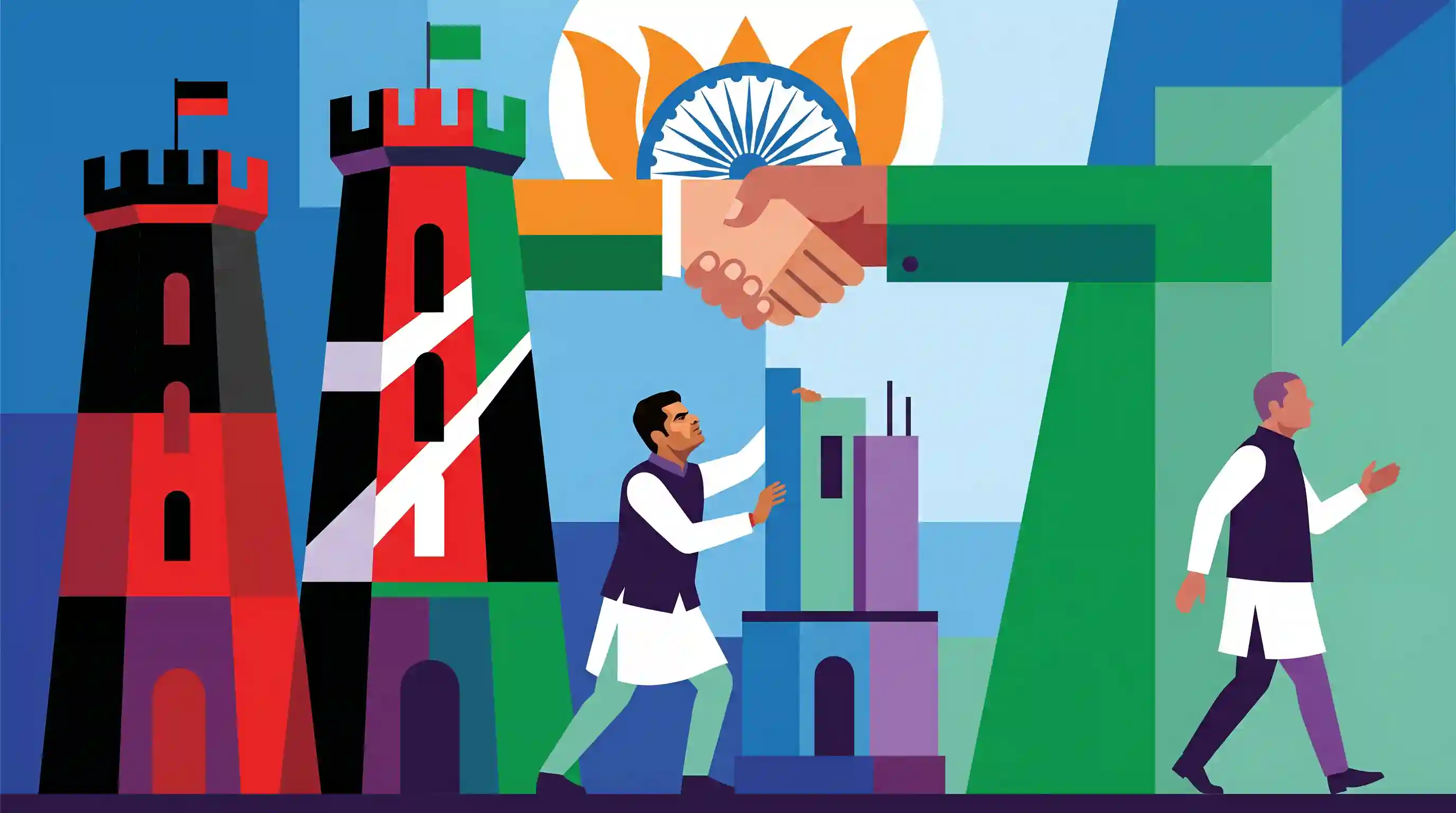
The episode illustrates the complex interplay between national party ambitions and regional realpolitik. It is a compelling case study of the challenges faced by civil servants transitioning to politics, where ideological rigidity often clashes with the pragmatic compromises required in coalition politics.
Summary
K Annamalai's resignation from the BJP marks the end of his attempt to establish the party as an independent alternative to the entrenched Dravidian parties (DMK and AIADMK) in Tamil Nadu. A former IPS officer who entered politics to enact systemic change, Annamalai strongly opposed aligning with regional powers. However, the BJP central leadership's pragmatic decision to revive its alliance with the AIADMK sidelined his ideological stance, ultimately leading to his departure. His political trajectory highlights the broader tension between national parties' ambitions for autonomous growth and the realpolitik necessity of regional alliances.
Key Points
- Former IPS officer K Annamalai resigned from the BJP after being sidelined due to the central leadership's decision to revive its alliance with the AIADMK.
- Annamalai sought to establish the BJP as an independent alternative to Tamil Nadu's dominant Dravidian parties, strongly opposing any alliance with them.
- His aggressive, anti-Dravidian ideological stance alienated regional allies like AIADMK leader Edappadi K Palaniswami.
- The BJP central leadership prioritized realpolitik and electoral pragmatism over Annamalai's long-term goal of autonomous growth in the state.
- The political rise of actor C Joseph Vijay suggests that Annamalai's belief in the existence of political space for a non-Dravidian alternative may be accurate.
Important Terms
Dravidian Politics

A political movement centered on South Indian identity, advocating for social equality, linguistic pride, and regional autonomy while opposing perceived Northern or 'Aryan' cultural hegemony.
UPSC context
GS II: Regionalism. Tests understanding of identity-based movements and their impact on Indian federalism.
Bharatiya Janata Party (BJP)
The world's largest political party by membership, it advocates for a centralized national identity and 'Hindutva,' currently seeking to expand into historically regionalist Southern states.
UPSC context
GS II: Political Parties. Tests knowledge of national party expansion strategies and center-state political tensions.
All India Anna Dravida Munnetra Kazhagam (AIADMK)
A major regional party in Tamil Nadu founded in 1972 by M.G. Ramachandran; it emphasizes welfare-centric governance and often serves as a pragmatic ally for national parties.
UPSC context
GS II: Regional Parties. Tests understanding of alliance politics and the 'third pole' theory in state elections.
Dravida Munnetra Kazhagam (DMK)
The ruling party in Tamil Nadu (as of 2026), rooted in the self-respect movement; it champions state rights, social justice, and the preservation of Tamil culture.
UPSC context
GS II: Federalism. Tests the role of regional parties in balancing national authority and local aspirations.
Indian Police Service (IPS)
One of India's three All India Services (Art 312), responsible for public order and security; its members' transition to politics highlights debates on civil service neutrality.
UPSC context
GS II: Civil Services. Tests awareness of administrative backgrounds in political leadership and post-retirement conduct.
Rashtriya Swayamsevak Sangh (RSS)
A right-wing volunteer organization and the ideological mentor of the BJP; it focuses on cultural nationalism and provides a grassroots organizational framework for the party.
UPSC context
GS II: Pressure Groups. Tests the influence of ideological organizations on mainstream political policy and governance.
Prelims Trap
Bureaucrats must serve a mandatory one-year 'cooling-off' period before joining any political party.
The 1-year cooling-off rule applies strictly to commercial employment post-retirement. The Election Commission's recommendation for a political cooling-off period remains unlegislated.
Static Concepts Connected
Why is the political entry of former civil servants ethically debated?
- Non-partisanship: Undermines the core value of bureaucratic neutrality, raising doubts about an officer's impartiality and unbiased decision-making during their active service tenure.
- Quid Pro Quo: Creates risks of officers favoring specific political entities or ministers while in power to secure lucrative post-retirement electoral tickets.
- Trust Deficit: Erodes public confidence in the permanent executive's structural independence from the ruling political dispensation.
How does regional party dominance constrain national party expansion?
- Realpolitik dilemmas: National parties often sacrifice independent state-level ideological growth to form pragmatic alliances with entrenched regional players, driven by Lok Sabha electoral arithmetic.
- Cultural sub-nationalism: Deep-rooted linguistic and regional identities act as a formidable barrier to the unitary, centralized political messaging often employed by national parties.
Cross-Topic Patterns
Bureaucratic neutrality and RPA reforms
The swift transition of civil servants to active politics blends GS4 ethics (non-partisanship) with GS2 polity (Election Commission's push to amend the Representation of the People Act for cooling-off periods).
Intra-party federalism vs High Command
Showcases the tension in Indian party structures where centralized high-command decisions overrule state-unit leadership, prioritizing national coalition arithmetic over independent regional party-building.

A GS2 Mains question on the Election Commission's proposed cooling-off period for bureaucrats entering politics is highly probable.
Linked PYQs · 2
Linked PYQs · 2
- 2022MainsGS2
“While the national political parties in India favour centralisation, the regional parties are in favour of State autonomy.” Comment.
- 2021MainsGS4
Should impartial and being non-partisan be considered as indispensable qualities to make a successful civil servant? Discuss with illustrations.
