Undavalli Caves Host Telugu Mahotsavam Cultural Event
Source:The Hindu ↗
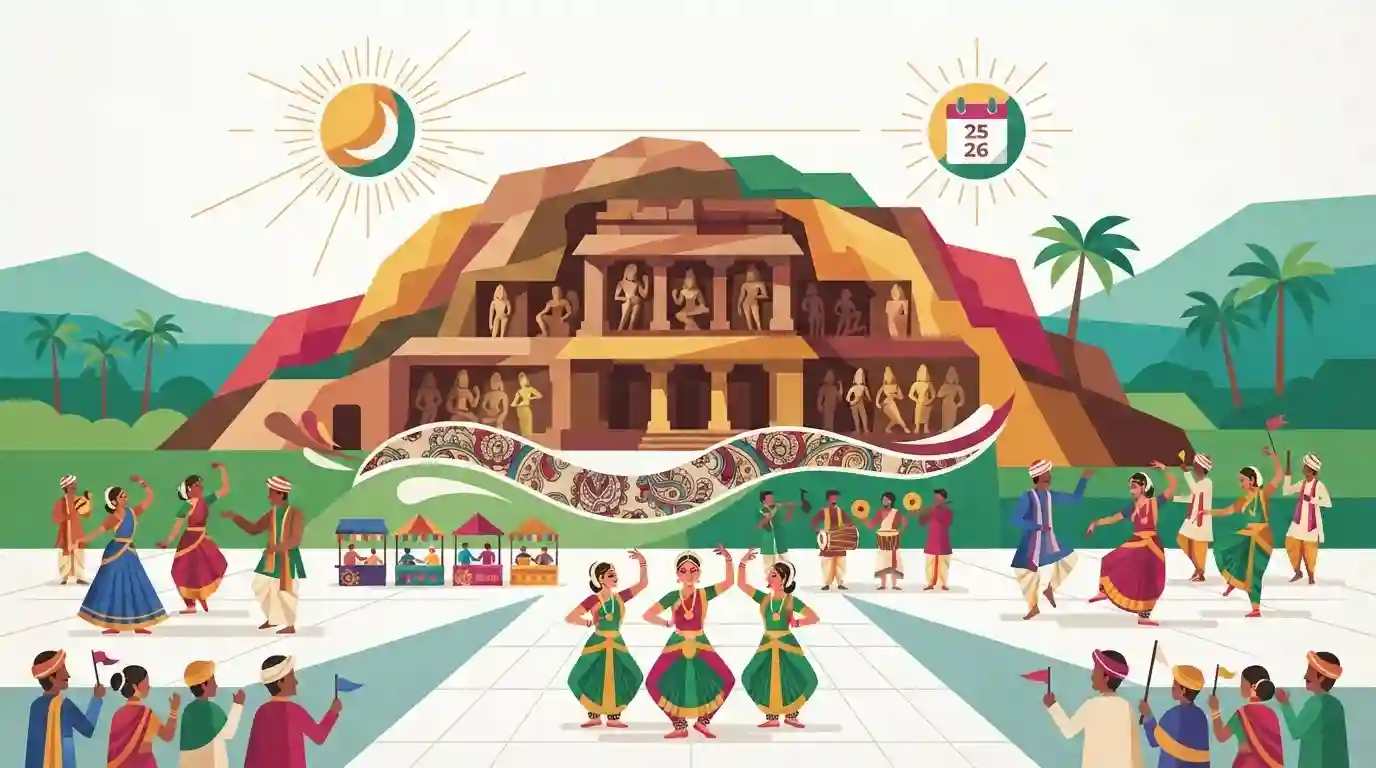
Why It Matters
Highly relevant for APPSC Group 1 Prelims as it integrates Andhra Pradesh's historical sites (Undavalli Caves - rock-cut architecture) with state-sponsored cultural promotion (Telugu language and arts). Questions frequently appear on classical languages and significant cultural/historical sites of AP.
Summary
The Government of Andhra Pradesh is set to host the 'Telugu Mahotsavam', a two-day cultural festival on July 25 and 26 at the historic Undavalli Caves near Mangalagiri. Initiated by the State Cultural and Creative Committee, the festival aims to celebrate the richness of the Telugu language, showcase traditional, folk, and classical art forms, and instill a sense of cultural pride among the youth.
Key Points
- The Andhra Pradesh government is organising a two-day 'Telugu Mahotsavam' at the Undavalli Caves in Guntur district on July 25 and 26.
- The festival aims to preserve and promote the richness of the Telugu language, its cultural heritage, and artistic traditions.
- The event is designed to rekindle pride in the Telugu language among the youth and provide a platform for artists.
- It will feature a variety of literary, traditional, folk, and classical art performances to educate younger generations on their roots.
Important Terms
Undavalli Caves

Monolithic 4th-5th century CE rock-cut caves in Andhra Pradesh's Guntur district. Carved from sandstone under the Vishnukundina dynasty, they represent a transition from Buddhist/Jain monastic cells to Vaishnavite Hindu temples.
UPSC context
GS Paper I: Art & Culture. Tests knowledge of Indian rock-cut architecture, regional dynasties, and ancient religious transformations.
Classical Languages of India
A prestigious status given by the Indian Government to ancient, independent languages with rich, original literary traditions. Currently, 11 languages hold this status, with Telugu designated in 2008.
UPSC context
GS Paper I: Art & Culture. Tests linguistic history, criteria for classical status, and government promotional benefits.
Telugu Mahotsavam
A state-level cultural and linguistic festival organized by the Government of Andhra Pradesh to showcase, preserve, and promote the rich heritage, literature, and folk art forms of the classical Telugu language.
UPSC context
GS Paper I & AP PSC: Art & Culture. Tests regional state-sponsored cultural initiatives and language preservation efforts.
Department of Language and Culture (Andhra Pradesh)
Formed in 1981, this state department preserves, fosters, and propagates the Telugu language, regional dialects, classical dances like Kuchipudi, and folk arts through specialized academies and welfare assistance to artists.
UPSC context
GS Paper I & II: Art & Culture and Governance. Tests regional cultural conservation policies and linguistic developmental governance.
Andhra Pradesh State Creativity and Culture Commission
Reconstituted in 2016, this state-level statutory body plans, organizes, and promotes cultural heritage, fine arts, and traditional performance crafts across Andhra Pradesh, coordinating cultural festivals and artist welfare.
UPSC context
GS Paper II & AP PSC: Governance. Tests regional cultural institutional frameworks, state-sponsored heritage conservation, and artist support.
Department of Tourism (Andhra Pradesh)
The administrative body tasked with promoting, planning, and executing tourism policies, infrastructure development, and marketing campaigns to position Andhra Pradesh as a premier sustainable travel destination.
UPSC context
GS Paper III & AP PSC: Economic Development. Tests state tourism strategies, infrastructure models, and tourism's economic contribution.
Prelims Trap
Undavalli Caves were conceived and built exclusively as Brahmanical cave temples under the patronage of the Vishnukundins.
While the Vishnukundins constructed/adapted Undavalli for Hindu worship (notably the reclining Vishnu), the caves were not Hindu from inception; they were initially excavated as Buddhist viharas. UPSC often tests this sequential evolution.
Static Concepts Connected
What are the criteria and current list of Classical Languages in India?
- Antiquity Criteria: High antiquity of early texts/recorded history spanning a period of 1,500 to 2,000 years.
- Literary Heritage: A body of ancient literature/texts considered a valuable heritage by generations of speakers.
- Originality: The literary tradition must be original and not borrowed from another speech community.
- Current Status: There are 11 languages: Tamil, Sanskrit, Kannada, Telugu, Malayalam, Odia, and the 2024 additions: Marathi, Pali, Prakrit, Assamese, and Bengali.
What is the historical and architectural significance of the Vishnukundin Dynasty?
- Chronology & Region: Ruled parts of the Deccan (Andhra Pradesh, Telangana) from the mid-4th to early 7th centuries CE.
- Architectural Legacy: Pioneered rock-cut cave temple architecture in Andhra Pradesh, laying the foundation for later Dravidian temple styles.
- Religious Leanings: Though patrons of Brahmanical Hinduism (specifically Vaishnavism), they initially tolerated and adapted older Buddhist monastic sites.
Cross-Topic Patterns
Cave architecture as sites of religious transition
Many Deccan cave complexes (e.g., Undavalli, Ellora) physically document the socio-religious shift from early Buddhist monasticism to the resurgence of Hindu puranic sects.
Deccan river valleys as civilizational corridors
The concentrated cluster of monuments along the Krishna River (Amaravati, Nagarjunakonda, Undavalli) shows how riverine trade networks sustained diverse religious patronage in ancient Andhra.

Undavalli's Buddhist-to-Hindu architectural shift and Vishnukundin patronage are ripe for a multi-statement architectural question in 2026.
Linked PYQs · 2
Linked PYQs · 2
- 2024APPSC_PRELIMSGS1
In the Satavahana's inscriptions, the terms 'Katakas' and 'Skandhavaras' mean
- 2012APPSC_PRELIMSGS1
The Central Government has so far accorded classical language status to
