NTPC Issues EPC Tender for 1 GW Solar Project in Kambadur
Source:saurenergy ↗
Why It Matters
The establishment of a 1 GW solar project in Andhra Pradesh highlights the state's strategic role in India's renewable energy transition and infrastructure growth, making it highly relevant for questions on state-specific economic development and clean energy policies.
Summary
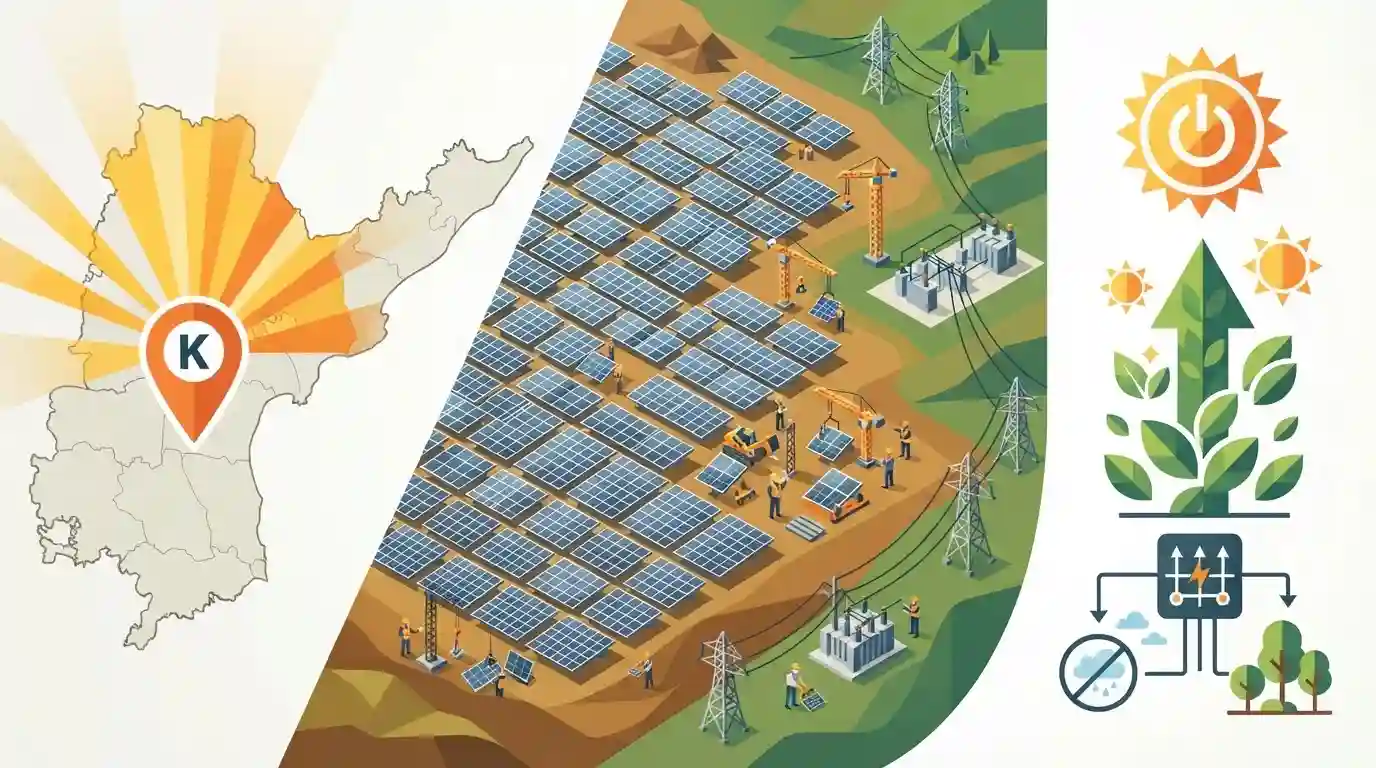
NTPC Renewable Energy Limited (NTPC REL) has floated an Engineering, Procurement, and Construction (EPC) tender for a 1 GW solar power plant in Kambadur, Anantapur district, Andhra Pradesh. The project is a major milestone for clean energy expansion in the state, leveraging the region's solar potential and supporting India's national climate and renewable goals.
Key Points
- NTPC Renewable Energy Limited (NTPC REL) has issued an EPC tender for a massive 1 GW solar power project located in Kambadur, Anantapur district, Andhra Pradesh.
- This project marks a significant boost to Andhra Pradesh's renewable energy capacity and green infrastructure development.
- Kambadur and surrounding areas in Anantapur possess high solar irradiance, making them prime locations for utility-scale solar parks.
- The tender underscores India's push towards achieving its 500 GW non-fossil fuel energy capacity target by 2030, with major public sector undertakings like NTPC leading the transition.
Prelims Trap
NTPC Renewable Energy Limited is the nodal agency for renewable energy promotion in Andhra Pradesh.
Aspirants may confuse NTPC REL (a subsidiary of NTPC Green Energy) with state-level NREDCAP, though NREDCAP is the nodal agency for RE promotion in AP.
Static Concepts Connected
What are the key institutional mechanisms and policies for Renewable Energy development in Andhra Pradesh?
- State Nodal Agency: NREDCAP serves as the state nodal agency for promoting wind, solar, and biomass energy projects across AP.
- Geographical Advantage: Rayalaseema districts (Anantapur, Kurnool, Kadapa) possess high solar irradiance and vast arid lands ideal for ultra-mega solar parks.
- Green Policy 2023: The AP Green Hydrogen and Green Ammonia Policy 2023 incentivizes green energy production using renewable sources like solar and wind.
Cross-Topic Patterns
Rayalaseema Solar Hubs & Industrial Policies
Rayalaseema's high solar irradiance makes it a focal point for green energy investments, merging industrial corridor planning with decentralized district-level decarbonization under state policies.

Anantapur solar projects + AP RE policy targets will likely be tested via multi-statement or match-the-following questions.
Linked PYQs · 2
Linked PYQs · 2
- 2024APPSC_PRELIMSGS1
Which of the following statements are valid in connection with Andhra Pradesh Green Hydrogen and Green Ammonia Policy (2023)? I. The objective is to target Green Energy production up to the capacity of 1 MPTA (Million Tonnes Per Annum) or Green Ammonia production up to the capacity of 2-0 MTPA in the next five years. II. New and Renewable Energy Development Corporation of A.P. Ltd (NREDCAP) shall act as a Nodal Agency under this policy. III. All the Ports in the State have infrastructure for storing liquid nitrogen which can then be utilized for storing Green Hydrogen for exporting to other countries. IV. The Policy prohibits the production of Green Hydrogen/Green Ammonia by using Renewable Energy and/or Biomass from 'Third-Party/Power exchange'. Select the correct answer using the codes given below :
- 2024APPSC_PRELIMSGS1
Which of the following statement/statements is/are incorrect regarding the Andhra Pradesh Industrial Policy 2023 - 27? I. To achieve a minimum contribution of 25% by industry in the State GDP II. To provide end-to-end facilitation in 2 weeks III. To envisage ten (10) priorities of accomplishment IV. To focus on becoming a 'Plug and Play State' for investments V. Ensuring land allotment by APIIC within a period of 2 weeks upon receipt of application Select the answer using the codes given below :
