Andhra Pradesh firecracker unit industrial safety lapses and blast
Source:The Hindu ↗
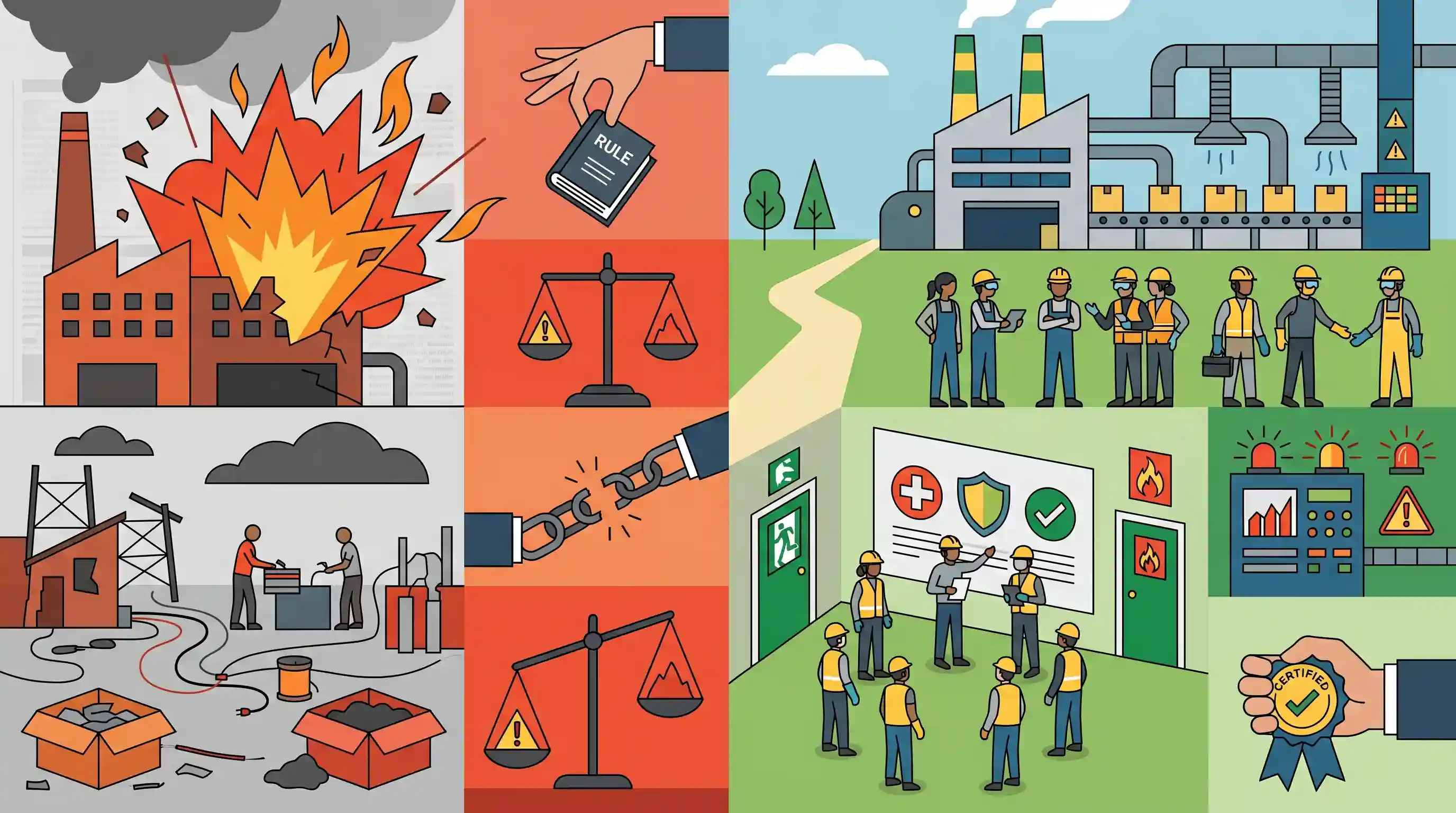
Why It Matters
Frequent industrial accidents in the firecracker sector expose crucial gaps in disaster management and occupational safety enforcement. For civil servants, this highlights the necessity of strict regulatory compliance, hazard vulnerability assessment, and the protection of marginalized workers in the unorganized sector.
Summary
A tragic blast at a firecracker unit in Andhra Pradesh has once again highlighted the perilous working conditions and severe safety lapses in hazardous manufacturing sectors. The flash fire caused significant casualties, underscoring the gap between the existence of regulations like the Explosives Act and their actual enforcement on the ground. Such recurrent industrial disasters heavily impact unorganized sector workers, pointing to an urgent need for enhanced occupational health and safety standards, stringent disaster preparedness, and proactive hazard mitigation strategies to protect vulnerable populations.
Key Points
- A devastating flash fire and explosion at a firecracker manufacturing unit in Andhra Pradesh resulted in severe casualties and injuries.
- The incident exposes systemic lapses in enforcing industrial safety norms and the Explosives Act within hazardous, often informal, manufacturing units.
- Highlights the acute vulnerability of unorganized sector workers who are frequently employed in high-risk environments with inadequate occupational safety protocols.
- Underscores the urgent need for stringent disaster preparedness, regular compliance audits, and hazard zonation to prevent recurrent industrial disasters.
Important Terms
Explosives Act, 1884

A colonial-era legislation regulating the manufacture, storage, and transport of explosives. It empowers the Central Government to set safety standards to prevent industrial accidents and mitigate public risk.
UPSC context
GS Paper 2 & 3: Regulatory frameworks for hazardous substances and disaster management protocols.
Factories Act, 1948
A foundational post-independence law regulating working conditions, health, and safety in industrial premises. It defines legal responsibilities for factory "occupiers" regarding worker welfare and hazard prevention.
UPSC context
GS Paper 2 & 3: Social justice, labor rights, and industrial safety standards.
Petroleum and Explosives Safety Organization (PESO)
A statutory body under the Ministry of Commerce and Industry that serves as the nodal agency for regulating the safety of explosives, petroleum, and compressed gases.
UPSC context
GS Paper 2 & 3: Statutory bodies and their role in disaster mitigation and internal security.
Occupational Safety, Health and Working Conditions (OSH) Code, 2020
A modern legislative framework that consolidates 13 central labor laws, including the Factories Act. It aims to unify safety, health, and welfare standards across diverse sectors.
UPSC context
GS Paper 2 & 3: Modern labor reforms and balancing worker rights with industrial growth.
Unorganized Sector
Economic activities characterized by small, unregistered units with irregular employment terms. Workers here often lack social security, making them highly vulnerable during industrial disasters.
UPSC context
GS Paper 3: Employment, informal economy challenges, and social security coverage.
Hazard Mitigation
Proactive strategies designed to reduce or eliminate the risk to life and property from hazards. It involves safety audits, standard operating procedures (SOPs), and improved infrastructure.
UPSC context
GS Paper 3: Disaster Management; focusing on preventive measures for man-made disasters.
Prelims Trap
"The Petroleum and Explosives Safety Organisation (PESO) regulates explosives under the Ministry of Home Affairs."
PESO functions under the Department for Promotion of Industry and Internal Trade (DPIIT) within the Ministry of Commerce and Industry, not MHA.
Static Concepts Connected
What is the mandate and nodal ministry of PESO?
- Nodal Ministry: Functions under the DPIIT, Ministry of Commerce and Industry, not the Ministry of Home Affairs or MoEFCC.
- Statutory Backing: Administers the Explosives Act 1884 and Petroleum Act 1934 to regulate the manufacture, transport, and storage of hazardous substances.
- Headquarters: Headquartered in Nagpur, Maharashtra, with testing stations and circle offices across India.
How does the OSHWC Code 2020 address unorganized hazardous units?
- Law Consolidation: Consolidates 13 central labour laws, including the Factories Act, 1948, into a unified code.
- Micro-unit Coverage: Empowers the government to extend strict safety rules to any establishment engaged in hazardous work, even if it employs only one worker.
- Employer Liability: Shifts the burden of ensuring a hazard-free work environment strictly onto the employer, along with mandating annual health check-ups.
Cross-Topic Patterns
Industrial Safety + Article 24 (Child Labour)
Firecracker manufacturing heavily involves informal labor and historically features child labour, directly invoking Article 24 (prohibition of employment of children in factories/hazardous work).
Explosives Act + Public Liability Insurance
Victim compensation for hazardous industrial accidents is linked to the Public Liability Insurance Act, 1991, which mandates insurance for handlers of hazardous substances.

Questions on statutory bodies regulating hazardous industries (PESO, AERB) and their ministries often appear as pair-matching in prelims.
Linked PYQs · 3
Linked PYQs · 3
- 2019MainsGS3
Vulnerability is an essential element for defining disaster impacts and its threat to people. How and in what ways can vulnerability to disasters be characterized? Discuss different types of vulnerability with reference to disasters.
- 2019MainsGS3
Disaster preparedness is the first step in any disaster management process. Explain how hazard zonation mapping will help disaster mitigation in the case of landslides.
- 2019MainsGS2
Performance of welfare schemes that are implemented for vulnerable sections is not so effective due to absence of their awareness and active involvement at all stages of policy process. Discuss.
