Digital age transforms anaesthesia into intelligent personalised care
Source:The Hindu ↗
Why It Matters
Highlights the profound impact of emerging digital technologies (AI, ML, automation) on critical medical practices, directly linking to UPSC GS3 themes of S&T applications in everyday life and healthcare improvements.
Summary
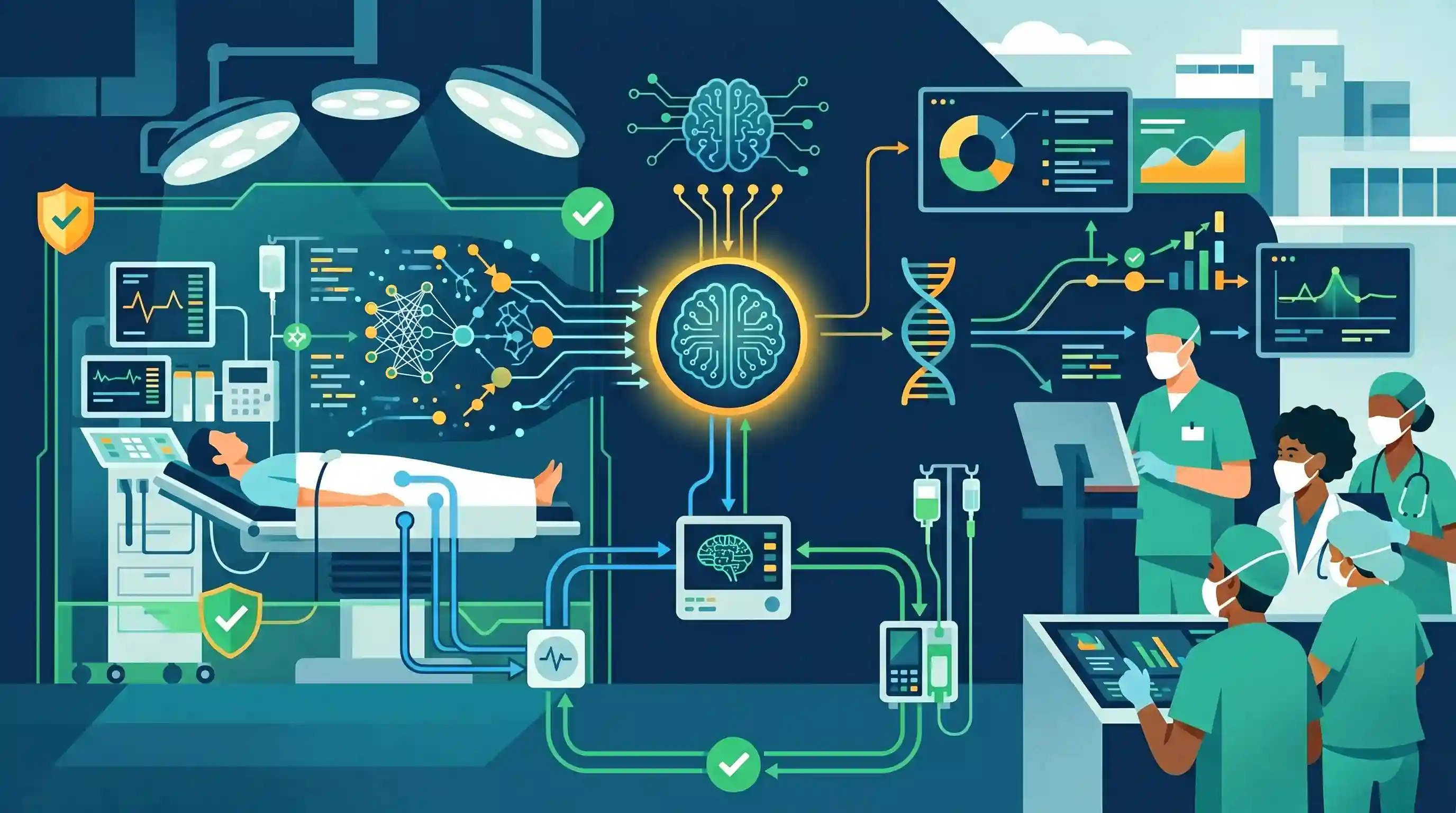
The article highlights the transformative evolution of anaesthesia from a rudimentary practice into a sophisticated, technology-driven field. Driven by the digital age, modern anaesthesiology increasingly integrates Artificial Intelligence (AI), Machine Learning (ML), and continuous digital monitoring to enhance patient safety. These emerging technologies enable a shift toward precision medicine, where advanced tools like closed-loop delivery systems and pharmacogenomics allow anaesthesiologists to tailor drug administration precisely to individual patient profiles, ensuring intelligent and highly personalized perioperative care.
Key Points
- Historical Evolution: Anaesthesia has evolved from traditional, generalized methods of inducing sleep to a highly precise and technologically advanced medical specialty.
- AI and Machine Learning Integration: The incorporation of AI and ML allows for the real-time analysis of large datasets (such as continuous vital signs), enabling predictive analytics and enhancing the safety of anaesthetic delivery.
- Personalised Care and Precision Medicine: Through pharmacogenomics and targeted data, anaesthetic dosages can now be customized to an individual's unique genetic and physiological profile, reducing the risk of adverse reactions.
- Automated Delivery Systems: The development of advanced closed-loop anaesthesia delivery systems (often referred to as robotic anaesthesia) allows for dynamic, automated adjustment of drug infusions based on real-time patient feedback.
- Enhanced Patient Safety: The transition to intelligent, digital monitoring empowers anaesthesiologists to preemptively identify and manage potential complications during surgical procedures.
Prelims Trap
"AI-based closed-loop delivery systems completely eliminate the need for human anaesthesiologists by autonomously managing drug infusions."
UPSC frequently uses absolute terms like "completely eliminate" as traps. Closed-loop systems automate and adjust dosages dynamically but strictly require human oversight for safety.
Static Concepts Connected
What is Pharmacogenomics and how does it enable Precision Medicine?
- Definition: It is the study of how an individual's genetic makeup affects their response to specific drugs.
- Application: It customizes drug dosages (like anaesthetics) to maximize efficacy and minimize adverse reactions based on genetic profiling.
- Precision Medicine: It shifts healthcare from a generalized "one-size-fits-all" approach to treatments tailored to an individual's genes, lifestyle, and environment.
What are the key principles of ICMR's Ethical Guidelines for AI in Healthcare?
- Human Autonomy: Ensures human oversight remains paramount; AI acts as an assistive tool but does not replace the physician's final decision.
- Data Privacy: Mandates strict data anonymization and protection for sensitive patient health records used to train algorithms.
- Accountability: Medical professionals and institutions, not the AI algorithms themselves, bear ultimate responsibility for patient care outcomes.
Cross-Topic Patterns
AI Healthcare & DPDP Act 2023
Real-time continuous monitoring and predictive analytics rely on vast datasets of patient vitals, directly intersecting with the strict health-data processing norms under the DPDP Act 2023.
Pharmacogenomics & Genome India Project
The success of pharmacogenomics and precision medicine in India heavily depends on the Genome India Project, which maps diverse genetic pools to create accurate, region-specific drug-response algorithms.

Expect a multi-statement Prelims 2026 question linking pharmacogenomics, closed-loop medical AI, and ICMR ethical guidelines for healthcare.
Linked PYQs · 2
Linked PYQs · 2
- 2023MainsGS3
Introduce the concept of Artificial Intelligence (AI). How does Al help clinical diagnosis? Do you perceive any threat to privacy of the individual in the use of Al in healthcare?
- 2024PrelimsGS1
Consider the following statements: I. It is expected that Majorana 1 chip will enable quantum computing. II. Majorana 1 chip has been introduced by Amazon Web Services (AWS). III. Deep learning is a subset of machine learning. Which of the statements given above are correct?
