India US Talks on Sanctions Laws and Strategic Autonomy
Source:The Hindu ↗
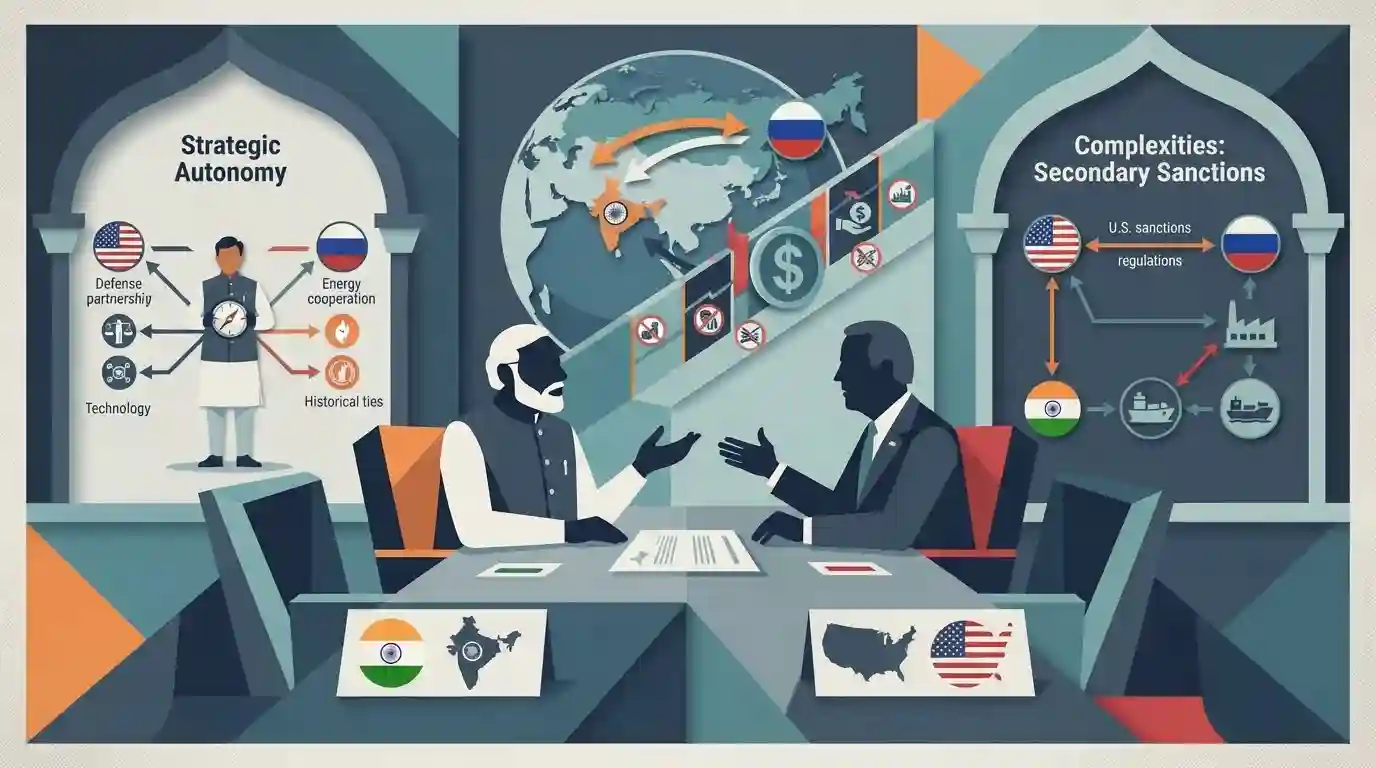
Why It Matters
This article illustrates the diplomatic challenges India faces in balancing its strategic partnership with the United States against its long-standing defense and economic ties with Russia, especially in the context of unilateral U.S. sanctions regimes.
Summary
India's Foreign Secretary met with a U.S. delegation to discuss concerns arising from U.S. sanctions laws targeting Russia. The meeting highlights the complexities in India-U.S. relations regarding secondary sanctions and India's commitment to strategic autonomy in handling ties with traditional partners like Russia.
Key Points
- The Foreign Secretary of India held discussions with a visiting U.S. delegation amid growing concerns regarding U.S. sanctions laws affecting bilateral economic and strategic interests, particularly concerning relations with Russia.
- The talks focused on navigating secondary sanctions, defense and energy cooperation, and maintaining strategic autonomy in India's foreign policy framework.
- The engagement underscores the diplomatic balancing act India must maintain while managing its traditional partnership with Russia and its expanding comprehensive global strategic partnership with the United States.
Important Terms
Russia sanctions law

U.S. legislative measures, such as CAATSA and secondary sanctions bills, designed to penalize countries engaging in significant trade or defense transactions with Russia.
UPSC context
GS Paper II (International Relations - India-U.S. Relations); tests understanding of secondary sanctions, strategic autonomy, and economic diplomacy.
Ministry of External Affairs
The premier government department responsible for executing India's foreign policy, conducting international diplomacy, and managing bilateral ties through the Indian Foreign Service.
UPSC context
GS Paper II (International Relations & Polity); tests the administrative machinery and institutional framework governing India's foreign affairs.
Prelims Trap
India is legally bound to comply with U.S. sanctions targeting third countries like Russia under international law obligations.
U.S. sanctions laws are domestic legislation, not multilateral UN Security Council resolutions. India is not legally bound by unilateral secondary sanctions under international law.
Static Concepts Connected
What is the difference between primary and secondary economic sanctions under international law?
- Primary Sanctions:: Direct prohibition on trade, financial transactions, or diplomatic engagement between the sanctioning state and the target state.
- Secondary Sanctions:: Penalties imposed by a sanctioning country on third-party non-nationals (such as Indian firms) for transacting with the primary target state.
- Extraterritorial Reach:: Unilateral secondary sanctions lack explicit backing from UN Security Council resolutions, making their extraterritorial enforcement a matter of domestic jurisdictional reach.
Cross-Topic Patterns
Strategic Autonomy vs. High-Tech Alliances
India's balancing act between U.S. technology partnerships like iCET and legacy Russian defense platforms illustrates the limits of non-alignment in high-tech supply chains.
Secondary Sanctions and Central Bank Settlements
U.S. secondary sanctions complicate India's rupee-ruble trade mechanisms, creating direct friction with RBI's international trade settlement framework and capital account convertibility goals.

Expect a statement-based question examining the legal basis of secondary sanctions vs. primary sanctions under international law.
Linked PYQs · 3
Linked PYQs · 3
- 2019MainsGS2
‘What introduces friction into the ties between India and the United States is that Washington is still unable to find for India a position in its global strategy, which would satisfy India's national self-esteem and ambitions.’ Explain with suitable examples.
- 2020MainsGS2
What is the significance of Indo-US defence deals over Indo-Russian defence deals? Discuss with reference to stability in the Indo-Pacific region.
- 2018MainsGS2
In what ways would the ongoing US-Iran Nuclear Pact Controversy affect the national interest of India? How should India respond to this situation?
