Rising political influence of Indian diaspora in American democracy
Source:The Hindu ↗
Why It Matters
Understanding the political rise of the Indian diaspora in the US is crucial for UPSC aspirants, as it directly impacts bilateral relations, soft power dynamics, and the formulation of US domestic policies that can affect Indian interests globally.
Summary
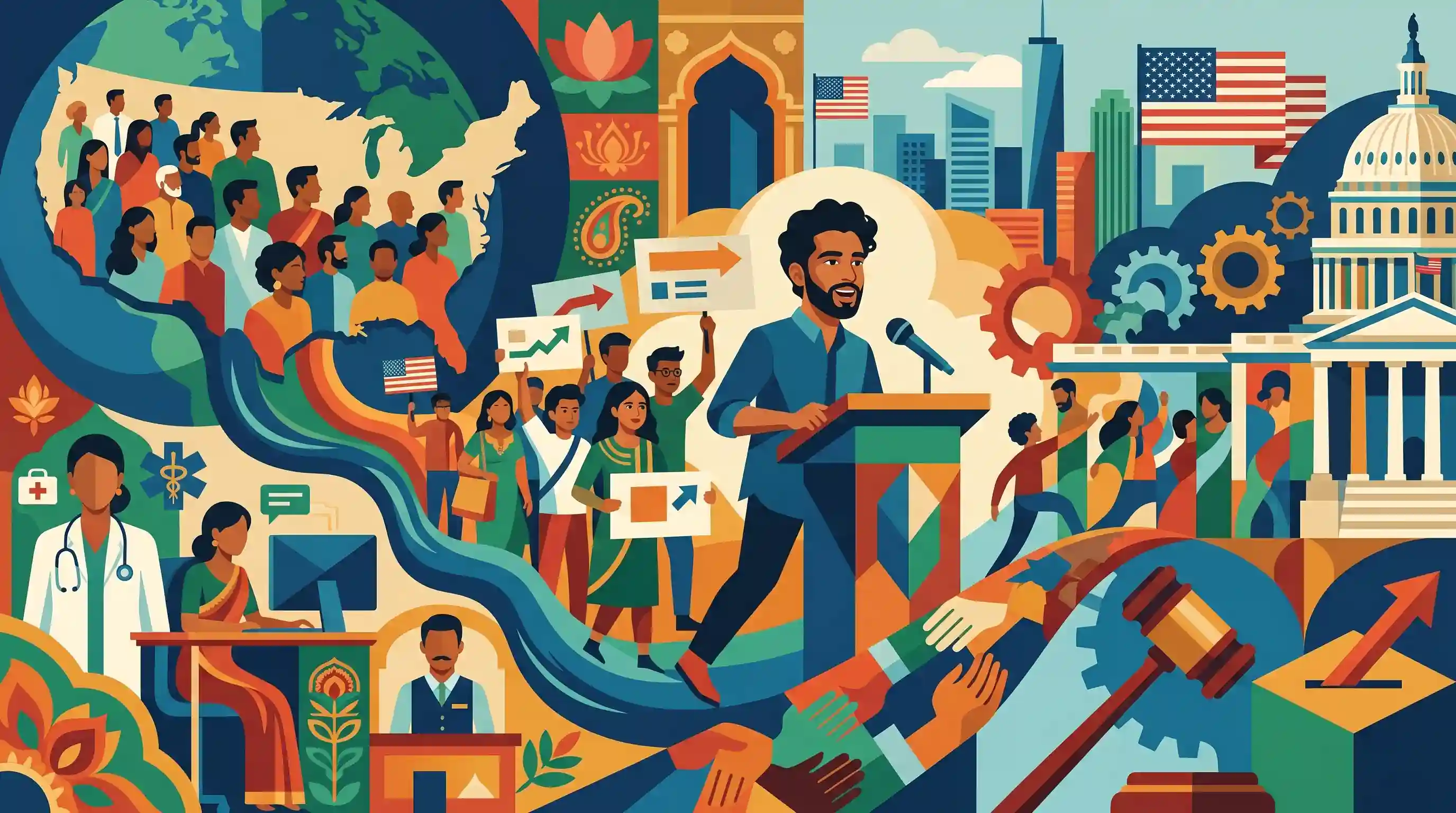
The article discusses the rising political prominence of figures like Zohran Mamdani in the United States, symbolizing the evolving and impactful role of the Indian diaspora in American politics. It highlights how young, progressive politicians from immigrant backgrounds are increasingly shaping policy debates and electoral dynamics, signifying a shift in the diaspora's influence from traditional economic spheres to active political representation. This "moment" underscores the deepening diversification of US democratic institutions and the potent role of progressive, grassroots political movements in modern American elections.
Key Points
- Highlights the rising political trajectory of progressive politicians like Zohran Mamdani in the United States.
- Underscores the evolving role of the Indian diaspora, transitioning from primarily economic contributions to active and significant political representation.
- Reflects the broader diversification of American democratic institutions, with younger candidates from minority and immigrant backgrounds gaining electoral traction.
- Showcases the impact of grassroots mobilization and progressive political platforms in urban American politics, particularly in diverse constituencies like New York.
Important Terms
Democratic Socialists of America (DSA)

A broad-based political organization in the U.S. that advocates for social ownership and democratic control of the economy while supporting progressive candidates within the existing electoral framework.
UPSC context
GS Paper II: Effect of policies/politics of developed countries. Tests understanding of ideological shifts in global politics affecting international relations.
Indian Diaspora
The community of persons of Indian origin living outside India. It serves as a bridge for cultural, economic, and political influence between India and their host countries.
UPSC context
GS Paper II: Significance of Indian Diaspora. Tests knowledge of the diaspora's role in shaping foreign policy and national interests.
Democratic Socialism
A political ideology that combines democratic principles with a socially owned or regulated economy, focusing on wealth redistribution, social justice, and extensive public welfare services.
UPSC context
GS Paper II: International Relations and Political Ideologies. Relevant for comparing global governance models and their impact on diplomatic ties.
Soft Power
The ability of a country to influence others through cultural appeal, political values, and foreign policies rather than military or economic coercion.
UPSC context
GS Paper II: International Relations. Tests understanding of non-traditional tools of diplomacy, including the cultural and political influence of the diaspora.
Grassroots Mobilisation
Political activity that originates from the local community level, relying on volunteer efforts and mass mobilization rather than established political party hierarchies or corporate funding.
UPSC context
GS Paper II: Governance and Polity. Tests knowledge of evolving democratic participation and electoral strategies in modern societies.
Identity Politics
A political framework where people of a specific race, religion, or background form alliances to promote their group's interests, often challenging traditional broad-party alignments.
UPSC context
GS Paper I & II: Social Issues and Polity. Important for analyzing the societal impact on political representation and democratic stability.
Prelims Trap
"Indian-Americans comprise over 5% of the US population, granting them a decisive demographic veto in federal elections."
Despite wielding disproportionate political leverage, the Indian diaspora constitutes barely over 1% of the US population. Their influence stems from wealth, language proficiency, and high voter turnout.
Static Concepts Connected
What are the phases of Indian migration to the US?
- Pre-1965:: Early agricultural laborers on the West Coast, who later became politically active through the anti-colonial Ghadar movement.
- Post-1965:: The US Immigration and Nationality Act triggered an influx of highly skilled professionals, creating a wealthy, tech-oriented diaspora.
- Contemporary:: A shift from purely economic/tech dominance to active grassroots and legislative political representation (e.g., the 'Samosa Caucus').
What are the political rights of the Indian Diaspora?
- NRIs (Citizens):: Non-Resident Indians retain voting rights but must be physically present at their registered constituency in India to cast a ballot.
- OCIs (Foreign Citizens):: Overseas Citizens of India hold lifelong visas but have no voting rights, cannot contest elections, and cannot hold constitutional posts.
Cross-Topic Patterns
Ideological fracturing & bilateral ties
While older diaspora cohorts typically champion US-India strategic ties, the progressive youth wing frequently critiques India's domestic policies, complicating traditional diaspora diplomacy.
Pan-South Asian political coalitions
Indian-origin politicians are transcending narrow ethnic identities, forming broader working-class electoral coalitions with Bangladeshi, Pakistani, and Nepali immigrants in major American cities.

Expect a GS2 Mains question in 2026 contrasting the traditional diaspora's economic diplomacy with the progressive wing's ideological focus.
Linked PYQs · 2
Linked PYQs · 2
- 2020MainsGS2
Indian diaspora has a decisive role to play in the politics and economy of America and European Countries'. Comment with examples.
- 2023MainsGS2
Indian diaspora has scaled new heights in the West. Describe its economic and political benefits for India.
