US Shift from Multilateralism to Protectionism
Source:Indian Express ↗
Why It Matters
The transition from US-led multilateralism to protectionist 'sovereign nationalism' demands an evolution in India's strategic autonomy and trade policies, directly addressing the UPSC themes of globalization's decline and the changing global order.
Summary
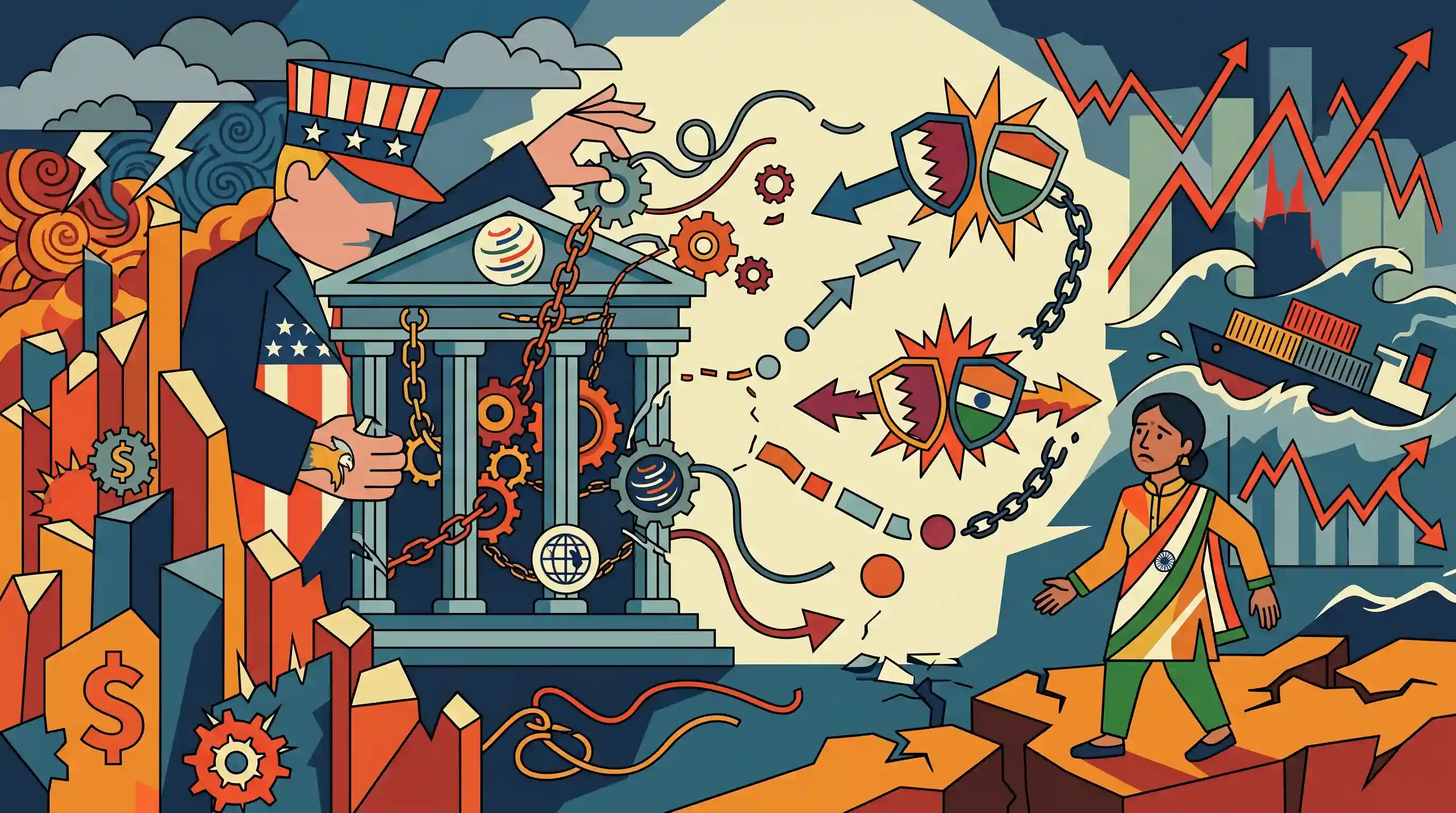
The article analyzes a profound structural shift in global geopolitics: the United States is retreating from the liberal international order and multilateral institutions (such as the WTO and Bretton Woods system) that it established post-WWII. Driven by a domestic backlash against globalization, America is increasingly adopting protectionist trade policies, engaging in trade wars, and walking away from free trade agreements. This departure from multilateralism towards transactional bilateralism and economic nationalism creates a leadership vacuum and poses significant challenges for global governance, macroeconomic stability, and the geopolitical interests of emerging economies like India.
Key Points
- The US is retreating from the post-WWII liberal international order and the multilateral institutions it helped create, such as the WTO and UN.
- A structural shift towards economic nationalism and protectionism is replacing America's traditional support for globalization and free trade.
- The US is increasingly favoring transactional, bilateral diplomacy and ad hoc coalitions over binding multilateral treaties.
- This waning of globalization and transition toward 'sovereign nationalism' creates trade uncertainties and strategic challenges for emerging economies like India.
Important Terms
Liberal International Order

A rules-based system of international institutions, norms, and cooperative mechanisms established post-WWII to regulate global relations, foster trade, and prevent large-scale conflict.
UPSC context
GS II: Global Governance; tests understanding of current shifts in geopolitical stability and institutional legitimacy.
Multilateralism
The process of organizing relations between three or more states to pursue common goals through formal institutional settings like the UN or WTO.
UPSC context
GS II: International Relations; tests knowledge of cooperative frameworks versus rising unilateralism and transactional bilateralism.
Bretton Woods System
The post-WWII financial architecture established in 1944, creating the IMF and World Bank to ensure global monetary stability and economic reconstruction.
UPSC context
GS III: Economy; essential for understanding global financial governance and India's role in international economic history.
World Trade Organization (WTO)
The only global intergovernmental organization regulating international trade rules; established in 1995 to replace GATT following the Marrakesh Agreement.
UPSC context
GS III: Economy/Trade; focuses on trade wars, dispute settlement, and India's interests in global commerce.
International Monetary Fund (IMF)
A UN specialized agency that promotes global monetary cooperation and provides financial assistance to member states facing balance of payments crises.
UPSC context
GS III: Economy; tests understanding of global financial stability, surveillance, and macroeconomic policy coordination.
World Bank
An international financial institution that provides loans, grants, and technical assistance to developing nations for poverty reduction and sustainable development.
UPSC context
GS II: Important International Institutions; focuses on global development aid and India's founding membership.
Prelims Trap
The US has officially withdrawn from the WTO, causing the dissolution of its dispute settlement mechanism.
The US has not withdrawn from the WTO. Instead, it paralyzed the dispute settlement mechanism by blocking the appointment of Appellate Body judges.
Static Concepts Connected
How does the WTO Dispute Settlement Mechanism function?
- Two-tier system: It comprises ad-hoc panels for initial rulings and a standing Appellate Body (7 members) for appeals.
- Reverse consensus: Rulings are adopted automatically unless there is a 'reverse consensus' (every single member country votes against adopting it).
- Current crisis: The Appellate Body has been paralyzed since 2019 because the US blocked the appointment of new judges, forcing members to seek alternative arbitration.
What are the Bretton Woods institutions and their core mandates?
- Origin: Established at the 1944 UN Monetary and Financial Conference in Bretton Woods, USA, to rebuild the post-WWII international economic system.
- The Twins: The IMF focuses on balance of payments and macroeconomic stability, while the World Bank (IBRD) focuses on long-term development and poverty reduction.
- Trade pillar missing: The proposed International Trade Organization (ITO) failed to materialize; GATT was formed as an interim agreement, later evolving into the WTO in 1995.
Cross-Topic Patterns
Multilateral gridlock fuels Minilateralism
As the UN and WTO stall, flexible plurilateral groupings like the Quad, I2U2, and Supply Chain Resilience Initiative (SCRI) become the primary vehicles for strategic and economic cooperation.
Protectionism vs. Currency Dynamics
The retreat from free trade often pairs with protectionist tariffs and currency manipulation dynamics. Watch for linkages between high import duties, forex policies, and domestic inflation trends.

Expect a multi-statement Prelims question comparing the WTO’s paralyzed Appellate Body with the rise of plurilateral/minilateral pacts.
Linked PYQs · 5
Linked PYQs · 5
- 2025MainsGS2
"With the waning of globalization, post-Cold War world is becoming a site of sovereign nationalism.” Elucidate.
- 2018MainsGS2
What are the key areas of reform if the WTO has to survive in the present context of "Trade War', especially keeping in mind the interest of India?
- 2025MainsGS3
What are the challenges before the Indian economy when the world is moving away from free trade and multilateralism to protectionism and bilateralism? How can these challenges be met?
- 2018MainsGS3
How would the recent phenomena of protectionism and currency manipulations in world trade affect macroeconomic stability of India?
- 2016MainsGS2
The broader aims and objectives of WTO are to manage and promote international trade in the era of globalization. But the Doha round of negotiations seem doomed due to differences between the developed and the developing countries." Discuss in the Indian perspective.
