इलाहाबाद उच्च न्यायालय ने पुलिस एनकाउंटर की सीबीआई जांच का आदेश दिया
स्रोत:indiatomorrow.net ↗
क्यों मायने रखता है
Extrajudicial actions by law enforcement violate the core constitutional principle of Separation of Powers (Article 50) and human rights. This development is highly relevant for UPPSC Polity and Governance sections, specifically concerning judicial oversight, the right to life (Article 21), and the Supreme Court's encounter guidelines.
सारांश
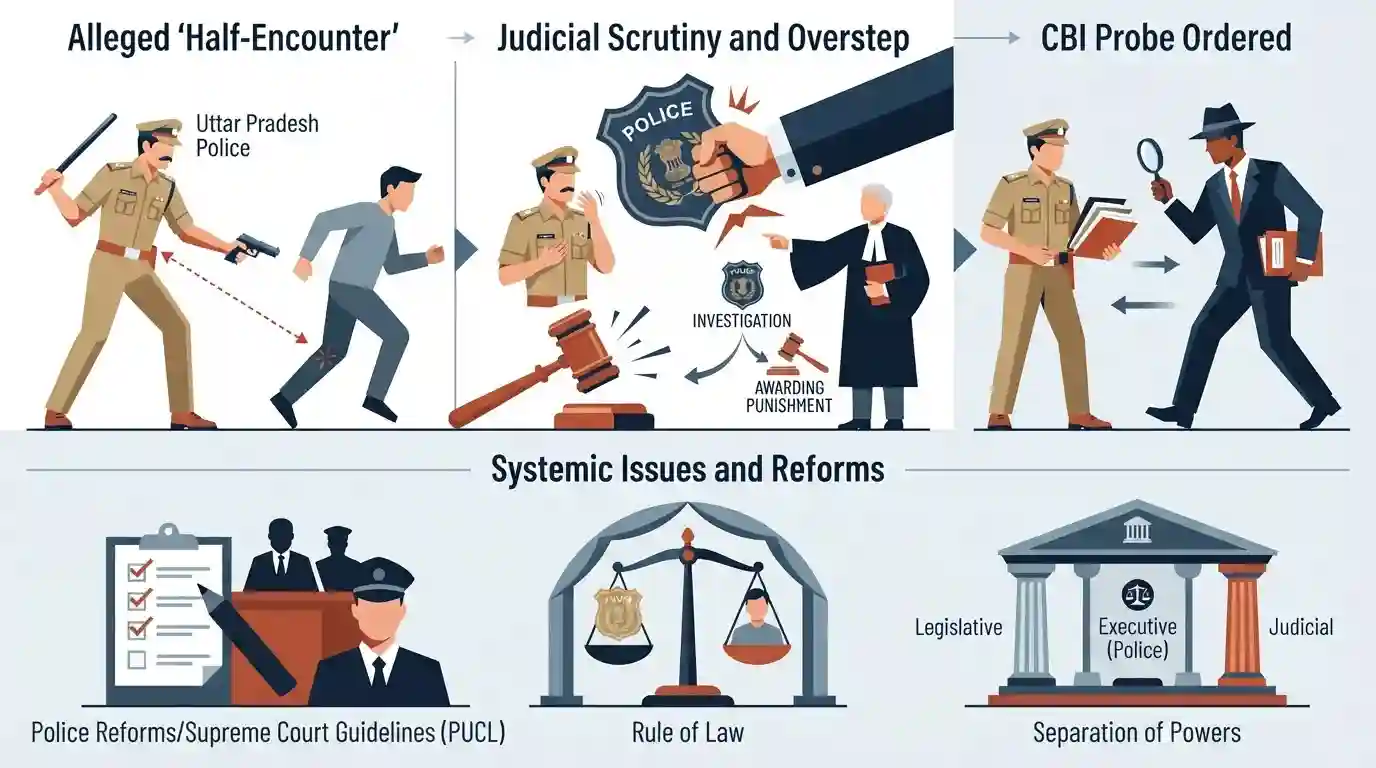
The Allahabad High Court has directed the Central Bureau of Investigation (CBI) to probe an alleged 'half-encounter' by the Uttar Pradesh Police in Shravasti district, where an accused was shot in the leg. The division bench strongly criticized the police for overstepping their authority, asserting that the police's role is strictly to investigate, while awarding punishment is the exclusive domain of the judiciary. The court warned against the growing trend of orchestrated encounters aimed at pleasing superiors or securing promotions, and reiterated the need for strict compliance with the Supreme Court's guidelines on police encounters (PUCL case).
मुख्य बिंदु
- इलाहाबाद हाईकोर्ट ने राज्य पुलिस की निष्पक्षता पर अविश्वास व्यक्त करते हुए, यूपी के श्रावस्ती में एक कथित "हाफ-एनकाउंटर" की CBI जांच के आदेश दिए।
- एक खंडपीठ ने पुलिस द्वारा आरोपियों के पैरों में गोली मारने की प्रवृत्ति की निंदा करते हुए कहा कि सजा देना विशेष रूप से न्यायपालिका का संवैधानिक जनादेश है।
- The court observed that staged encounters are often orchestrated to please political superiors, gain public applause, or secure out-of-turn promotions.
- इस फैसले में पुलिस मुठभेड़ों की जांच के संबंध में PUCL बनाम महाराष्ट्र राज्य मामले में सुप्रीम कोर्ट द्वारा निर्धारित 16-सूत्रीय दिशानिर्देशों का कड़ाई से पालन करने पर जोर दिया गया।
- यह न्यायिक हस्तक्षेप, कार्यपालिका के अतिक्रमण के खिलाफ मानवाधिकारों की रक्षा करने में शक्तियों के पृथक्करण (अनुच्छेद 50) और विधि के शासन के अत्यंत महत्व को रेखांकित करता है।
महत्वपूर्ण शब्द
PUCL बनाम महाराष्ट्र राज्य (2014) दिशानिर्देश

A 2014 Supreme Court verdict that established 16-point mandatory guidelines to investigate police encounters. It requires prompt FIR registration, independent probes (CID/other stations), magisterial inquiries, and prohibits immediate out-of-turn promotions or gallantry awards for involved officers.
UPSC context
विधि के शासन, पुलिस जवाबदेही और न्यायेतर हत्याओं के खिलाफ न्यायिक दिशानिर्देशों से संबंधित सामान्य अध्ययन प्रश्नपत्र-II (राजव्यवस्था और शासन) की अवधारणाओं का परीक्षण करता है।
Half-Encounter
A policing tactic reported in Uttar Pradesh where suspects are intentionally shot below the knee (often termed "Operation Langda") to incapacitate rather than kill. It is widely criticized by courts as extrajudicial punishment bypassing the judicial process.
UPSC context
GS-II और GS-IV (नीतिशास्त्र) के लिए प्रासंगिक, जो शक्तियों के पृथक्करण, मानवाधिकारों के उल्लंघन और "विजिलेंटे जस्टिस" पर नैतिक बहस को रेखांकित करता है।
Allahabad High Court
The High Court having jurisdiction over Uttar Pradesh. In this context, its Lucknow bench ordered a CBI probe into a suspicious "half-encounter" in Shravasti, reiterating that punishing criminals is strictly a judicial domain, not a police function.
UPSC context
GS-II (न्यायपालिका): कार्यपालिका के अतिरेक को रोकने और कानून के शासन का अनुपालन सुनिश्चित करने में संवैधानिक न्यायालयों की भूमिका को दर्शाता है।
केंद्रीय अन्वेषण ब्यूरो (CBI)
भारत की प्रमुख जांच एजेंसी, जो कार्मिक, लोक शिकायत और पेंशन मंत्रालय के क्षेत्राधिकार के तहत कार्य करती है। जटिल मामलों या पुलिस कदाचार से जुड़े मामलों की निष्पक्ष रूप से जांच करने के लिए उच्च न्यायालयों या उच्चतम न्यायालय द्वारा अक्सर इसे कार्य सौंपा जाता है।
UPSC context
GS-II (सांविधिक/नियामक निकाय): राज्य तंत्र के प्रभावित होने पर स्वतंत्र जांच सुनिश्चित करने में केंद्रीय एजेंसियों की भूमिका को रेखांकित करता है।
शक्तियों का पृथक्करण
एक मूल लोकतांत्रिक सिद्धांत जो राज्य की शक्ति को कार्यपालिका, विधायिका और न्यायपालिका में विभाजित करता है। उच्च न्यायालय पुलिस (कार्यपालिका) को यह याद दिलाने के लिए इसका हवाला देते हैं कि उनका दायित्व जांच करना है, जबकि सजा सुनाना और दंड देना विशेष रूप से न्यायपालिका के अधिकार क्षेत्र में आता है।
UPSC context
Core GS-II Polity concept. Tested in essay and mains questions on constitutional checks and balances and preventing arbitrary state action.
प्रारंभिक ट्रैप
"The High Court requires the prior consent of the UP Government to order a CBI investigation into the state police."
हालांकि आमतौर पर CBI को DSPE Act की धारा 6 के तहत राज्य की सहमति की आवश्यकता होती है, लेकिन संवैधानिक न्यायालय (सुप्रीम कोर्ट और हाई कोर्ट) इसके बिना भी CBI जांच का आदेश दे सकते हैं।
संबंधित अवधारणाएँ
पुलिस मुठभेड़ों को नियंत्रित करने वाले प्रमुख न्यायिक दिशानिर्देश क्या हैं?
- PUCL Guidelines (2014): किसी भी मुठभेड़ में मृत्यु/घायल होने के मामले में स्वतंत्र जांच (CID या किसी अन्य पुलिस थाने द्वारा), अनिवार्य मजिस्ट्रेटी जांच और तत्काल FIR दर्ज करना अनिवार्य करता है।
- प्रकाश सिंह (2006): पुलिस को राजनीतिक दबाव से बचाने के लिए संरचनात्मक पुलिस सुधारों का निर्देश दिया, जिसमें राज्य और जिला स्तरों पर पुलिस शिकायत प्राधिकरणों की स्थापना शामिल है।
संविधान आपराधिक न्याय में कार्यपालिका के अतिरेक को कैसे संबोधित करता है?
- अनुच्छेद 50 (DPSP): राज्य को लोक सेवाओं में न्यायपालिका को कार्यपालिका से अलग करने का निर्देश देता है, जिससे यह सुनिश्चित हो सके कि दोष निर्धारण और सजा देना पूरी तरह से न्यायिक क्षेत्र के अधीन रहे।
- Article 21: Guarantees the Right to Life and Personal Liberty, establishing that the State cannot deprive a person of life except according to procedure established by law.
अंतर-विषय पैटर्न
NHRC/SHRC की सांविधिक शक्तियां और राज्य पुलिस
Encounters often trigger parallel NHRC inquiries. For UPPSC, revise the composition, appointment committee, and investigative powers of the State Human Rights Commission (SHRC) under the Protection of Human Rights Act.
CBI का क्षेत्राधिकार बनाम राज्य की स्वायत्तता
यह सीधे तौर पर संघवाद से संबंधित बहसों से जुड़ता है। राज्यों द्वारा सामान्य सहमति वापस लेने के फैसले को कानूनी रूप से तब दरकिनार कर दिया जाता है जब संवैधानिक न्यायालय (SC या उच्च न्यायालय) सीधे CBI जांच का आदेश देते हैं।

CBI की गैर-सांविधिक प्रकृति, राज्य की सहमति के अपवादों और अनुच्छेद 50 के तहत शक्तियों के पृथक्करण का परीक्षण करने वाले बहु-कथन वाले प्रश्नों की अपेक्षा करें।
संबद्ध PYQ · 3
संबद्ध PYQ · 3
- 2023UPPSC_PRELIMSGS1
Consider the following statements concerning the powers of the Supreme Court to issue certain writs to stop violation of Fundamental Rights – (1) The Supreme Court has power to issue writs like Habeas Corpus, Mandamus, Prohibition, Quo Warranto and Certiorari which is appropriate for the enforcement of Fundamental Rights. (2) Parliament may by law empower any other court to exercise within its jurisdiction the powers given to Supreme Court. Which of the above mentioned statement/statements is/are correct? Select the correct answer from the code given below –
- 2021UPPSC_PRELIMSGS1
Which one of the following is NOT correctly matched? (Subject — Related Article)
- 2020UPPSC_PRELIMSGS1
Which of the following is not a correct match?
