Chronic Venous Insufficiency: Anatomy, Causes and Medical Care
Source:The Hindu ↗
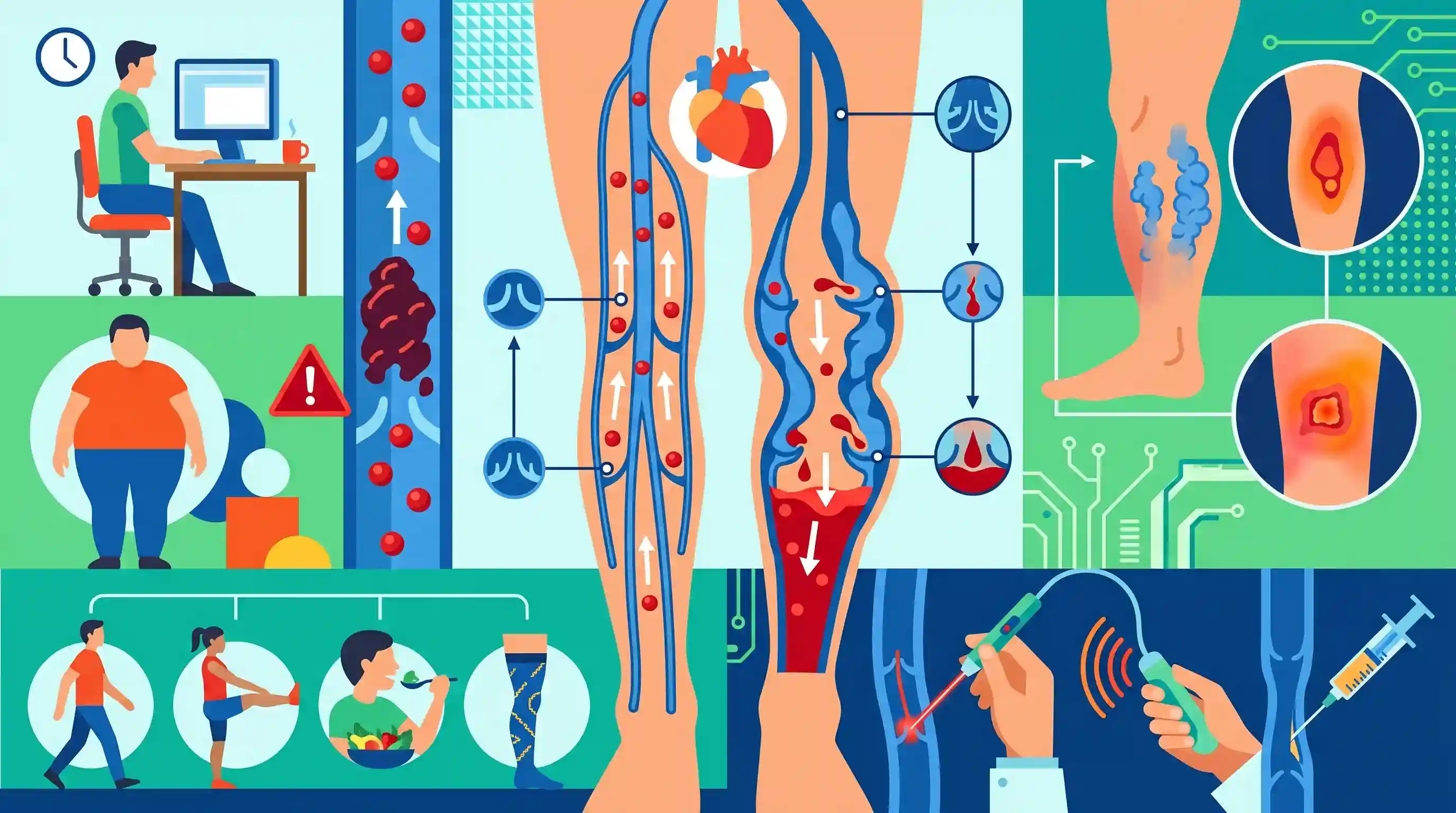
Why It Matters
Highlights the physiological impact of sedentary lifestyles on cardiovascular health and introduces candidates to modern, minimally invasive medical procedures (like EVLA and sclerotherapy) relevant to the S&T syllabus.
Summary
Chronic Venous Insufficiency (CVI) is a vascular condition where the veins and valves in the legs fail to effectively pump blood back to the heart, leading to pooling. Driven by factors like sedentary lifestyles, obesity, and deep vein thrombosis, CVI can cause swelling, varicose veins, and painful stasis ulcers. While early stages can be managed through lifestyle changes and compression therapy, advanced cases require modern medical interventions such as laser ablation, radiofrequency ablation, or sclerotherapy. The condition highlights the growing health challenges associated with modern sedentary lifestyles.
Key Points
- Chronic Venous Insufficiency (CVI) occurs when one-way valves in leg veins malfunction, causing blood to pool in the lower extremities instead of returning to the heart.
- Key risk factors include sedentary lifestyles, prolonged sitting or standing, obesity, aging, pregnancy, and a history of deep vein thrombosis (DVT).
- Symptoms start with swelling and a heavy feeling in the legs, eventually leading to varicose veins, skin discoloration, and severe stasis ulcers if untreated.
- Diagnostic and preventative care includes ultrasounds to assess blood flow, alongside lifestyle changes like regular exercise, leg elevation, and the use of compression stockings.
- Advanced treatments involve minimally invasive medical procedures such as Endovenous Laser Ablation (EVLA), radiofrequency ablation, and sclerotherapy to close off non-functioning veins.
Prelims Trap
"CVI occurs when the one-way valves in arteries fail, preventing oxygenated blood from reaching the lower extremities."
UPSC often swaps vascular anatomy. Veins possess valves (which fail in CVI) and carry deoxygenated blood. Arteries lack valves and carry oxygenated blood away from the heart under high pressure.
Static Concepts Connected
How do veins and arteries structurally differ in the human circulatory system?
- Wall thickness: Arteries have thick, muscular walls to handle high-pressure blood flow. Veins have thinner walls and operate under much lower pressure.
- Presence of valves: Veins contain specialized one-way internal valves to prevent the backflow of blood against gravity. Arteries do not have these valves.
- Blood transport: Arteries typically carry oxygenated blood away from the heart, whereas veins return deoxygenated blood to the heart. The pulmonary artery and vein are the only exceptions.
What is Deep Vein Thrombosis (DVT) and why is it dangerous?
- Mechanism: DVT is the formation of a blood clot (thrombus) in a deep vein, usually in the legs, strongly linked to prolonged immobility, surgery, or sedentary lifestyles.
- Critical complication: The primary danger is a Pulmonary Embolism (PE), which occurs when the clot breaks loose, travels through the bloodstream, and critically blocks an artery in the lungs.
Cross-Topic Patterns
Occupational health in the service economy
The rise of CVI and DVT mirrors modern occupational hazards in India's IT and service sectors, shifting public health focus from traditional industrial accidents to sedentary lifestyle-induced vascular NCDs.
Directed energy in medical therapeutics
Advanced CVI treatments like Endovenous Laser Ablation connect to UPSC's S&T focus on non-invasive medical technologies utilizing directed energy, building on past themes like LASIK and targeted radiation therapies.

Expect a Prelims statement pairing basic circulatory anatomy (valves in veins vs arteries) with the rising incidence of lifestyle NCDs.
Linked PYQs · 2
Linked PYQs · 2
- 2024PrelimsGS1
Which one of the following is synthesised in human body that dilates blood vessels and increases blood flow?
- 2022MainsGS3
The increase in life expectancy in the country has led to newer health challenges in the community. What are those challenges and what steps need to be taken to meet them?
