Charles Bonnet Syndrome and Neurological Vision Loss Symptoms
Source:The Hindu ↗
Why It Matters
A key topic in S&T (human biology, neurology, and diseases) as well as Social Issues (geriatric care and health challenges of an aging population). It highlights the importance of distinguishing between sensory-deprivation phenomena and psychiatric illnesses in elderly patients.
Summary
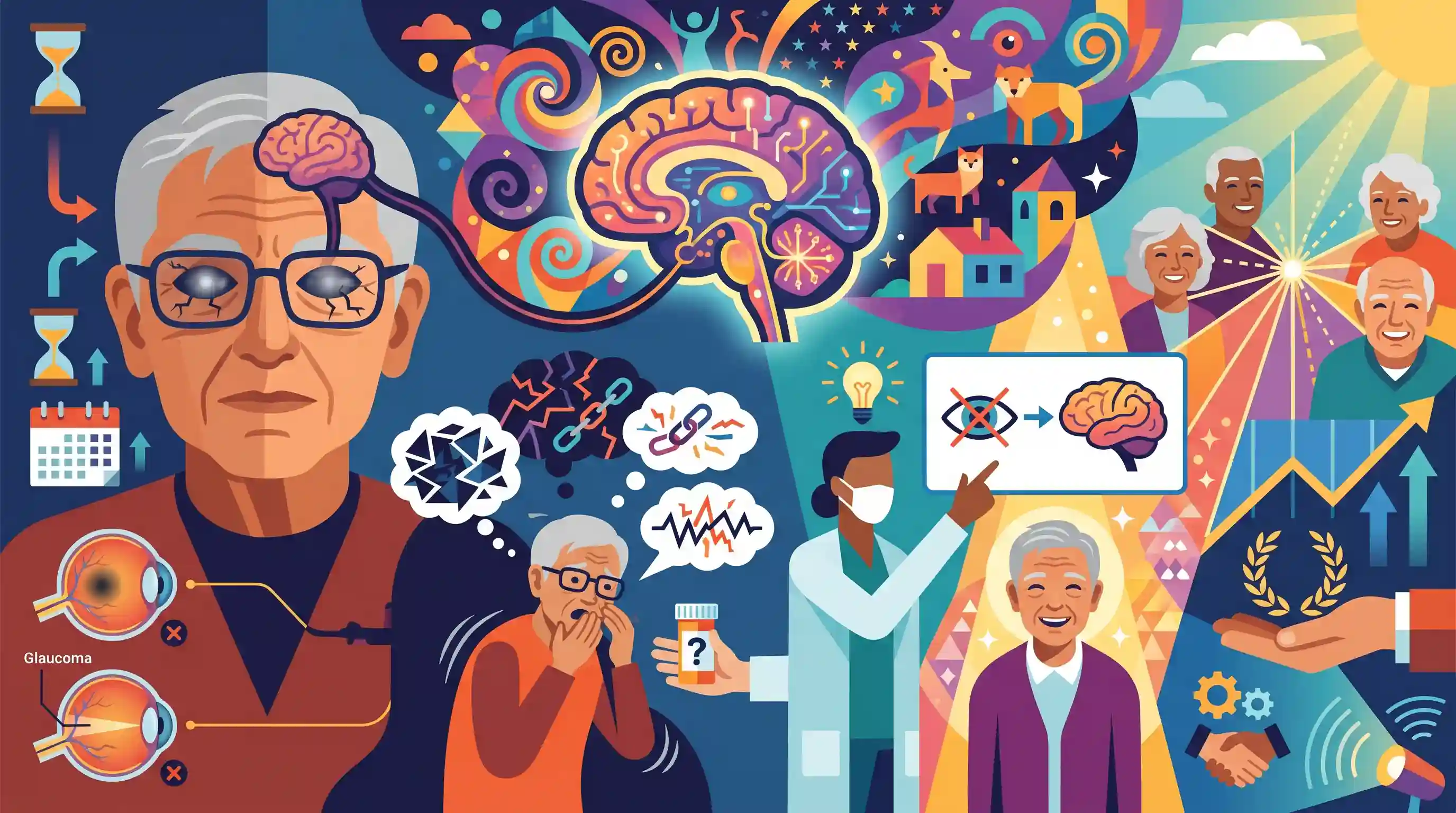
Charles Bonnet Syndrome (CBS) is a neurological condition characterized by visual hallucinations in people who have experienced significant vision loss. Rather than being a sign of mental illness or cognitive decline like dementia, CBS occurs because the brain actively generates images to compensate for the lack of sensory input from failing eyes. It is most commonly seen in the elderly suffering from age-related vision issues such as macular degeneration or glaucoma. However, due to a lack of awareness, many patients fear they are developing psychiatric conditions like schizophrenia and remain silent, or face misdiagnosis by healthcare providers. Proper awareness is essential to reassure patients and prevent unnecessary psychiatric treatments, especially as an aging population faces an increase in age-related health challenges.
Key Points
- Charles Bonnet Syndrome (CBS) is a neurological condition where individuals with significant vision loss experience visual hallucinations.
- It is often triggered by age-related eye conditions such as macular degeneration, glaucoma, cataracts, or diabetic retinopathy.
- The hallucinations occur because the brain attempts to 'fill in the gaps' when it stops receiving adequate visual input from the eyes.
- CBS is not a mental illness and is completely distinct from psychiatric conditions like schizophrenia or cognitive decline like dementia.
- Due to a lack of awareness, patients are often misdiagnosed with psychiatric disorders, leading to stigma and inappropriate treatment.
- As life expectancy increases and age-related visual impairments become more common, awareness and proper diagnosis of CBS are crucial for the mental well-being of the elderly.
Prelims Trap
Charles Bonnet Syndrome is a psychiatric disorder triggered by cognitive decline and dementia.
CBS is a neurological sensory-deprivation response, not a mental illness. The brain creates phantom images due to vision loss, and patients retain cognitive awareness.
Static Concepts Connected
What are the physiological mechanisms of major age-related eye disorders?
- Glaucoma: Caused by abnormally high intraocular pressure that damages the optic nerve, leading to irreversible peripheral vision loss.
- Macular Degeneration: Damage to the macula (central part of the retina) resulting in the progressive loss of central, sharp vision.
- Diabetic Retinopathy: Chronic high blood sugar damages light-sensitive retinal blood vessels, leading to fluid leaks, swelling, and severe vision loss.
How does the human brain respond to profound sensory deprivation?
- Neural Compensation: When deprived of sensory input, the cortex becomes hyperactive, autonomously generating images to 'fill in the gaps' (a form of neuroplasticity).
- Phantom Sensations: Similar to phantom limb syndrome, CBS represents the brain actively misinterpreting the sudden lack of physical sensory signals from failing organs.
Cross-Topic Patterns
Geriatric Care & NCD Burden
Rising life expectancy makes age-related visual impairments and secondary neurological effects (like CBS) a critical policy challenge for India's National Programme for Health Care of the Elderly (NPHCE).
Neurological vs. Psychiatric Distinctions
UPSC frequently tests exact disease classifications. Differentiating sensory-deprivation neurological conditions (CBS) from neurodegenerative (dementia) or psychiatric (schizophrenia) disorders is a classic Science MCQ pattern.

Expect a 'disease-matching' Prelims question pairing CBS, Glaucoma, and Macular Degeneration with their physiological targets/mechanisms.
Linked PYQs · 3
Linked PYQs · 3
- 2022MainsGS3
The increase in life expectancy in the country has led to newer health challenges in the community. What are those challenges and what steps need to be taken to meet them?
- 2021PrelimsGS1
Magnetite particles, suspected to cause neurodegenerative problems, are generated as environmental pollutants from which of the following? 1. Brakes of motor vehicles 2. Engines of motor vehicles 3. Microwave stoves within homes 4. Power plants 5. Telephone lines Select the correct answer using the code given below.
- 2014PrelimsGS1
Consider the following pairs : Vitamin Deficiency disease 1. Vitamin C : Scurvy 2. Vitamin D : Rickets 3. Vitamin E : Night blindness Which of the pairs given above is/are correctly matched?
