Academic Stress and Mental Health Crisis Among Children
Source:The Hindu ↗
Why It Matters
The mental and emotional well-being of the youth is critical for realizing India's demographic dividend. Analyzing the root causes of student stress, from academic pressure to the loss of play, provides key sociological insights for GS1 (society) and informs arguments for Essay topics on education, competition, and mental health.
Summary
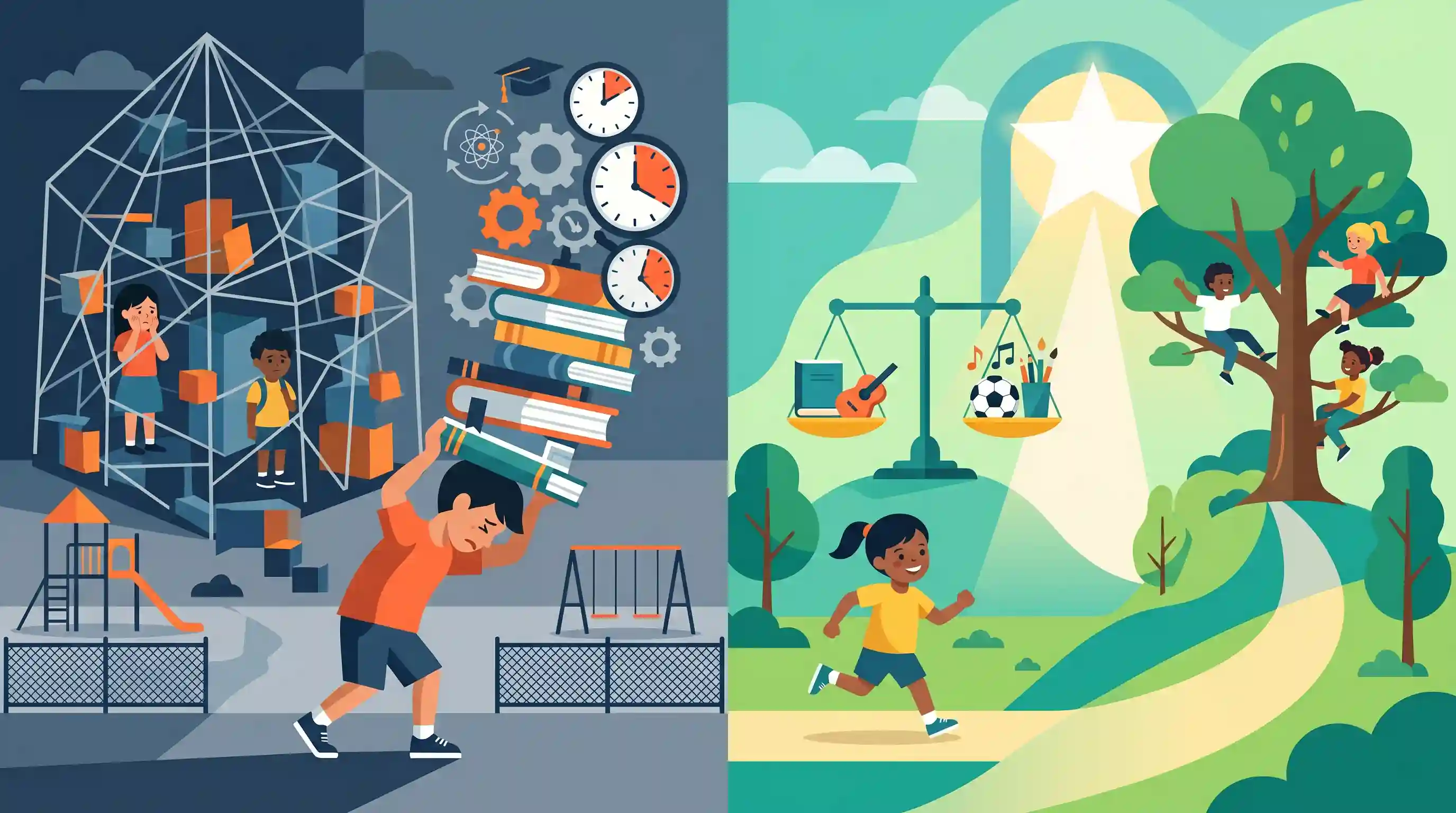
The article sheds light on the worsening mental health crisis among children, primarily driven by immense academic stress and a severe lack of playtime. It argues that a heavily competitive education system and changing societal norms are making children increasingly anxious and emotionally fragile. By prioritizing academic milestones over holistic development, the current environment deprives children of the socialization and emotional regulation benefits that come from free play. The narrative calls for an urgent paradigm shift—echoing the holistic vision of the National Education Policy (NEP) 2020—to create a balanced ecosystem that nurtures rather than overwhelms young minds.
Key Points
- Rising academic pressure and a hyper-competitive educational environment are triggering a mental health crisis among children, characterized by anxiety, depression, and stress.
- The steady erosion of unstructured playtime and outdoor activities deprives young minds of essential mechanisms for emotional regulation, coping, and socialization.
- Modern parenting norms and schooling systems often prioritize rote learning and academic metrics over a child's holistic psychological well-being.
- Systemic reforms, such as the holistic and multidisciplinary approach advocated by the National Education Policy (NEP) 2020, are necessary to strike a balance between academics and play.
- Mental health in children requires urgent societal awareness and early interventions to safeguard India's future demographic dividend.
Important Terms
National Education Policy (NEP) 2020

A comprehensive framework transforming India's education system by replacing the 10+2 model with a 5+3+3+4 structure, emphasizing flexible, multidisciplinary, and value-based learning.
UPSC context
GS Paper 2 (Education/Social Justice); tests understanding of policy shifts towards flexible, student-centric learning.
Early Childhood Care and Education (ECCE)
A foundational pillar of NEP 2020 focusing on the cognitive, emotional, and physical development of children aged 0-8 through play-based and activity-based learning.
UPSC context
GS Paper 2 (Social Sector/Education); tests awareness of foundational literacy and early childhood intervention strategies.
Holistic Development
An educational philosophy that integrates intellectual, physical, emotional, and social growth, moving away from rote learning to nurture a well-rounded personality.
UPSC context
GS Paper 2 (Human Resources) & GS Paper 4; tests the shift from rote learning to value-integrated education.
Adolescent Mental Health Crisis
The rising prevalence of anxiety, depression, and stress-linked disorders among Indian youth, driven by intense academic competition, societal expectations, and digital overexposure.
UPSC context
GS Paper 2 (Health/Youth Issues); tests understanding of public health challenges and the impact of societal stressors.
Play-based Learning
A pedagogical approach using structured or free play—such as storytelling and games—to foster foundational literacy, numeracy, and social skills in an engaging, low-stress environment.
UPSC context
GS Paper 2 (Education Reforms); tests knowledge of pedagogical innovations under NEP 2020 for primary education.
Emotional Regulation
The capacity to effectively manage and respond to emotional experiences, a key skill for resilience and mental well-being developed through social interaction and play.
UPSC context
GS Paper 4 (Emotional Intelligence); tests ability to apply psychological concepts to social and individual well-being.
Prelims Trap
Student suicides constitute the absolute largest demographic share of total suicides in India according to NCRB data.
While student suicides surged by 65% over a decade, daily wage earners and housewives still account for a significantly larger overall share of suicides.
Static Concepts Connected
What are the key pedagogical shifts mandated by NEP 2020 to reduce academic stress?
- Curricular Reduction: Reduces curriculum to core essentials, emphasizing critical thinking and multidisciplinary study over rote learning to lighten cognitive loads.
- Formative Assessment: Shifts from high-stakes summative board exams to continuous, competency-based formative assessments guided by the national assessment centre, PARAKH.
- 5+3+3+4 Structure: Replaces the rigid 10+2 system, specifically integrating early childhood care and play-based learning during the 5-year foundational stage.
How does the Mental Healthcare Act, 2017 address severe stress and suicide attempts?
- Decriminalization of Suicide: Section 115 effectively decriminalizes attempted suicide by presuming the individual is under severe stress, preventing prosecution under Section 309 of the IPC.
- Right to Care: Legally guarantees every person the right to access mental healthcare and treatment from government-funded or operated services.
- Prevention Programs: Mandates the government to plan, design, and implement public health programs to reduce suicide rates and attempt incidents.
Cross-Topic Patterns
Demographic dividend to demographic liability
A youth mental health crisis directly threatens India's demographic dividend, turning a highly anticipated human capital asset into an economic and healthcare liability.
Tele-MANAS and youth outreach
To combat the social stigma surrounding mental health noted by UNICEF, India’s Tele-MANAS network acts as a crucial, anonymous first-line intervention for distressed adolescents.

Expect a Mains GS2 question linking surging student suicide rates (NCRB) with gaps in implementing NEP 2020's holistic pedagogical reforms.
Linked PYQs · 5
Linked PYQs · 5
- 2023MainsGS1
Child cuddling is now being replaced by mobile phones. Discuss its impact on the socialization of children.
- 2023MainsGS1
Explain why suicide among young women is increasing in Indian society.
- 2014MainsEssay
Is the growing level of competition good for the youth?
- 2020MainsGS2
National Education Policy 2020 is in conformity with the Sustainable Development Goal-4 (2030). It intends to restructure and reorient education system in India. Critically examine the statement.
- 2024MainsEssay
Social media is triggering 'Fear of Missing Out' amongst the youth, precipitating depression and loneliness.
