Bioeconomy framework and the pursuit of biohappiness in India
Source:The Hindu ↗
Why It Matters
The transition towards a bio-economy and concepts like 'biohappiness' are highly relevant for GS3 under Environment, Economy, and Science & Technology. It addresses the intersecting challenges of climate resilience, equitable growth, and agricultural productivity.
Summary
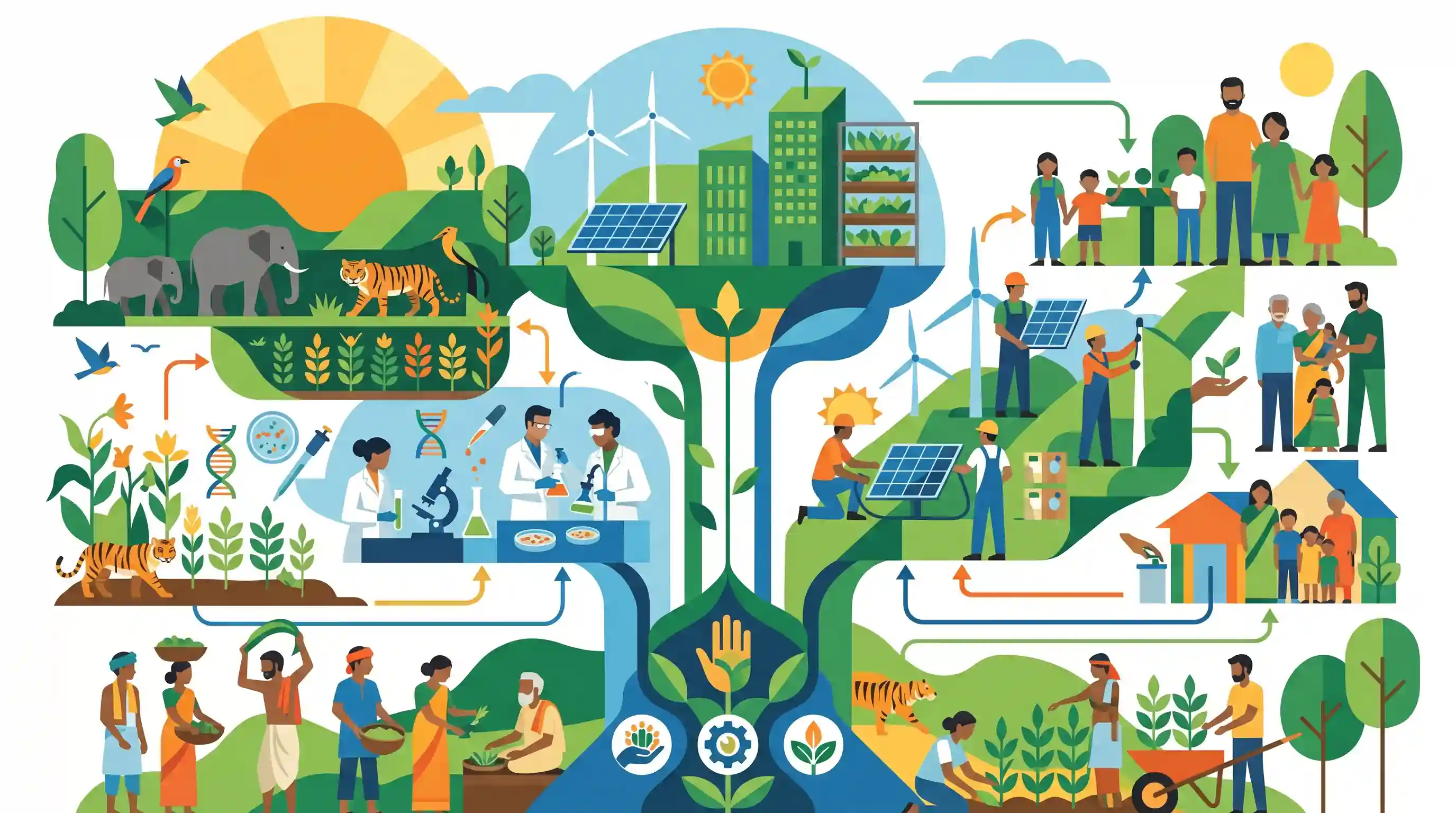
The article discusses the transition toward an era of 'biohappiness' in India, a paradigm that aligns economic growth with the conservation and sustainable use of biological resources. By leveraging advancements in biotechnology alongside traditional ecological knowledge, India can build a resilient bio-economy. This approach seeks to address contemporary challenges such as climate change, nutritional insecurity, and unemployment through sustainable means. It advocates for robust policies, such as the BioE3 policy, that promote green jobs, equitable benefit-sharing for local communities, and the integration of environmental health into the broader metric of national well-being.
Key Points
- The concept of 'biohappiness' emphasizes achieving human well-being and prosperity through the sustainable and equitable use of biological resources.
- Integrating modern biotechnology with traditional ecological knowledge can enhance food security, health, and climate resilience while providing green employment (aligning with India's BioE3 policy).
- Transitioning to a robust bio-economy requires a departure from fossil fuel-driven growth, focusing instead on biodiversity conservation and reducing carbon footprints.
- Equitable benefit-sharing mechanisms are crucial to ensure that local communities and indigenous groups profit from the commercialization of bio-resources.
Important Terms
Bio-economy

Economic system utilizing renewable biological resources (plants, microbes, etc.) sustainably for goods and services. India aims for a $300 billion bio-economy by 2030.
UPSC context
GS Paper III (Economy/S&T); tests knowledge of sustainable development models and India's sector-specific growth targets.
BioE3 Policy
Launched in 2024, the "Biotechnology for Economy, Environment and Employment" policy fosters high-performance biomanufacturing to drive green growth and regional development.
UPSC context
GS Paper III (Science & Tech); tests understanding of current policies promoting high-performance biomanufacturing and employment.
Biological Diversity Act, 2002
A 2002 law enacted to conserve biological diversity, manage sustainable resource use, and ensure fair sharing of benefits with local communities.
UPSC context
GS Paper III (Environment); essential legal framework for biodiversity governance and community rights in India.
National Biodiversity Authority (NBA)
A statutory, autonomous body established in 2003 to implement the Biological Diversity Act, 2002, and regulate access to India's biological resources.
UPSC context
GS Paper III (Environment/Governance); tests knowledge of institutional mechanisms preventing biopiracy and regulating resource access.
Access and Benefit Sharing (ABS)
A mechanism ensuring fair distribution of monetary and non-monetary benefits from biological resource utilization between users and the steward communities.
UPSC context
GS Paper III (Environment/Ethics); key concept under the Nagoya Protocol for equitable environmental justice.
Ministry of Environment, Forest and Climate Change (MoEFCC)
The nodal central agency responsible for planning and coordinating India's environmental, forestry, and wildlife policies and programs.
UPSC context
GS Paper III (Environment/Governance); identifies the primary administrative body for national environmental oversight.
Prelims Trap
"Indian citizens require prior approval from the National Biodiversity Authority (NBA) to access bio-resources for commercial use."
Indian citizens and domestic entities only need to give prior intimation to the State Biodiversity Board (SBB). Foreign entities require prior approval from the NBA.
Static Concepts Connected
What is the 3-tier institutional structure under the Biological Diversity Act, 2002?
- National Level: National Biodiversity Authority (NBA) at the apex level, regulating access to bio-resources by foreign individuals and entities.
- State Level: State Biodiversity Boards (SBBs) regulate access by Indian citizens and domestic corporations for commercial utilization.
- Local Level: Biodiversity Management Committees (BMCs) operate at the panchayat/municipality level, prepare People's Biodiversity Registers, and can levy collection fees.
What is the Nagoya Protocol in the context of global biodiversity conservation?
- Framework: A supplementary agreement to the UN Convention on Biological Diversity (CBD) adopted in 2010.
- Core Objective: It establishes a binding legal framework for Access and Benefit Sharing (ABS) of genetic resources.
- Community Rights: Ensures that indigenous communities receive fair compensation when their traditional ecological knowledge or local bio-resources are commercialized.
Cross-Topic Patterns
Biomanufacturing for Net-Zero Targets
India's BioE3 policy shifts the focus from chemical-based to bio-based manufacturing, directly linking biotechnology advancements with India's net-zero carbon targets and circular economy goals.
Traditional Knowledge + Nutritional Security
Swaminathan's 'Evergreen Revolution' merges modern biotechnology with Traditional Ecological Knowledge (TEK), connecting biodiversity conservation directly with nutritional security and climate adaptation (e.g., millets).

Expect a 2026 Prelims question mapping the BioE3 policy's biomanufacturing goals against the statutory powers of BMCs to levy access fees.
Linked PYQs · 5
Linked PYQs · 5
- 2019MainsGS3
How can biotechnology help to improve the living standards of farmers?
- 2019MainsGS3
Define the concept of carrying capacity of an ecosystem as relevant to an environment. Explain how understanding this concept is vital while planning for sustainable development of a region.
- 2020MainsGS3
Explain intra-generational and inter-generational issues of equity from the perspective of inclusive growth and sustainable development.
- 2015PrelimsGS1
The Genetic Engineering Appraisal Committee is constituted under the
- 2021PrelimsGS1
Bollgard I and Bollgard II technologies are mentioned in the context of
