AICTE Data Showing BTech Enrolment Surge Driven by Computer Science
Source:Indian Express ↗
Why It Matters
The trend in technical education enrollment highlights the aspirations of India's youth and the evolving job market. It points to a structural shift in the economy towards services (IT) while emphasizing the need for balanced growth in manufacturing and infrastructure, which require core engineering skills. For UPSC aspirants, this data is highly relevant for analyzing issues related to demographic dividend, employability, education policies, and the effectiveness of skill development programs.
Summary
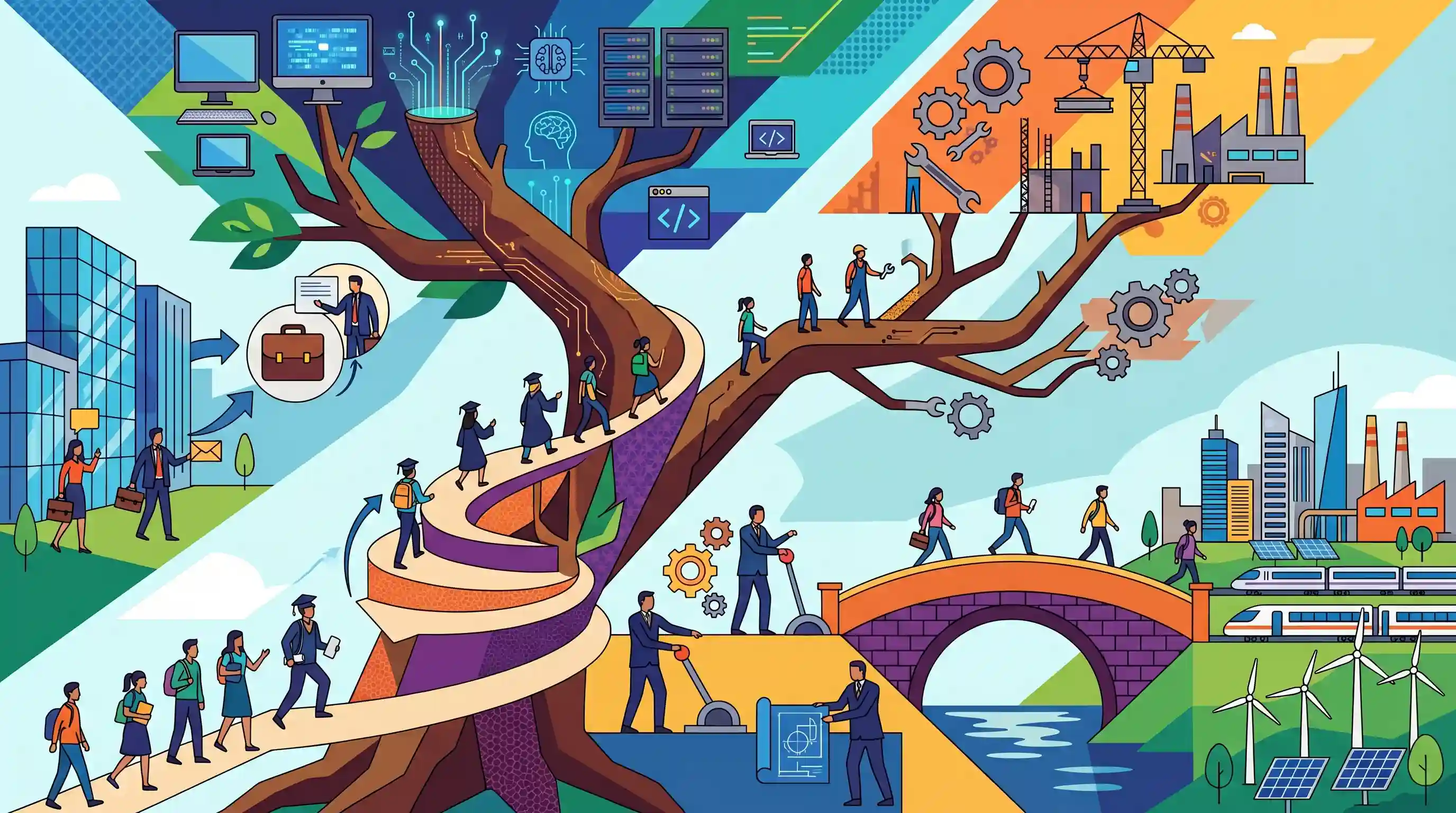
According to recent data from the All India Council for Technical Education (AICTE), enrollment in BTech and other technical programs has hit an eight-year high in India. This resurgence is primarily fueled by a massive demand for Computer Science and related branches, driven by the strong placement prospects in the IT sector. While the increase in technical higher education enrollment is a positive step toward harnessing India's demographic dividend, it highlights a structural imbalance: the stagnation of core engineering branches (such as Mechanical and Civil) which are vital for the manufacturing and infrastructure sectors. Policymakers must focus on improving the quality and employability of graduates across all branches to bridge the skill gap and support comprehensive economic growth.
Key Points
- BTech and engineering enrollments in India have reached an eight-year high, reversing previous trends of declining admissions.
- The surge in enrollment is overwhelmingly driven by the demand for Computer Science and allied technology branches, reflecting students' preference for the lucrative IT sector.
- Core engineering branches such as Civil, Mechanical, and Electrical continue to see relatively muted demand, posing long-term challenges for India's infrastructure and manufacturing ambitions like 'Make in India'.
- The data underscores a critical need to ensure that the rising quantity of technical graduates is matched by high employability and industry-relevant skill development.
Important Terms
All India Council for Technical Education (AICTE)

A national-level statutory body under the Ministry of Education responsible for planning, developing, and coordinating India's technical education system, including engineering, management, and pharmacy.
UPSC context
GS Paper 2: Statutory/Regulatory bodies; GS Paper 3: Issues relating to Education and Human Resources.
Demographic Dividend
Economic growth potential resulting from a shift in a population's age structure where the working-age group (15-64) exceeds the dependent population, boosting productivity and savings.
UPSC context
GS Paper 3: Indian Economy and issues relating to planning, mobilization of resources, growth, and employment.
Core Engineering Branches
The fundamental, traditional disciplines of engineering—Mechanical, Civil, Electrical, and Chemical—that form the structural foundation of manufacturing, infrastructure, and energy sectors.
UPSC context
GS Paper 3: Infrastructure; Industrial growth; and the 'Make in India' initiative.
Skill Development
The process of identifying skill gaps and providing targeted vocational or technical training to make the workforce industry-ready and improve individual employability.
UPSC context
GS Paper 2: Government policies for development; GS Paper 3: Employment and Human Capital.
Human Resource Development (HRD)
A broader process of improving the quality of a population through education, health, and skills to enhance their contribution to economic and social development.
UPSC context
GS Paper 2: Issues relating to development and management of Social Sector/Services relating to Health, Education, Human Resources.
Employability Gap
The disconnect between the academic qualifications of graduates and the practical, industry-specific skills required by employers, leading to high unemployment despite high degree attainment.
UPSC context
GS Paper 3: Employment and job creation; challenges in the Indian labor market.
Prelims Trap
"AICTE is the apex statutory body regulating all higher and professional education in India."
AICTE specifically regulates technical and management education. General education is under UGC, while medical (NMC) and legal (BCI) have their own separate statutory councils.
Static Concepts Connected
What are the key features of the National Skills Qualifications Framework (NSQF)?
- Competency-based: Organizes qualifications from levels 1 to 10 based on outcomes of knowledge, skills, and aptitude rather than mere academic learning.
- Mobility: Enables seamless multiple entry and exit points between vocational training, general academic education, and the job market.
- Regulator: It is currently operationalized, anchored, and monitored by the National Council for Vocational Education and Training (NCVET).
How does India's "services-led" economic growth differ from traditional development models?
- Sectoral leapfrogging: India bypassed the traditional transition phase of building a massive manufacturing base, moving directly from an agrarian economy to a services-dominated GDP.
- Employment disconnect: Service sectors like IT have massive GDP contribution but low employment elasticity, failing to absorb the millions of low-skilled workers leaving agriculture.
- Skill bias: Labor demand is highly skewed towards educated, English-speaking professionals (like Computer Science graduates), structurally limiting broad-based economic mobility.
Cross-Topic Patterns
PLI Schemes vs Engineering Skew
India's push for global manufacturing hubs via PLI schemes requires robust mechanical and electrical talent, which is directly contradicted by the mass academic migration to IT disciplines.
NEP 2020 & Vocational Integration
NEP 2020's mandate to integrate vocational education with mainstream degrees addresses this exact structural flaw, attempting to make core physical disciplines more employable and attractive.

Mains GS-3 is highly likely to test the paradox of India's tech enrollment boom alongside the critical skill deficit in manufacturing.
Linked PYQs · 4
Linked PYQs · 4
- 2023MainsGS2
Skill development programmes have succeeded in increasing human resources supply to various sectors. In the context of the statement analyse the linkages between education, skill and employment.
- 2016MainsGS2
Demographic Dividend in India will remain only theoretical unless our manpower becomes more educated, aware, skilled and creative." What measures have been taken by the government to enhance the capacity of our population to be more productive and employable?
- 2014MainsGS3
While we flaunt India's demographic dividend, we ignore the dropping rates of employability. What are we missing while doing so? Where will the jobs that India desperately needs come from? Explain.
- 2023MainsGS2
The crucial aspect of development process has been the inadequate attention paid to Human Resource Development in India. Suggest measures that can address this inadequacy.
