AI Summit and Global South Energy Solutions
Source:The Hindu ↗
Why It Matters
AI offers developing nations an opportunity to leapfrog infrastructural deficits. Its application in ensuring affordable energy and enhancing access to basic services (education, healthcare) makes it a crucial topic for GS3 (S&T, Energy, Inclusive Growth) and GS2 (Global South dynamics).
Summary
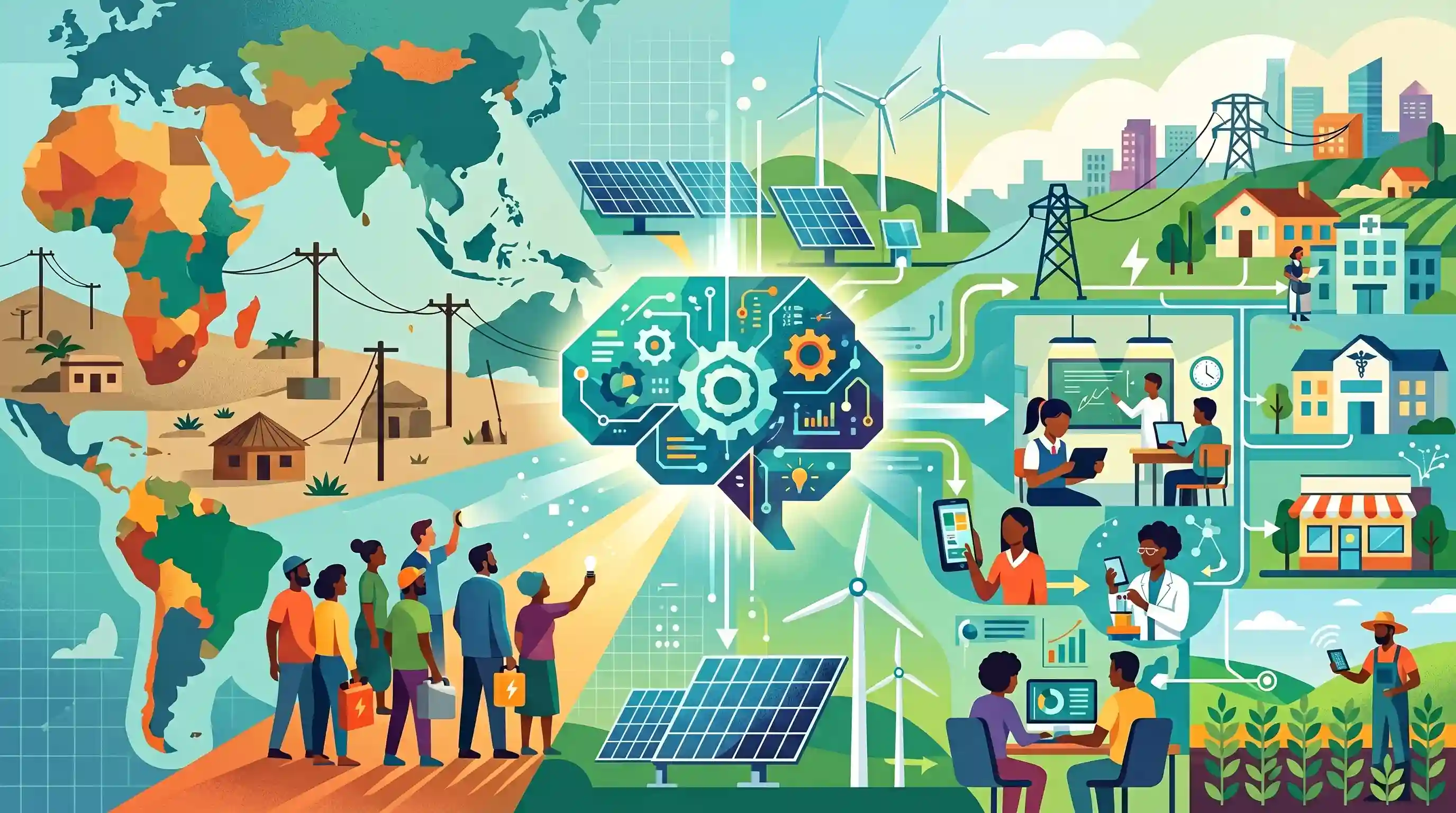
The article discusses the themes from a recent AI Summit, focusing on how Artificial Intelligence is being leveraged as a practical tool to solve energy management and accessibility issues in the Global South. It emphasizes AI's role in advancing inclusive growth, optimizing energy transitions, and enhancing access to essential services in developing nations.
Key Points
- The AI Summit highlights the transformative potential of Artificial Intelligence in tackling foundational challenges in the Global South, particularly regarding energy and accessibility.
- AI applications are being deployed to optimize energy grids, enhance renewable energy efficiency, and ensure reliable and affordable power, aiding the clean energy transition.
- AI is bridging accessibility gaps in critical sectors such as education, healthcare, and digital inclusion for developing nations.
- There is an emphasis on equitable technological development and technology transfer to ensure that AI benefits marginalized populations rather than widening the digital divide.
Important Terms
Sustainable Development Goals (SDGs)

A set of 17 interconnected global objectives adopted by the United Nations in 2015 to end poverty, protect the planet, and ensure prosperity for all by 2030.
UPSC context
GS Paper 2 & 3: International commitments, governance, and sustainability targets.
Global South
A geopolitical term referring to economically developing nations primarily in Africa, Asia, and Latin America, often sharing a history of colonialism and marginalization in global governance.
UPSC context
GS Paper 2: International Relations; geopolitical groupings and North-South dynamics.
Energy Security
The continuous and uninterrupted availability of energy sources at an affordable price, encompassing four key dimensions: availability, accessibility, affordability, and sustainability.
UPSC context
GS Paper 3: Infrastructure; resource management and sustainable transitions.
Inclusive Growth
Economic growth that is broad-based across sectors and creates opportunities for all sections of society, ensuring equitable distribution of benefits and access to essential services.
UPSC context
GS Paper 3: Indian Economy; growth patterns and socio-economic equity.
Digital Inclusion
Ensuring equitable, meaningful, and safe access to digital technologies, literacy, and opportunities for all, bridging the "digital divide" between different socio-economic groups.
UPSC context
GS Paper 2 & 3: e-Governance and technological access.
Artificial Intelligence (AI)
Technology simulating human intelligence to optimize energy grids, forecast renewable supply, and enhance accessibility for marginalized populations through data-driven solutions.
UPSC context
GS Paper 3: Science and Tech; emerging technologies and impacts.
Prelims Trap
Deploying AI applications universally reduces the carbon footprint and energy consumption of developing nations.
Ignores the 'sustainability paradox'. While AI optimizes smart grids, training large language models and running data centers dramatically increases carbon emissions and water consumption.
Static Concepts Connected
What are the core characteristics of Digital Public Infrastructure (DPI)?
- Open-source architecture: Built on open standards, open APIs, and interoperable software rather than proprietary, closed-loop corporate systems.
- Three foundational layers: Enables seamless, trust-based interactions across three layers: identity (e.g., Aadhaar), payments (e.g., UPI), and data exchange (e.g., DEPA).
- Democratized access: Prevents private tech monopolies by providing a level playing field for startups and state welfare delivery.
How do Smart Grids differ from conventional electric grids?
- Two-way flow: Allows bidirectional communication and power flow between utility providers and end-users, unlike traditional one-way grids.
- Demand-response systems: Automatically adjusts consumption based on real-time supply, crucial for integrating highly variable renewable sources like solar and wind.
- Self-healing capabilities: Utilizes sensors and predictive analytics to automatically detect, isolate, and bypass faults, minimizing power outages.
Cross-Topic Patterns
AI's Sustainability Paradox + Carbon Taxes
The massive energy footprint of AI data centers complicates the Global South's clean energy targets, increasing vulnerability to Western CBAM (Carbon Border Adjustment Mechanism) tariffs.
India Stack + South-South Cooperation
Exporting indigenous Digital Public Infrastructure (like UPI and Modular Open-Source Identity Network) is becoming India's primary soft-power tool for leadership in the Global South.

Expect a GS-3 Mains question contrasting AI's grid-optimization benefits with the massive carbon footprint of training LLMs.
Linked PYQs · 3
Linked PYQs · 3
- 2023MainsGS3
Introduce the concept of Artificial Intelligence (AI). How does Al help clinical diagnosis? Do you perceive any threat to privacy of the individual in the use of Al in healthcare?
- 2018MainsGS3
“Access to affordable, reliable, sustainable and modern energy is the sine qua non to achieve Sustainable Development Goals (SDGs).” Comment on the progress made in India in this regard.
- 2025MainsGS2
India-Africa digital partnership is achieving mutual respect, co-development and long-term institutional partnerships. Elaborate.
