ISRO Integrates Artificial Intelligence and SMOPS in Space Missions
Source:Indian Express ↗
हे का महत्त्वाचे आहे
This article highlights India's strategic push towards integrating Artificial Intelligence with space technology, aligning with broader goals of mission autonomy, data processing efficiency, and technological self-reliance in space exploration.
सारांश
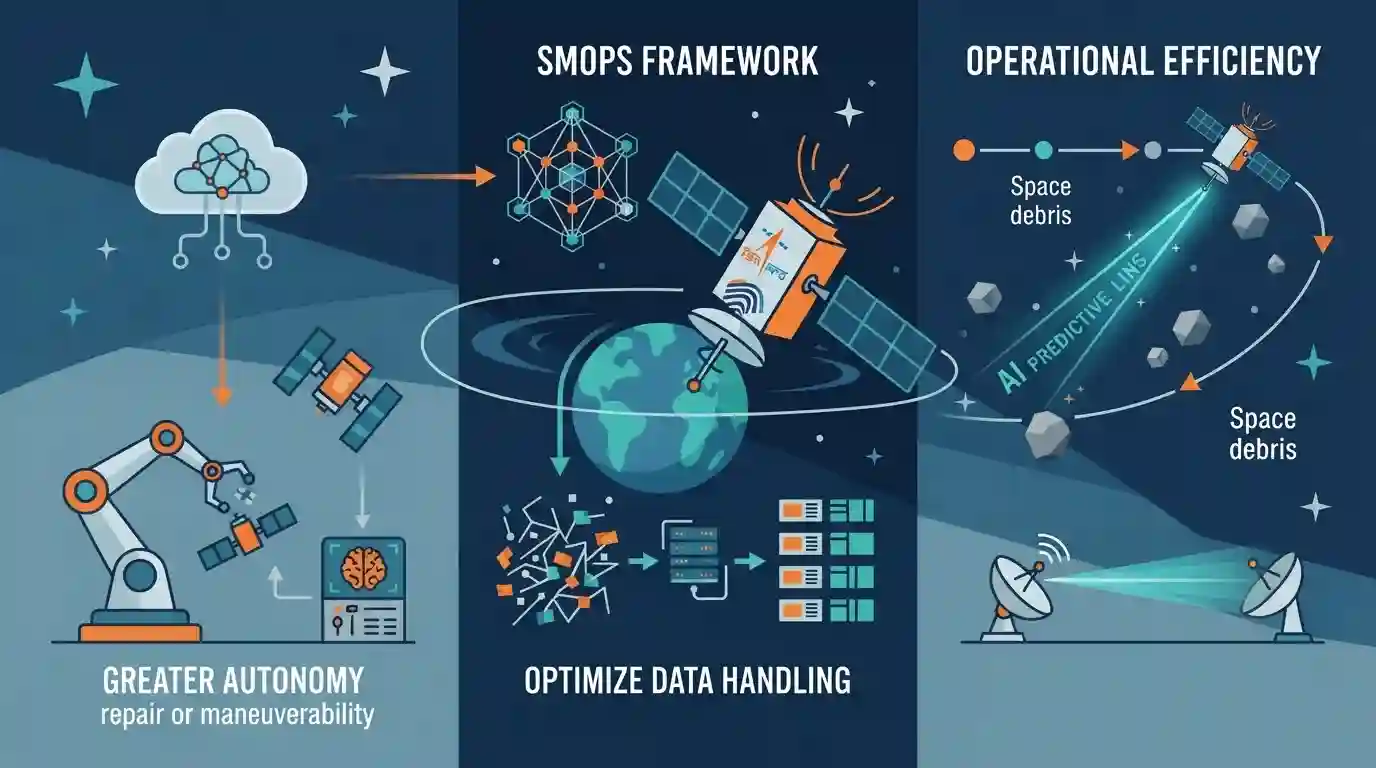
ISRO is actively incorporating Artificial Intelligence (AI) and advanced frameworks like SMOPS into its upcoming space missions to achieve greater autonomy, optimize data handling, and enhance operational efficiency in satellite management.
मुख्य मुद्दे
- ISRO is integrating Artificial Intelligence (AI) into future space missions to enhance autonomy, data processing, and decision-making capabilities.
- SMOPS (Smart Operations) framework is being leveraged to streamline space operations and optimize satellite missions.
- AI implementation helps manage the massive influx of telemetry and space observation data efficiently, reducing human intervention.
- Highlights India's technological shift towards smart automation in space science, fostering indigenous space capabilities.
महत्त्वाच्या संज्ञा
ISRO

India's apex national space agency responsible for planning, executing, and managing space exploration, satellite deployment, launch vehicle development, and scientific research.
UPSC context
UPSC GS Paper III (Science & Technology - Space). Tests knowledge of India's institutional advancements, space policy, and recent technological achievements.
SMOPS
The International Conference on Spacecraft Mission Operations, a major global forum focusing on innovative operations, smart space management, and next-generation mission automation.
UPSC context
UPSC GS Paper III (Science & Technology - Space). Tests awareness of international scientific conferences, collaborative frameworks, and contemporary trends in spacecraft management.
संबंधित स्थिर संकल्पना
What are the core applications of Artificial Intelligence in Indian space missions and satellite telemetry?
- Real-time Decision Making: Onboard autonomy allows satellites to make real-time orbital corrections without waiting for ground-station uplink windows.
- Data Optimization: Machine learning algorithms filter massive volumes of remote sensing and telemetry data directly on board, reducing downlink bandwidth bottlenecks.
- Space Traffic Management: AI-driven tracking systems assist in collision avoidance and space debris mitigation in congested low Earth orbits (LEO).
आंतर-विषय नमुने
AI Space Autonomy + Defence Avionics
ISRO's shift toward onboard autonomy mirrors global efforts in edge computing and defence avionics, merging GSAT communication networks with autonomous missile guidance systems.

ISRO's AI & SMOPS integration will likely feature in prelims matching statements on autonomous satellite navigation or deep-space data processing.
संबंधित PYQ · 1
संबंधित PYQ · 1
- 2016MainsGS3
Discuss India's achievements in the field of Space Science and Technology. How the application of this technology has helped India in its socio-economic development?
