आर्टिफिशियल इंटेलिजेंस बूम और विकास में व्यापक आर्थिक विसंगतियां
स्रोत:इंडियन एक्सप्रेस ↗
क्यों मायने रखता है
The intersection of advanced technology (AI) and macroeconomic stability is a critical area for UPSC candidates. The article highlights the importance of not losing sight of inclusive growth and structural employment challenges amidst technological hype, relevant for GS-3 Economics and S&T sections.
सारांश
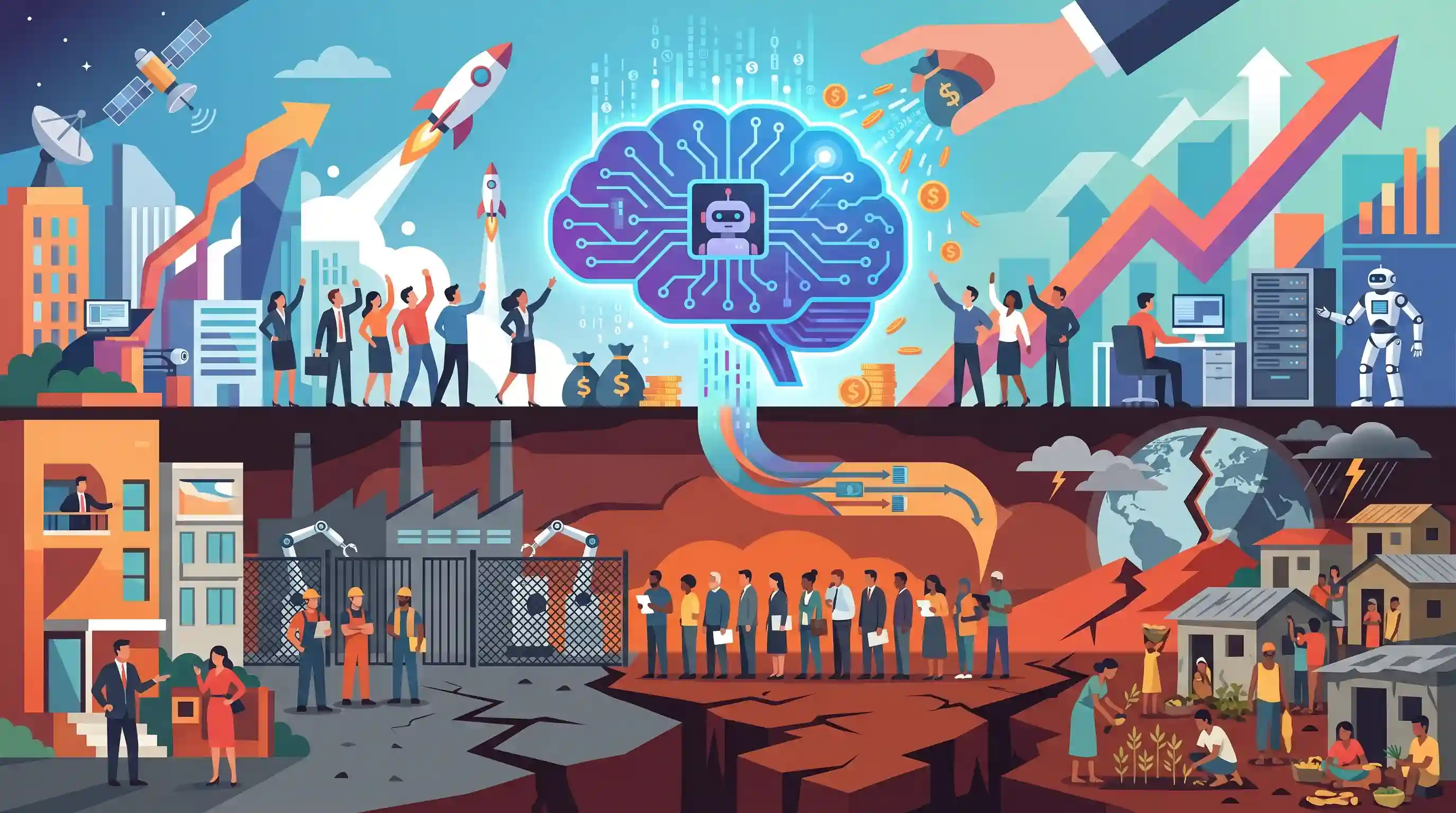
The article cautions against the unbridled optimism surrounding the 'AI mania,' arguing that it distracts from underlying structural economic challenges and rising global uncertainty. While capital disproportionately flows into Artificial Intelligence and tech valuations soar, critical 'economic fissures'—such as structural unemployment, rising inequality, and the lack of inclusive growth—are being neglected. The piece emphasizes that technological exuberance should not mask the urgent need for comprehensive macroeconomic reforms, warning that without addressing labor disruptions and equitable wealth distribution, the AI boom could lead to jobless growth and deeper economic disparities.
मुख्य बिंदु
- The current surge of investment and enthusiasm in Artificial Intelligence (AI) is creating a technological bubble that risks masking broader macroeconomic vulnerabilities.
- While tech stocks soar, deep-rooted 'economic fissures' such as structural unemployment, income inequality, and stagnant inclusive growth remain unaddressed.
- The transition towards an AI-driven economy might exacerbate labor displacement, making it crucial to manage the transition to avoid jobless growth.
- Policymakers must look beyond the AI hype to tackle rising global economic uncertainties, focusing on systemic economic reforms and sustainable growth strategies.
प्रारंभिक ट्रैप
"Jobless growth indicates an economic phase with high employment elasticity where GDP expands."
Jobless growth implies extremely LOW or near-zero employment elasticity. GDP grows, but employment elasticity drops because output expansion isn't creating proportional jobs.
संबंधित अवधारणाएँ
What is the 'Employment Elasticity of Growth'?
- मुख्य परिभाषा: A macroeconomic metric measuring how employment responds to GDP growth, calculated as the percentage change in employment for every 1% change in economic growth.
- भारतीय संदर्भ: India has experienced steadily declining employment elasticity over recent decades, indicating that GDP growth is increasingly driven by capital-intensive sectors rather than mass labor generation.
How does structural unemployment differ from cyclical or frictional unemployment?
- Structural Unemployment: Caused by a fundamental mismatch between workforce skills and market demands, often triggered by technological disruptions like AI or shifts in the economic structure.
- घर्षणजनित बेरोजगारी: Short-term, temporary joblessness that occurs when workers are voluntarily in-between jobs or transitioning to new roles in the labor market.
- Cyclical Unemployment: Involuntary unemployment directly tied to the business cycle, occurring during economic downturns or recessions when aggregate demand falls short.
अंतर-विषय पैटर्न
AI & India's Demographic Dividend
Automation of routine cognitive jobs threatens to shut off the mass-employment avenues necessary to harness India's demographic dividend before it peaks in the 2040s.
Universal Basic Income (UBI) & AI
As AI-driven skill polarization causes wage stagnation and concentrates wealth among capital owners, economic debates around UBI as an essential social safety net gain prominence.

Expect a GS3 Mains question directly linking AI deployment to India's declining employment elasticity and the 'jobless growth' phenomenon.
संबद्ध PYQ · 4
संबद्ध PYQ · 4
- 2023MainsGS3
Introduce the concept of Artificial Intelligence (AI). How does Al help clinical diagnosis? Do you perceive any threat to privacy of the individual in the use of Al in healthcare?
- 2022MainsGS3
Economic growth in the recent past has been led by increase in labour productivity." Explain this statement. Suggest the growth pattern that will lead to creation of more jobs without compromising labour productivity.
- 2023MainsGS3
Most of the unemployment in India is structural in nature. Examine the methodology adopted to compute unemployment in the country and suggest improvements.
- 2016MainsGS3
Comment on the challenges for inclusive growth which include careless and useless manpower in the Indian context. Suggest measures to be taken for facing these challenges.
