Dual Impact of Artificial Intelligence in Cancer Healthcare
Source:The Hindu ↗
Why It Matters
AI in healthcare is a rapidly evolving domain with direct implications for public health infrastructure, patient safety, and medical ethics. Understanding its socio-ethical impacts is crucial for civil servants formulating digital health policies.
Summary
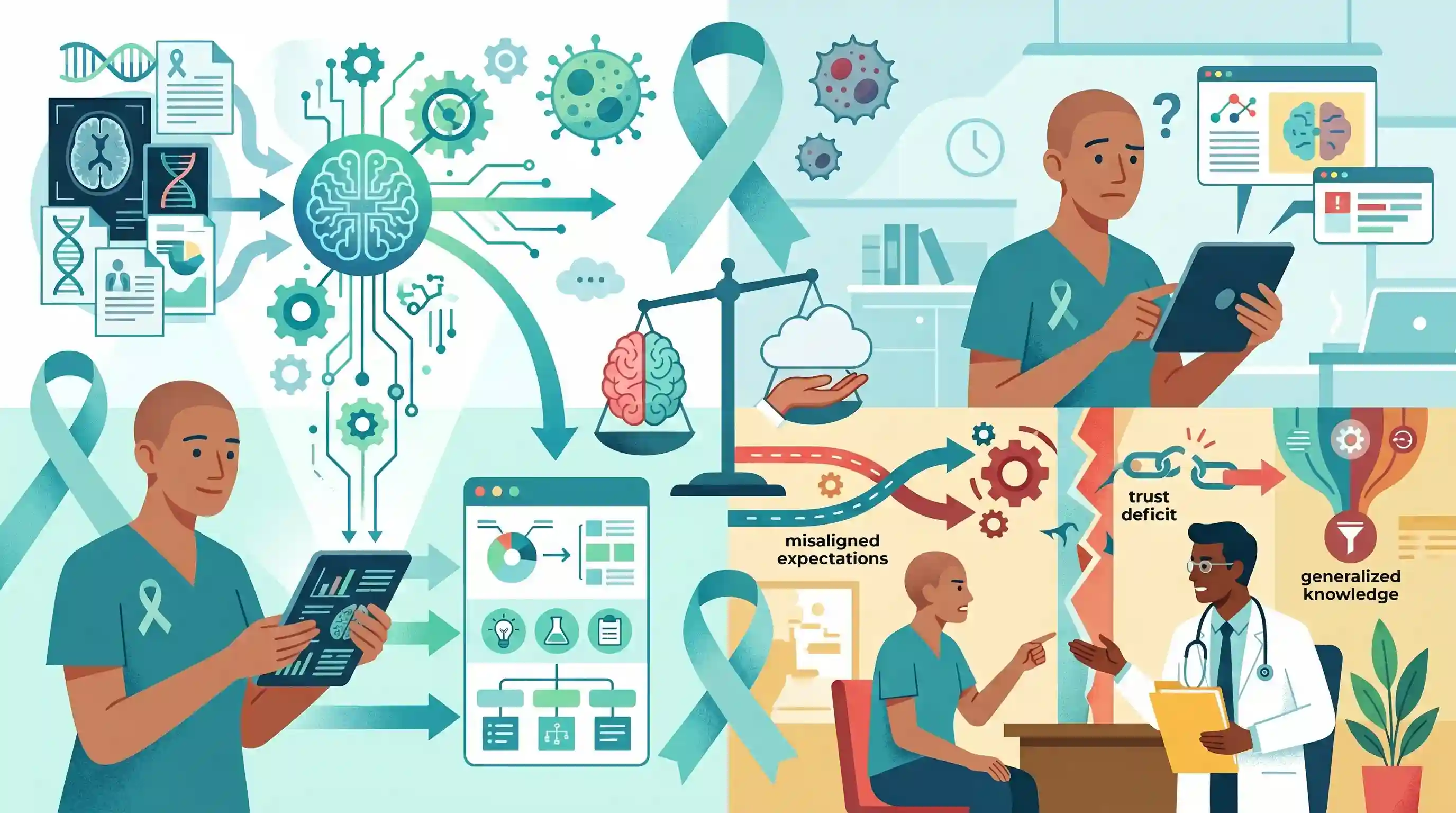
The article explores the dual impact of Artificial Intelligence (AI) on healthcare, specifically concerning cancer patients. While AI tools help patients simplify and understand complex medical information and diagnoses, they also risk causing misunderstandings between patients and their doctors. Because AI models provide generalized information without grasping a patient's specific clinical context, they can create confusion, misaligned treatment expectations, and a potential trust deficit in the doctor-patient relationship. The situation underscores the need to balance technological empowerment with medical expertise and ethical considerations.
Key Points
- AI tools and chatbots are increasingly utilized by patients to decode complex medical jargon related to cancer diagnoses, aiding in health literacy.
- While AI helps democratize medical knowledge, it lacks the contextual understanding of an individual patient's unique clinical history and prognosis.
- Over-reliance on AI can lead to misunderstandings, where generalized or inaccurate AI-generated information contradicts a doctor's nuanced, personalized advice.
- This discrepancy can result in a trust deficit, misaligned treatment expectations, and strain the doctor-patient relationship.
- The issue highlights the urgent need for robust ethical frameworks, patient AI literacy, and regulations to ensure the safety and accuracy of AI-generated health information.
Prelims Trap
Generative AI chatbots are legally recognized as primary personalized diagnostic tools for cancer in India.
While AI aids in health literacy and simplifies jargon, generative AI chatbots are not clinically approved as primary diagnostic tools due to lack of individual context.
Static Concepts Connected
What are the four foundational principles of medical bioethics?
- Autonomy: Respecting a patient's right to make informed, independent decisions about their own healthcare and treatments.
- Beneficence: The obligation of healthcare providers to act in the best interest of the patient.
- Non-maleficence: The core principle of "do no harm" – avoiding actions that cause unnecessary suffering or injury.
- Justice: Ensuring fairness, equity, and impartiality in the distribution of healthcare resources and treatments.
How is Artificial Intelligence currently utilized in public health and diagnostics?
- Image Analysis: AI is used in radiology and pathology to detect anomalies like tumors earlier than traditional methods.
- Predictive Analytics: Forecasting disease outbreaks and patient admission rates using historical epidemiological data.
- Drug Discovery: Accelerating the identification of potential therapeutic compounds and automating clinical trial matching for oncology.
Cross-Topic Patterns
AI diagnostics & Health Data Privacy
The use of patient data to train medical AI models directly intersects with the DPDP Act 2023, raising concerns over consent, anonymization, and the commercialization of sensitive health data.
Bioethics of algorithmic advice (GS4)
As AI generalizes medical advice, it disrupts the trust and accountability foundation of the doctor-patient relationship, making algorithmic health literacy a prime candidate for GS4 case studies on professional ethics.

GS3/GS4 Mains 2026: Expect a question linking generative AI in healthcare with medical ethics, patient trust, and clinical accountability.
Linked PYQs · 2
Linked PYQs · 2
- 2023MainsGS3
Introduce the concept of Artificial Intelligence (AI). How does Al help clinical diagnosis? Do you perceive any threat to privacy of the individual in the use of Al in healthcare?
- 2022MainsGS4
Online methodology is being used for day-to-day meetings, institutional approvals in the administration and for teaching and learning in education sector to the extent telemedicine in the health sector is getting popular with the approvals of the competent authority. No doubt, it has advantages and disadvantages for both the beneficiaries and the system at large. Describe and discuss the ethical issues involved in the use of online method particularly to the vulnerable section of the society.
