AI deepfakes and X platform regulation during geopolitical conflicts
Source:The Hindu ↗
Why It Matters
Highlights the security and ethical challenges posed by AI-generated disinformation during geopolitical conflicts, as well as the limitations of self-regulation by social media platforms—key issues for internal security and technology governance.
Summary
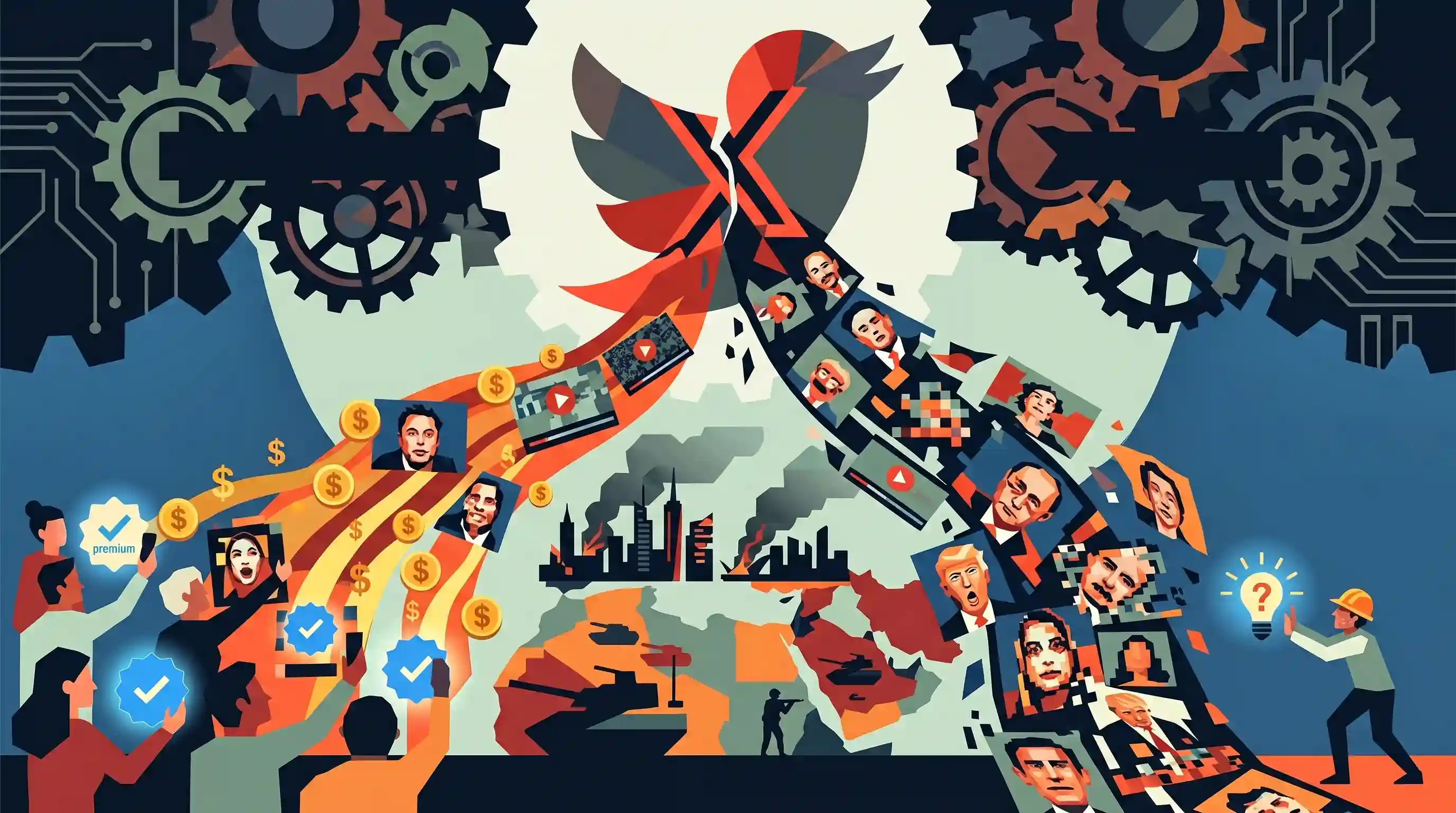
Despite introducing a new policy to penalize creators who share undisclosed AI-generated content, social media platform X is overwhelmed by deepfakes related to the West Asia conflict. Researchers point out that the platform's monetization model financially incentivizes premium accounts to spread sensational disinformation. Furthermore, experts criticize X's reliance on the limited Community Notes feature for fact-checking, emphasizing the broader challenge of regulating AI and social media during geopolitical crises.
Key Points
- X implemented a 90-day demonetization policy for creators who post undisclosed AI-generated war videos.
- The policy aims to curb a massive influx of lifelike deepfakes related to the West Asia conflict between Iran, the US, and Israel.
- Disinformation researchers remain skeptical of the policy's effectiveness, citing financial incentives for premium accounts to post sensational fakes.
- The platform's reliance on crowd-sourced Community Notes for fact-checking is seen as inadequate, and its AI chatbot, Grok, has even misidentified fake visuals as real.
Important Terms
X (Social Media Platform)

A global social media and microblogging platform owned by Elon Musk, central to debates over intermediary liability, monetization of content, and the spread of real-time misinformation.
UPSC context
GS Paper 2/3: Regulation of intermediaries, social media accountability, and internal security challenges from viral disinformation.
Institute for Strategic Dialogue (ISD)
A London-based non-profit think tank that researches and develops policies to counter extremism, polarization, and disinformation globally.
UPSC context
GS Paper 3: Internal Security; relevant for studying global influence operations and digital radicalization trends.
AFP (Agence France-Presse)
One of the world's three major news agencies, based in France, renowned for its global network and extensive digital fact-checking operations.
UPSC context
GS Paper 2: Role of media in a democracy and the importance of verified information in governance.
Tech Transparency Project (TTP)
A research-based watchdog group that investigates the influence of Big Tech companies on politics and their failures to protect users from harmful content.
UPSC context
GS Paper 2: Transparency and accountability of global tech platforms; relevant to the IT Rules.
Digital Democracy Institute of the Americas (DDIA)
A research organization that studies how disinformation impacts democratic participation and seeks to build information resilience within communities across the Americas.
UPSC context
GS Paper 2: International case studies in protecting digital democracy and combating foreign information interference.
Cornell Tech
An applied science and technology research hub of Cornell University, significant for its work on AI safety, deepfake detection, and technical watermarking.
UPSC context
GS Paper 3: Science and Technology; covers technical solutions for cybersecurity and emerging threats like synthetic media.
Prelims Trap
"India has enacted a dedicated 'Deepfake Regulation Act' to penalize synthetic media and AI disinformation."
India does not currently have a dedicated deepfake law. Prosecution relies entirely on the existing Information Technology Act, 2000 and the IT Rules, 2021.
Static Concepts Connected
What is the 'Safe Harbour' provision for intermediaries in India?
- Section 79 (IT Act): Grants legal immunity to social media platforms from liability for third-party user content hosted on their networks.
- Due Diligence Condition: Protection is conditional; platforms must observe mandated due diligence, such as establishing grievance redressal mechanisms and acting within specified timelines.
- Loss of Immunity: Failure to expeditiously remove reported unlawful content (like deepfakes) strips platforms of immunity, exposing them to direct criminal prosecution.
How are deepfakes currently prosecuted under Indian law?
- Section 66D (IT Act): Punishes cheating by personation using a computer resource, frequently applicable when deepfakes are used for financial fraud or identity theft.
- Section 66E (IT Act): Punishes the intentional capture, publication, or transmission of images violating a person's privacy, relevant for non-consensual deepfake pornography.
- IT Rules 2021: The central government issues directives mandating platforms to take down deepfakes to maintain their safe harbour status.
Cross-Topic Patterns
AI Disinformation & Hybrid Warfare
Deepfakes are weaponized by state and non-state actors as tools of psychological subversion, directly linking social media regulation to broader GS-3 Internal Security and hybrid warfare challenges.
Monetization vs. Media Ethics
Financial incentives for viral engagement create a structural ethical dilemma for tech giants, linking tech regulation (GS-3) directly to Corporate Governance and Media Ethics (GS-4).

Expect a 2026 Mains question evaluating the inadequacy of IT Act 'Safe Harbour' principles against AI-driven monetization of disinformation.
Linked PYQs · 4
Linked PYQs · 4
- 2024MainsGS3
Social media and encrypting messaging services pose a serious security challenge. What measures have been adopted at various levels to address the security implications of social media? Also suggest any other remedies to address the problem.
- 2016MainsGS3
Use of Internet and social media by non-state actors for subversive activities is a major security concern. How have these been misused in the recent past? Suggest effective guidelines to curb the above threat.
- 2024MainsGS4
The application of Artificial Intelligence as a dependable source of input for administrative rational decision-making is a debatable issue. Critically examine the statement from the ethical point of view.
- 2025MainsGS4
In the present digital age, social media has revolutionised our way of communication and interaction. However, it has raised several ethical issues and challenges. Describe the key ethical dilemmas in this regard.
