AI Integration in Distributed Renewable Energy and Smart Grids
Source:Indian Express ↗
Why It Matters
Understanding the intersection of emerging technologies (like AI) and renewable energy is vital for GS-3. It showcases practical applications of AI in addressing critical challenges in the energy sector, aiding India's shift to decentralized renewable energy and fulfilling sustainable development goals.
Summary
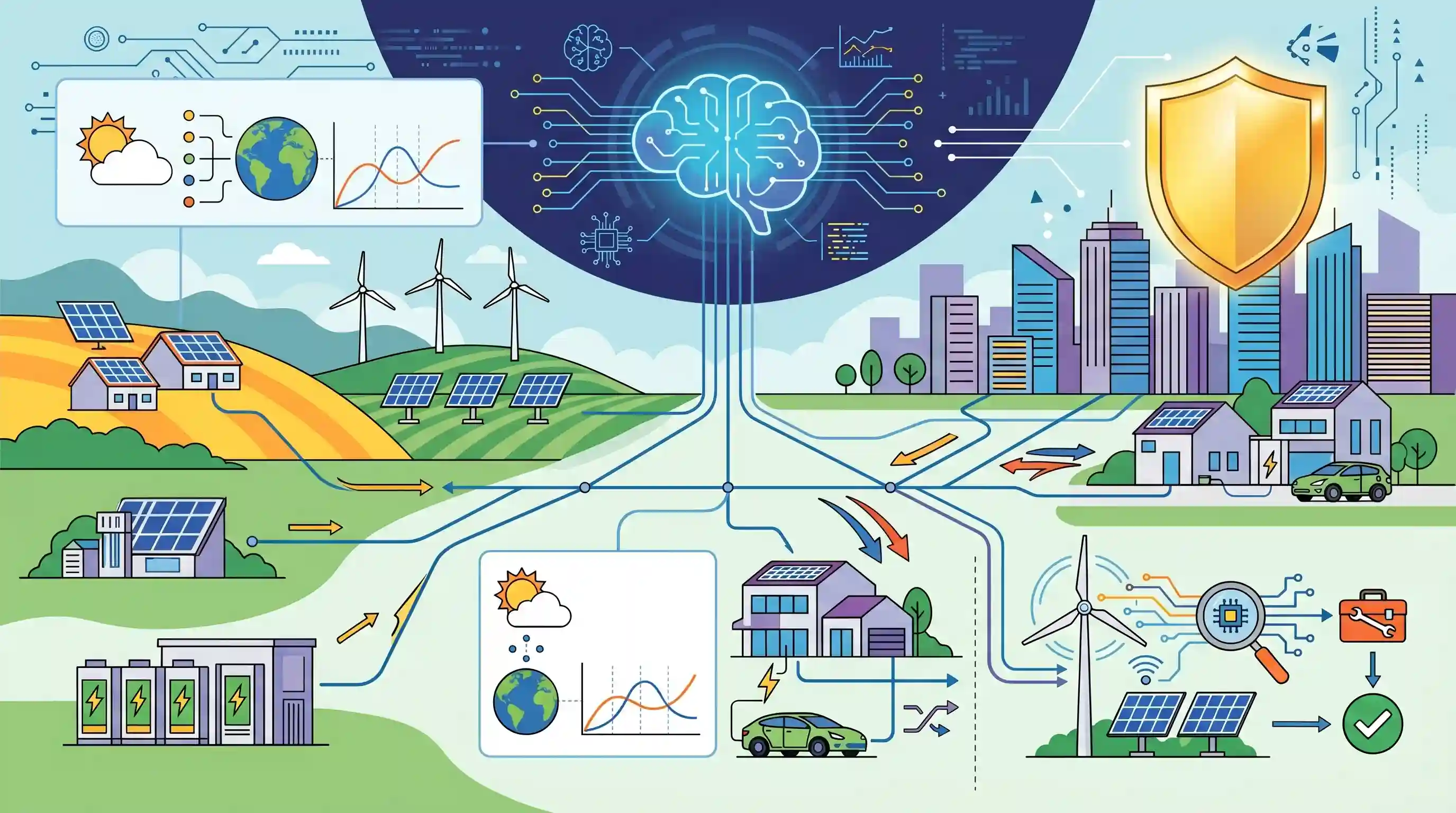
The article discusses the transformative potential of Artificial Intelligence (AI) in optimizing Distributed Renewable Energy (DRE) systems. AI can significantly enhance the efficiency of decentralized energy resources, such as rooftop solar and battery storage, through predictive generation forecasting, intelligent load management, and predictive maintenance. By integrating AI into smart grids, variable renewable energy can be managed more effectively to ensure grid stability. This synergy between advanced algorithms and clean energy technologies is poised to act as a game changer, driving the transition towards a more reliable, decentralized, and sustainable energy infrastructure.
Key Points
- Artificial Intelligence (AI) can optimize Distributed Renewable Energy (DRE) by accurately forecasting generation from decentralized sources and matching it with local demand.
- AI algorithms enable predictive maintenance for DRE assets like rooftop solar and battery storage, thereby minimizing operational downtime and costs.
- The integration of AI into smart grids facilitates better load balancing, grid stability, and efficient management of variable renewable energy inputs.
- Leveraging AI in distributed energy systems accelerates the transition to a decentralized energy model, promoting energy security and reliability.
Prelims Trap
"Distributed Renewable Energy (DRE) systems are strictly off-grid and do not interact with the centralized grid infrastructure."
DRE systems often integrate with centralized grids (e.g., net-metered rooftop solar). AI's primary value is managing this two-way power flow to maintain overall grid stability.
Static Concepts Connected
What constitutes Aggregate Technical and Commercial (AT&C) losses in power distribution?
- Technical Losses: Energy dissipated as heat during transmission and distribution due to equipment inefficiencies, transformer sizing, and conductor resistance.
- Commercial Losses: Revenue leakages caused by power theft, unmetered supply, defective meters, and inefficiencies in billing and collection.
How does a Smart Grid fundamentally differ from a conventional power grid?
- Two-way communication: Unlike conventional grids (one-way generation-to-consumer), smart grids allow electricity and data to flow in both directions, enabling active consumer participation.
- Self-healing capability: Uses advanced sensors and AI to automatically detect, isolate, and reroute power around faults with minimal human intervention.
- DRE Integration: Seamlessly accommodates decentralized, variable energy sources like rooftop solar and battery storage into the base load without frequency collapse.
Cross-Topic Patterns
AI & PM Surya Ghar integration
India's massive rooftop solar push creates volatile bidirectional power flows. AI-driven smart grids are critical to manage this decentralized generation without destabilizing local distribution transformers.
Cybersecurity of Critical Infrastructure
Connecting distributed energy networks via AI and IoT drastically expands the attack surface for state-sponsored cyber threats, linking clean energy transitions directly to national security and GS-3 cybersecurity.

AI applications in smart grids (load balancing, predictive maintenance, net-metering) are prime for a 2026 multi-statement prelims question.
Linked PYQs · 4
Linked PYQs · 4
- 2020PrelimsGS1
With the present state of development, Artificial Intelligence can effectively do which of the following? 1. Bring down electricity consumption in industrial units 2. Create meaningful short stories and songs 3. Disease diagnosis 4. Text-to-Speech Conversion 5. Wireless transmission of electrical energy Select the correct answer using the code given below:
- 2024PrelimsGS1
Consider the following: 1. Battery storage 2. Biomass generators 3. Fuel cells 4. Rooftop solar photovoltaic units How many of the above are considered "Distributed Energy Resources"?
- 2023MainsGS3
Introduce the concept of Artificial Intelligence (AI). How does Al help clinical diagnosis? Do you perceive any threat to privacy of the individual in the use of Al in healthcare?
- 2018MainsGS3
“Access to affordable, reliable, sustainable and modern energy is the sine qua non to achieve Sustainable Development Goals (SDGs).” Comment on the progress made in India in this regard.
