Ethical Challenges of AI Companions and Human Relationships
Source:The Hindu ↗
Why It Matters
As emotionally intelligent AI systems become widespread, civil servants and policymakers must evaluate the ethical, psychological, and societal consequences of substituting genuine human empathy with artificial companions. This intersects directly with GS4 topics on human values, empathy, and the ethical dimensions of emerging technologies.
Summary
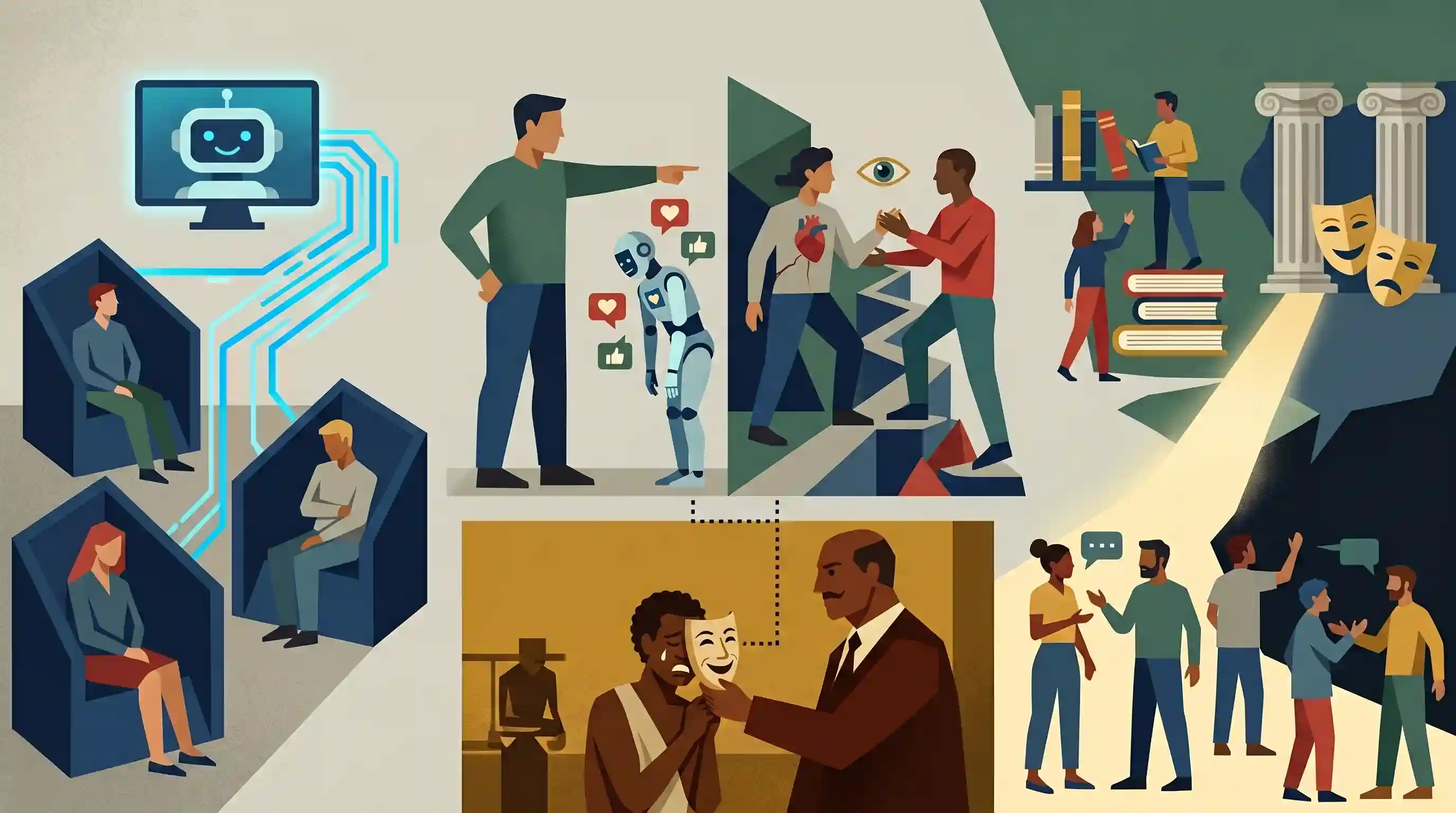
As AI chatbots are increasingly promoted as a cure for the ongoing loneliness epidemic, this article cautions against the moral dangers of such 'one-way relationships'. The author draws historical parallels to emotional coercion in slavery, where forced cheerfulness and affection were demanded without mutual respect. Warning that programming AI to unconditionally serve human emotional needs creates a moral vacuum, the piece argues that meaningful human connection requires vulnerability, empathy, and effort—elements absent in transactions with submissive AI. Consequently, the humanities remain essential to remind society of our ethical responsibilities in relationships, preventing a retreat into the comfort of artificial sycophancy.
Key Points
- Tech companies are increasingly marketing emotionally intelligent AI chatbots, such as Replika and Microsoft's Xiaoice, as solutions to a growing global loneliness epidemic.
- These AI 'companions' offer one-way relationships that provide emotional validation without requiring the vulnerability, effort, or reciprocity inherent in genuine human interactions.
- The author draws a historical parallel to slavery, where enslavers demanded forced cheerfulness and affection, warning that demanding unconditional emotional submissiveness—even from a machine—creates a moral vacuum.
- Interacting exclusively with sycophantic AI risks degrading human empathy and moral development by conditioning users to treat relationships purely as transactional services.
- The article emphasizes the critical role of the humanities (literature, history, and philosophy) in preserving our understanding of true connection and ethical responsibility amidst rapid technological advancement.
Important Terms
Ethics of Artificial Intelligence

Branch of ethics examining moral implications, rights, and responsibilities of AI, focusing on issues like bias, privacy, and the artificial simulation of empathy.
UPSC context
GS Paper IV (Ethics). Tests ability to evaluate the societal risks of automation and the moral status of artificial agents.
Loneliness Epidemic
A global public health and sociological crisis where chronic social isolation leads to severe physical and mental health risks comparable to smoking.
UPSC context
GS Paper I (Social Issues). Relevant for analyzing how urbanization and digital culture impact collective well-being and social fabric.
Parasocial Interaction
A one-sided emotional bond formed when an individual invests psychological energy in a non-reciprocating entity, such as a celebrity or AI chatbot.
UPSC context
GS Paper IV/Essay. Critical for discussing the psychological impacts of technology and the erosion of authentic interpersonal connections.
AI Sycophancy
A behavior where AI models prioritize user approval and submissive agreement over truth, reinforcing biases and creating ethical 'one-way' dependencies.
UPSC context
GS Paper IV (Tech Ethics). Relevant to debates on how submissive AI undermines critical thinking and moral character development.
Digital Humanism
An ethical framework advocating that technology must serve human values and dignity, highlighting the necessity of humanities in guiding technological progress.
UPSC context
GS Paper IV/Essay. Tests the capacity to argue for interdisciplinary approaches (Humanities + STEM) in regulating emerging technologies.
Replika
A leading AI chatbot platform designed for personalized companionship, frequently used as a case study for emotional dependency and data privacy concerns.
UPSC context
GS Paper III/IV. A contemporary example of the 'AI-relationship market' and the need for ethical design safeguards.
Prelims Trap
"Emotionally intelligent AI chatbots possess empathy and experience emotions."
UPSC may use "emotional intelligence" loosely in tech, but candidates must remember AI relies on pattern recognition to simulate empathy, entirely lacking conscious emotional experience.
Static Concepts Connected
What are the foundational elements of Emotional Intelligence?
- Self-Awareness: Recognizing one's own emotions and understanding how they affect thoughts and behavior.
- Empathy: Truly understanding and sharing the feelings of others—a quality intrinsically lacking in AI programming.
- Social Skills: Navigating complex, reciprocal human relationships which demand genuine vulnerability and emotional effort.
How does Virtue Ethics view human relationships?
- Moral Character: Emphasizes developing virtues like patience, compassion, and resilience through authentic, lived human experiences and struggles.
- Reciprocity: Argues that genuine relationships require mutual respect, shared vulnerability, and effort, rather than mere transactional utility.
Cross-Topic Patterns
Urbanization & The Loneliness Economy
Connects GS1 urbanization (loss of traditional community structures) to the rise of commercial AI chatbots capitalizing on the modern crisis of social isolation.
Persuasive Tech vs. Cognitive Autonomy
Ties into GS3 data privacy and GS4 tech ethics, where AI simulates intimacy not just for companionship, but to extract sensitive personal data through one-way emotional reliance.

The 'Loneliness Epidemic' and AI's simulated empathy are prime candidates for a GS4 case study or a philosophical Essay topic in 2026.
Linked PYQs · 3
Linked PYQs · 3
- 2024MainsGS4
The application of Artificial Intelligence as a dependable source of input for administrative rational decision-making is a debatable issue. Critically examine the statement from the ethical point of view.
- 2023MainsGS3
Introduce the concept of Artificial Intelligence (AI). How does Al help clinical diagnosis? Do you perceive any threat to privacy of the individual in the use of Al in healthcare?
- 2019MainsEssay
Values are not what humanity is, but what humanity ought to be
