Andhra Pradesh Agriculture Department Cyclone Preparedness Measures
Source:The Hindu ↗
Why It Matters
This article provides an excellent case study of disaster preparedness and the practical application of e-technology in agriculture (GS3). It illustrates how real-time data analytics, early warning systems, and coordinated governance can minimize crop vulnerability during natural disasters like cyclones.
Summary
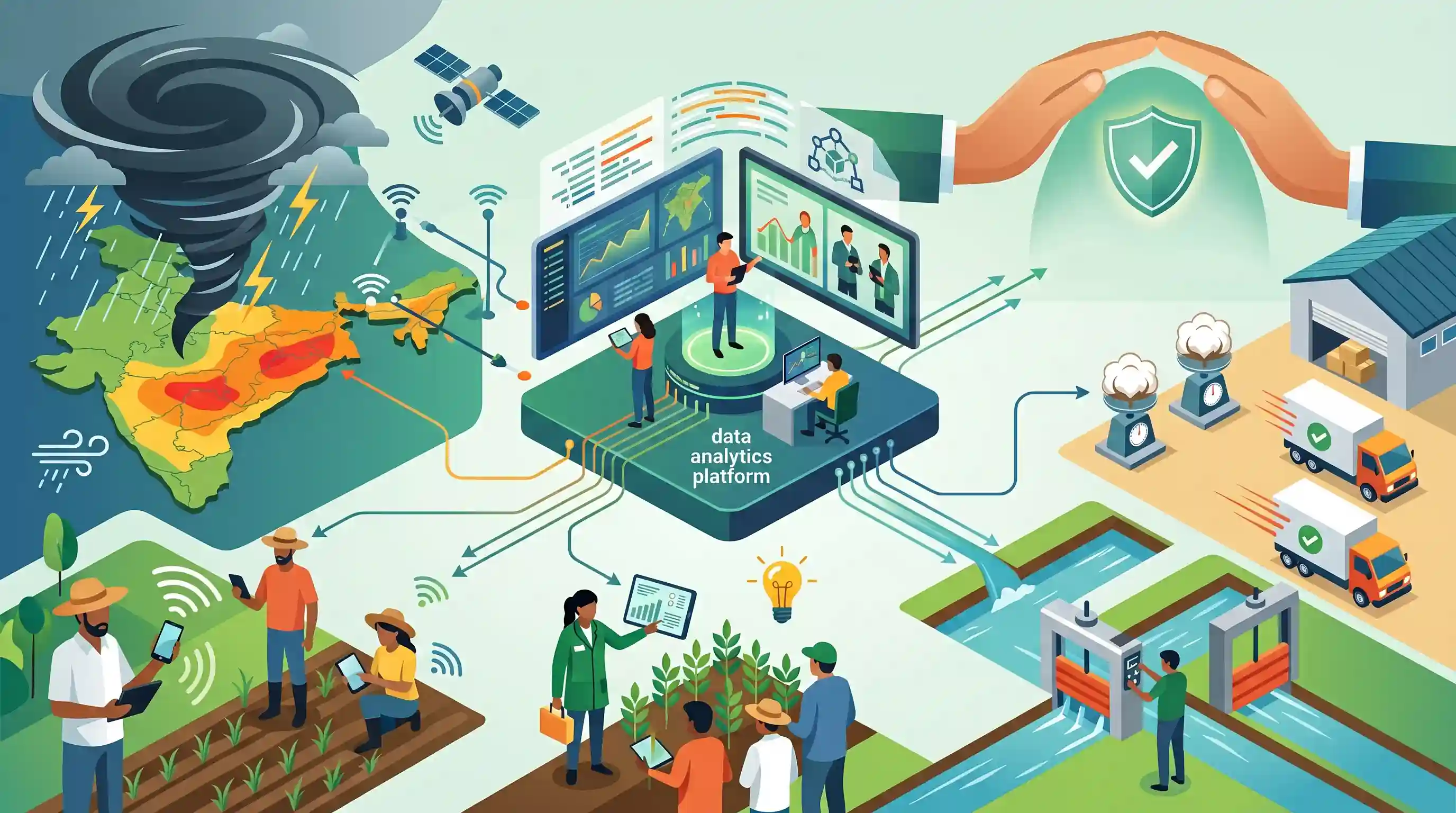
The Andhra Pradesh Agriculture Department is implementing a comprehensive, data-driven disaster preparedness strategy ahead of Cyclone Montha to mitigate crop damage. By leveraging the AP-AIMS platform, officials are mapping vulnerable agricultural zones and dispatching real-time updates and SMS alerts to farmers. Interventions include technical guidance from field assistants, regulating irrigation to prevent flooding, and expediting cotton procurement to prevent moisture damage. The integration of data analytics and e-governance in disaster management highlights a modern approach to safeguarding agricultural livelihoods against extreme weather events.
Key Points
- The Andhra Pradesh Agriculture Department is utilizing AP-AIMS, a data analytics platform developed by Vassar Labs, to prepare for Cyclone Montha.
- Rainfall and wind speed predictions are being analyzed to map vulnerable crops, including 6.23 lakh acres of paddy, across several districts.
- 69 lakh SMS alerts and field interventions via Rythu Seva Kendras have been deployed to provide farmers with crop-specific protection advisories.
- Proactive measures include regulating canal discharges, securing banana and vegetable crops, and expediting the procurement of ready cotton by the Cotton Corporation of India.
- The administration is leveraging IVRS-based performance reviews through RTGS to hold field officers accountable during the crisis.
Important Terms
AP-AIMS (Andhra Pradesh Agriculture Information Management System)

An AI-driven digital platform in Andhra Pradesh that integrates satellite data, IoT, and weather forecasts to provide farmers with plot-level pest alerts, irrigation advisories, and seamless subsidy delivery.
UPSC context
GS Paper 3: E-technology in the aid of farmers; shows how Digital Public Infrastructure enhances agricultural resilience.
Cyclone Montha
A severe cyclonic storm in the Bay of Bengal (October 2025) that tested Andhra Pradesh's data-driven disaster preparedness, particularly in safeguarding standing crops and regulating water resources.
UPSC context
GS Paper 3: Disaster Management; illustrates the shift from reactive to proactive tech-based disaster mitigation.
Rythu Seva Kendras (RSK)
Village-level one-stop centers in Andhra Pradesh providing 'seed-to-sale' services, including soil testing, quality input supply, and procurement of produce at Minimum Support Price (MSP).
UPSC context
GS Paper 2 & 3: Governance and Agricultural Marketing; recognized by NITI Aayog as a national best practice.
Cotton Corporation of India (CCI)
The nodal Public Sector Undertaking under the Ministry of Textiles responsible for cotton procurement at Minimum Support Price (MSP) and maintaining price stability in the cotton market.
UPSC context
GS Paper 3: Agricultural Pricing and Institutions; critical for protecting cotton farmers during market volatility.
Vassar Labs
A technology provider specializing in AI, IoT, and remote sensing that developed Andhra Pradesh’s integrated platforms for real-time agricultural monitoring and disaster early warning systems.
UPSC context
GS Paper 3: Science & Technology; example of public-private partnership in building climate-resilient digital infrastructure.
Real-time Governance Society (RTGS)
A command-and-control center in Andhra Pradesh that uses data analytics for real-time monitoring of governance, public service delivery, and emergency response during natural disasters.
UPSC context
GS Paper 2: E-governance; tests understanding of technology's role in administrative transparency and disaster mitigation.
Prelims Trap
"Early warning pre-disaster crop procurement is an exclusive statutory mandate of the National Disaster Management Authority (NDMA)."
Pre-disaster interventions like expediting commercial crop procurement (e.g., by CCI) are executed by state agriculture departments and market agencies, not the NDMA.
Static Concepts Connected
What is the role of E-technology in disaster-proofing agriculture?
- Predictive mapping: AI and GIS platforms create dynamic hazard zonation to identify vulnerable crop acreage before extreme weather strikes.
- Targeted advisories: Delivering crop-specific, hyper-local SMS and IVRS warnings via localized extension hubs to guide preemptive farmer action.
- Administrative accountability: E-governance dashboards monitor real-time field interventions and ensure local field officers are accountable during crisis windows.
What are the agronomic and structural measures for cyclone mitigation in agriculture?
- Agronomic adjustments: Expediting the harvesting of mature crops, altering irrigation schedules, and securing standing crops like bananas ahead of landfall.
- Hydrological management: Pre-emptive regulation of canal discharges and strengthening of embankments to prevent flash floods and field inundation.
- Economic safeguards: Accelerating institutional procurement of ready-to-harvest cash crops to prevent moisture damage and subsequent distress sales by farmers.
Cross-Topic Patterns
E-governance meets Climate Resilience
Using IT platforms for real-time disaster tracking highlights the shift from reactive disaster relief to predictive, data-driven climate resilience in public administration and agriculture.
Procurement as disaster mitigation
Standard procurement operations by agencies like the Cotton Corporation of India can be strategically accelerated prior to cyclones, acting as a preemptive economic shield against extreme weather damage.

GS-3 2026: Expect a mains question fusing extreme weather, localized predictive tech (AI/Data), and agricultural disaster resilience.
Linked PYQs · 4
Linked PYQs · 4
- 2023MainsGS3
How does e-Technology help farmers in production and marketing of agricultural produce? Explain it.
- 2019MainsGS3
Disaster preparedness is the first step in any disaster management process. Explain how hazard zonation mapping will help disaster mitigation in the case of landslides.
- 2019MainsGS3
Vulnerability is an essential element for defining disaster impacts and its threat to people. How and in what ways can vulnerability to disasters be characterized? Discuss different types of vulnerability with reference to disasters.
- 2024MainsGS3
What is disaster resilience? How is it determined? Describe various elements of a resilience framework. Also mention the global targets of Sendai Framework for Disaster Risk Reduction (2015–2030).
