Chhatrapati Shivaji Maharaj Museum and Heritage Conservation in Agra
Source:Indian Express ↗
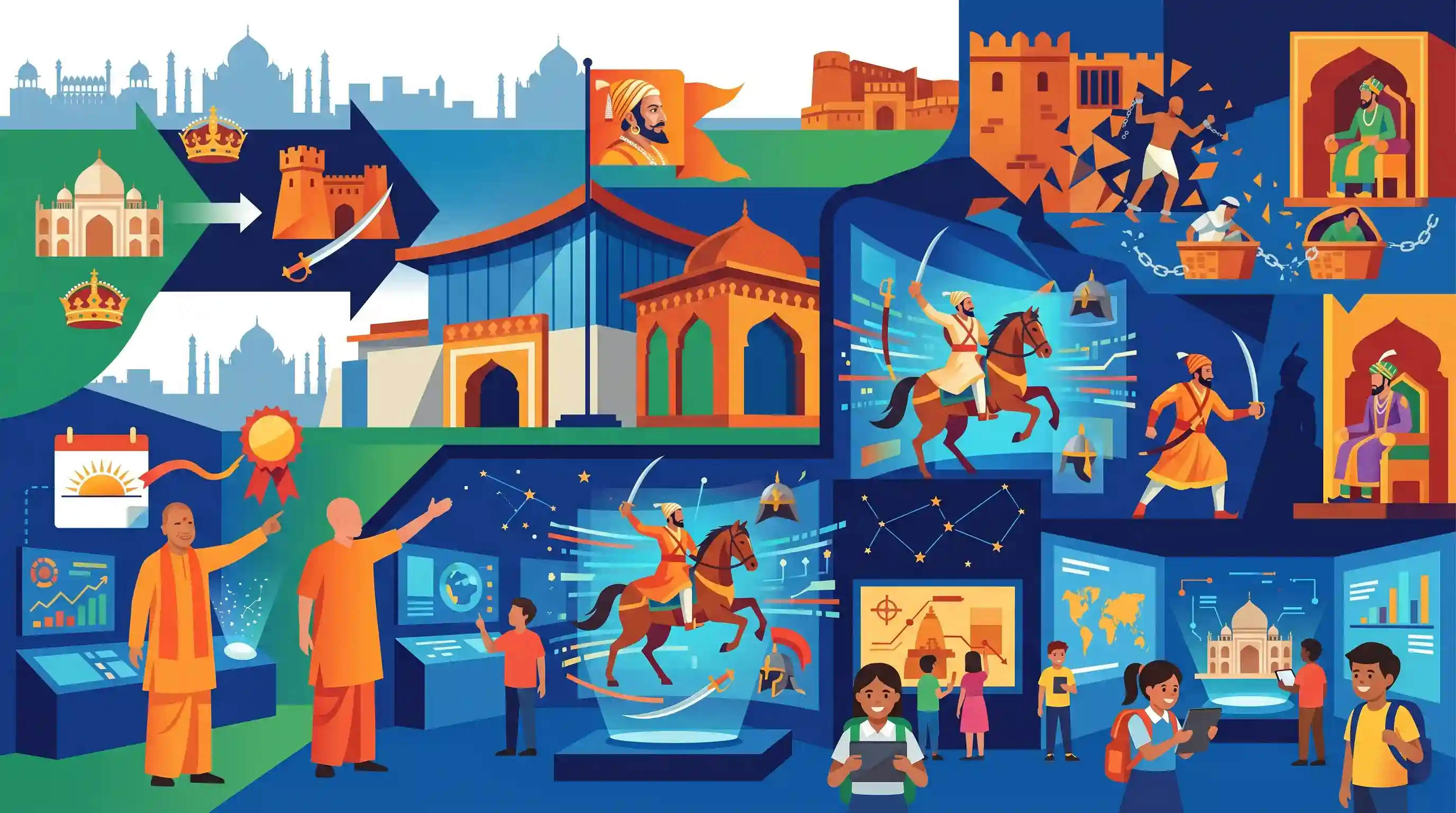
Why It Matters
The renaming and technological upgrading of heritage institutions highlight modern approaches to cultural preservation and state-led historical narratives. For UPSC, it serves as an excellent contemporary example of 'safeguarding Indian art heritage' and recalling significant events in medieval/early modern Indian history like Shivaji's interactions with the Mughal Empire.
Summary
The upcoming Chhatrapati Shivaji Maharaj Museum in Agra is set to be inaugurated in January, with UP Chief Minister Yogi Adityanath calling for state-of-the-art 'immersive experience' galleries. Originally planned as the Mughal Museum, it was renamed to honor the Maratha ruler's legacy, particularly focusing on his defiance of Aurangzeb and his legendary escape from imprisonment in Agra in 1666. The initiative represents a push to blend modern technology with cultural heritage preservation to educate future generations about Indian history.
Key Points
- The museum in Agra, originally conceived as the Mughal Museum, has been renamed the Chhatrapati Shivaji Maharaj Museum and is slated for inauguration in January.
- Uttar Pradesh Chief Minister Yogi Adityanath has directed the incorporation of 'immersive experience' galleries to vibrantly showcase Shivaji's life and legacy.
- The museum specifically commemorates Shivaji's historical connection to Agra, focusing on his strategic defiance, imprisonment by Mughal Emperor Aurangzeb in 1666, and his famous escape.
- The project highlights the use of modern technology in cultural preservation to engage the youth and promote Indian historical heritage.
Important Terms
Chhatrapati Shivaji Maharaj

The 17th-century founder of the Maratha Empire, known for establishing a sovereign kingdom (Swarajya) through guerrilla warfare tactics and a sophisticated administrative system called the Ashta Pradhan.
UPSC context
GS Paper I (Medieval History); tests regional state formation, resistance against central Mughal authority, and administrative reforms.
Mughal-Maratha Relations
The long-standing geopolitical conflict and diplomatic engagement (17th–18th centuries) between the Mughals and Marathas over territorial control and administrative rights, particularly in the Deccan region.
UPSC context
GS Paper I (History); focuses on the disintegration of the Mughal Empire and the rise of powerful regional states.
Aurangzeb
The sixth Mughal Emperor (r. 1658–1707) whose aggressive expansionist 'Deccan Policy' and religious stances significantly intensified conflict with the Marathas, notably during Shivaji’s 1666 Agra visit.
UPSC context
GS Paper I (History); covers administrative overreach, expansionist failures, and the subsequent decline of Mughal hegemony.
Treaty of Purandar (1665)
A 1665 pact between Mughal General Jai Singh I and Shivaji, forcing the latter to surrender 23 forts and visit the Mughal court in Agra, eventually leading to his imprisonment and escape.
UPSC context
GS Paper I (History); a pivotal diplomatic milestone illustrating Mughal strategic superiority and the subsequent Maratha resurgence.
Cultural Heritage Preservation
The systemic protection and management of India’s tangible assets (monuments, artifacts) and intangible traditions, guided by constitutional mandates like Article 49 and the AMASR Act 1958.
UPSC context
GS Paper I (Art and Culture); involves government policies for tourism, museumology, and maintaining national identity.
Immersive Experience Galleries
The integration of digital technology like Virtual Reality (VR) and interactive displays in museums to create engaging, educational environments that modernize historical storytelling and boost cultural tourism.
UPSC context
GS Paper I & III (Culture/Technology); relates to the modernization of museums and the use of technology in heritage education.
Prelims Trap
The Treaty of Purandar (1665) was signed directly between Chhatrapati Shivaji Maharaj and Mughal Emperor Aurangzeb.
The treaty was negotiated and signed with Raja Jai Singh I, a Rajput commander representing the Mughal Empire, not directly with Aurangzeb.
Static Concepts Connected
What were the key terms of the Treaty of Purandar (1665)?
- Forts surrendered: Shivaji ceded 23 forts to the Mughals, retaining only 12 for himself.
- Mansabdar status: Shivaji's son, Sambhaji, was granted a mansab (rank) of 5,000 in the Mughal system.
- Agra visit: Shivaji agreed to visit the Mughal court in Agra, which directly led to his famous house arrest and escape in 1666.
Which Constitutional provisions mandate the protection of historical heritage?
- Article 49 (DPSP): Directs the State to protect every monument, place, or object of artistic or historic interest from spoliation, destruction, or export.
- Article 51A(f): Makes it a fundamental duty of every citizen to value and preserve the rich heritage of our composite culture.
- Seventh Schedule: Jurisdiction over ancient and historical monuments is divided between the Union, State, and Concurrent lists depending on their declared national importance.
Cross-Topic Patterns
AR/VR in Heritage Conservation
The push for 'immersive experience' museums links Art & Culture with S&T, highlighting how augmented and virtual reality (AR/VR) are deployed for digital preservation and tourism promotion.
Renaming and historical narratives
Renaming institutions or places connects to the executive powers of the State government, often sparking debates on historical narratives, cultural identity, and political symbolism in modern India.

Expect a Prelims question pairing the Treaty of Purandar (1665) with Shivaji's Ashtapradhan system or his specific conflicts with Mughals.
Linked PYQs · 2
Linked PYQs · 2
- 2018MainsGS1
Safeguarding the Indian art heritage is the need of the moment. Discuss.
- 2017MainsGS1
Clarify how mid-eighteenth century India was beset with the spectre of a fragmented polity.
