Tribal Residential Schools Derecognition And Educational Governance
Source:hindustantimes ↗
Why It Matters
Crucial for understanding governance, accountability in tribal education, and state administration responses to student agitations in Maharashtra.
Summary
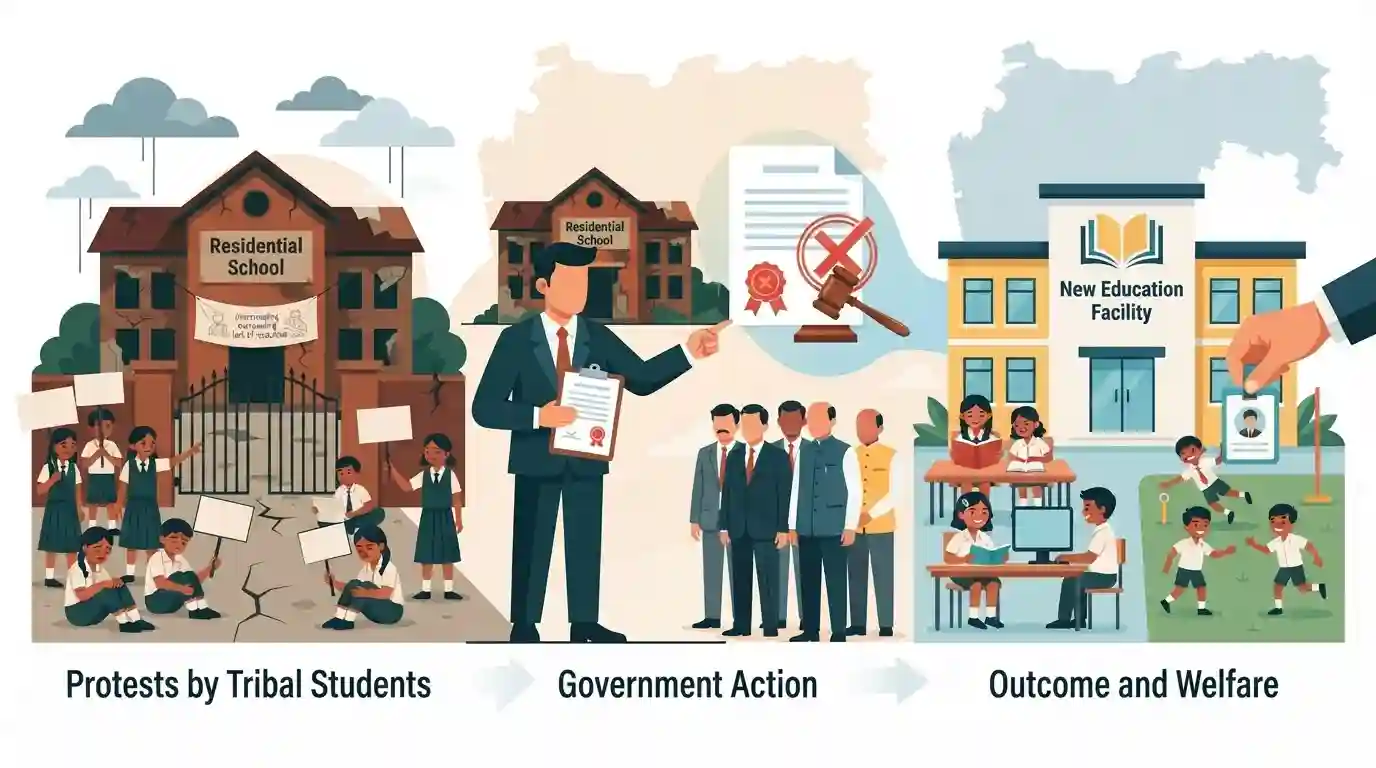
The Maharashtra government has initiated the derecognition process for subpar residential schools following protests by tribal students over poor living and educational conditions, highlighting governance and welfare issues in tribal education infrastructure.
Key Points
- Following widespread protests by tribal students over poor facilities, the Maharashtra state government has initiated steps to derecognize subpar residential (Ashram) schools.
- The action targets institutions failing to meet educational infrastructure, safety, and hygiene standards designated for tribal welfare students.
- Highlights systemic issues in the monitoring and accountability of government-funded or aided residential educational facilities in remote and tribal areas.
Important Terms
Bhagwan Birsa Munda Road Linking Scheme

A Maharashtra government scheme aimed at linking remote tribal villages and padas in 17 districts with main roads, primary health centers, and residential schools (ashramshalas).
UPSC context
Important for MPSC syllabus under social infrastructure, rural development, and welfare schemes targeting scheduled tribes in Maharashtra.
Bharat Ratna Dr. A.P.J. Abdul Kalam Amrut Ahar Yojana
A flagship welfare scheme of the Maharashtra government designed to provide nutritious hot cooked meals to pregnant and lactating women in tribal areas to combat malnutrition.
UPSC context
Relevant for MPSC exams under public health, women and child development, and nutrition-focused state government initiatives.
Prelims Trap
only government-operated residential Ashram schools face derecognition for failing infrastructural norms.
Aspirants often assume only government-run Ashram schools are subject to state derecognition, missing that private aided residential schools catering to tribal students are equally liable.
Static Concepts Connected
What are the constitutional safeguards and administrative provisions for Scheduled Tribes in Maharashtra?
- Article 275(1):: Article 275(1) provides Grants-in-Aid from the Consolidated Fund of India to states for promoting the welfare of Scheduled Tribes.
- Fifth Schedule:: Fifth Schedule governs the administration and control of Scheduled Areas, mandating Tribes Advisory Councils (TAC) in states like Maharashtra.
- Ashram Schools:: Ashram schools are specialized residential institutions established primarily in remote tribal pockets to provide free education, lodging, and boarding.
Cross-Topic Patterns
Tribal Ashram Schools + CAG Performance Audits
Tribal welfare infrastructure failures directly intersect with Comptroller and Auditor General (CAG) audit observations on unutilized funds under Article 275(1) grants for Scheduled Tribes.
Fifth Schedule Governance + Student Protests
Student agitations highlight governance deficits in remote areas, testing the state's administrative machinery under the Fifth Schedule of the Constitution.

Expect matching questions on Maharashtra's tribal welfare schemes (e.g., Amrut Ahar Yojana, Ashram school norms) in MPSC Prelims.
Linked PYQs · 2
Linked PYQs · 2
- 2018MPSC_PRELIMSGS1
In Maharashtra, Dr. Abdul Kalam Amrut Ahar Yojana is related with
- 2025MPSC_PRELIMSGS1
Identify the correct statements regarding Bhagwan Birsa Munda Road Linking Scheme. A. This scheme was started by Maharashtra Government. B. This scheme was only launched to connect the tribal villages. C. This scheme was made to connect tribal areas with primary health centres and Ashram schools through main roads. D. This scheme was discontinued by Govt. of Maharashtra in January 2025.
