Uttarakhand Disaster Alert: Cloudbursts and Landslides
Source:reliefweb-int ↗
Why It Matters
Extremely relevant for Uttarakhand state-specific current affairs and disaster management preparation for UKPSC PCS Prelims.
Summary
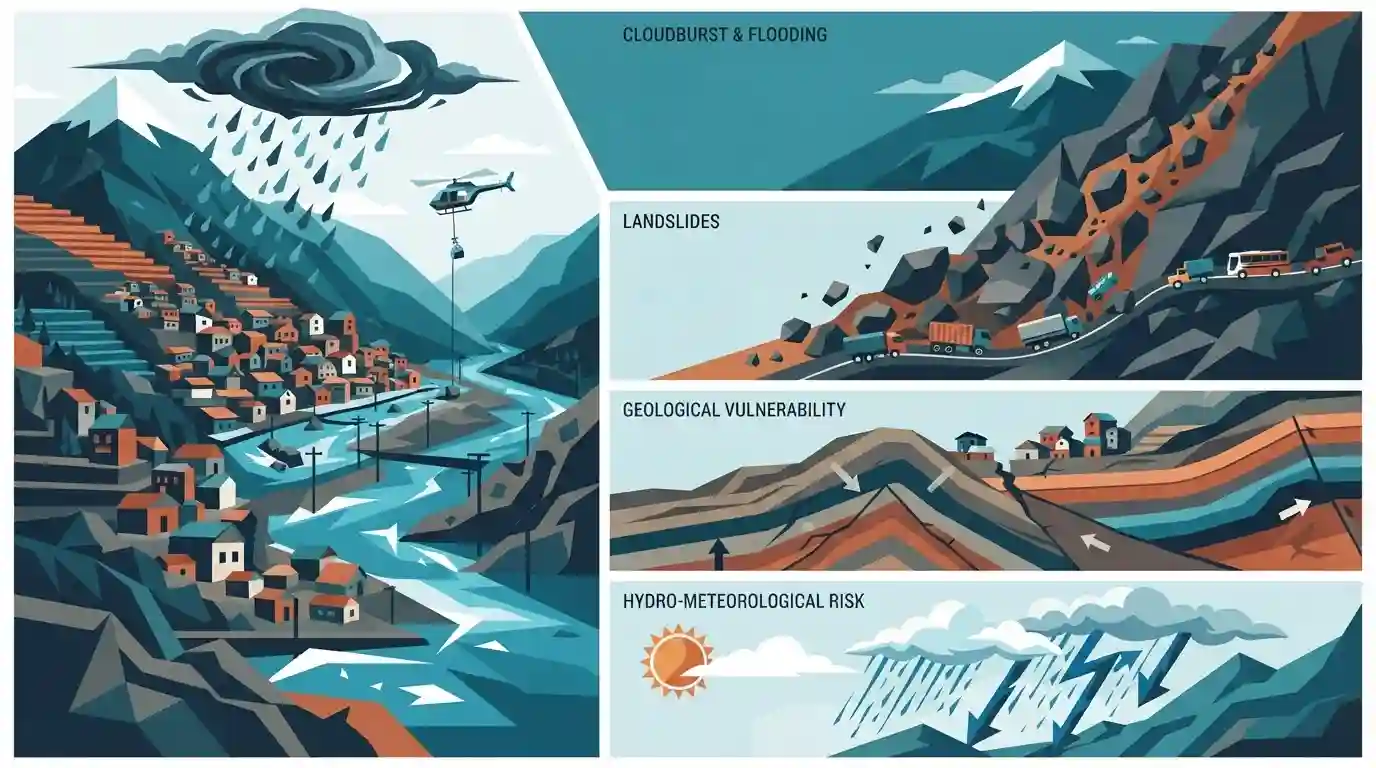
An alert issued by Act Alliance detailing the impact of cloudbursts, severe flooding, and landslides in Uttarakhand, highlighting the state's severe vulnerability to hydro-meteorological and geological disasters.
Key Points
- Act Alliance issued an alert regarding severe cloudbursts, flooding, and landslides in Uttarakhand, India.
- The region experiences high vulnerability to climate change, flash floods, and natural disasters due to its fragile Himalayan topography.
- Disasters of this nature cause significant disruption to local infrastructure, livelihoods, and communities.
Important Terms
ACT Alliance

A global coalition of over 145 faith-based organizations engaged in humanitarian assistance, sustainable development, and advocacy, frequently issuing alerts and coordinating relief for natural disasters like floods and landslides.
UPSC context
Important for UKPSC Paper III (Disaster Management) under international humanitarian response, institutional frameworks, and civil society roles in disaster relief.
Prelims Trap
72% of Uttarakhand's geographical area is categorized as prone to cloudbursts and flash floods.
Aspirants often confuse geological hazard zoning with weather forecasting. 72% refers specifically to landslide-prone geography, not general flood zones.
Static Concepts Connected
What are the primary institutional mechanisms for disaster management in India under the Disaster Management Act, 2005?
- NDMA Role: Apex body chaired by the Prime Minister for laying down policies, plans, and guidelines for disaster management.
- SDMA Mandate: Headed by the Chief Minister, responsible for implementing the National Plan and formulating state-level disaster policies.
- SDRF & NDRF: Mandated under Section 48 to meet expenses during threatening disaster situations or actual disasters.
What are the key geographical and geological features contributing to natural hazards in Uttarakhand?
- Fragile Geology: Young, fold mountain system with loose sedimentary strata, making slopes inherently unstable and prone to mass movement.
- Cloudburst Triggers: Localized, high-intensity rainfall events of short duration triggered by orographic uplift against steep Himalayan walls.
- Anthropogenic Pressures: Unplanned urbanization, massive civil construction, and deforestation destabilizing toe-holds of vulnerable hill slopes.
Cross-Topic Patterns
Himalayan Ecology + Infrastructure Carrying Capacity
Cloudbursts and flash floods in Uttarakhand directly intersect with ecological carrying capacity norms debated for fragile Himalayan infrastructure projects like the Char Dham highway.
Disaster Management Act + State Fiscal Federalism
Recurring hydro-meteorological disasters in Uttarakhand highlight the financial and administrative strains placed on state disaster response funds under the NDMA framework.

Uttarakhand landslide vulnerability percentage (72%) and cloudburst mechanics will likely feature in a matching or assertion-reason question.
Linked PYQs · 1
Linked PYQs · 1
- 2025UKPSC_PRELIMSGS1
Consider the following statements and select the correct answer from the options given below : Statement 1 : Uttarakhand is highly vulnerable to climate change. Statement 2 : Climate change is causing water stress and depleting biodiversity in Uttarakhand.
