जल संकट के बीच पंजाब में धान की सीधी बुआई का बढ़ता दायरा
स्रोत:इंडियन एक्सप्रेस ↗
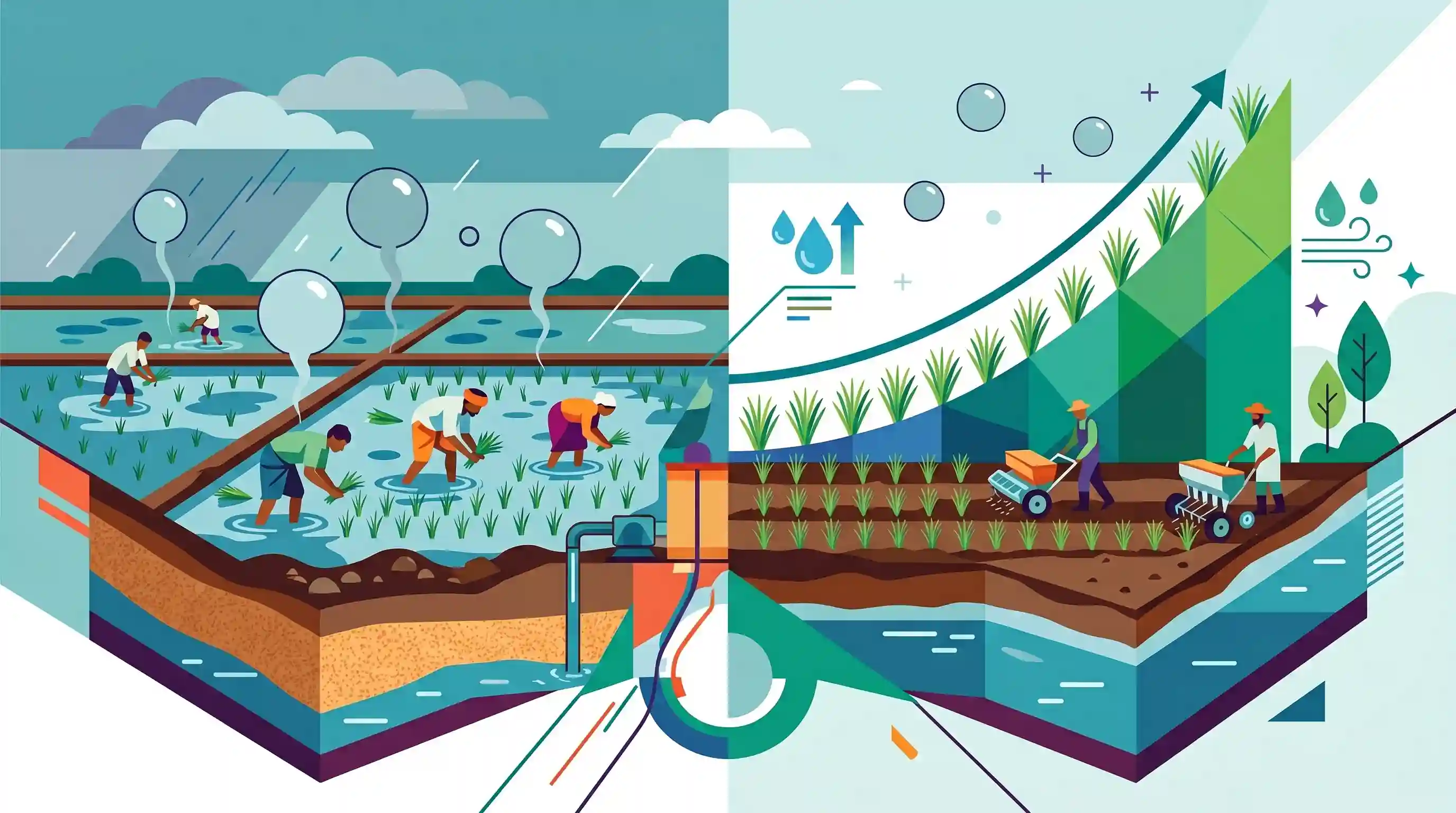
क्यों मायने रखता है
धान की सीधी बिजाई (Direct Seeding of Rice - DSR) कृषि में संसाधन संरक्षण के लिए एक महत्वपूर्ण हस्तक्षेप है। UPSC उम्मीदवारों के लिए, जल-बचत प्रौद्योगिकियों, उत्तर-पश्चिम भारत में भूजल संकट और कृषि के कार्बन फुटप्रिंट (मीथेन उत्सर्जन) को कम करने की रणनीतियों से संबंधित GS-3 के प्रश्नों के लिए DSR को समझना अत्यंत आवश्यक है।
सारांश
The acreage under Direct Seeding of Rice (DSR) in Punjab has increased by 16%, marking a slow but steady shift among farmers toward this sustainable alternative to traditional paddy transplanting. DSR saves significant amounts of water by eliminating nursery preparation and field puddling, directly addressing the severe groundwater depletion crisis in the state. Furthermore, by avoiding continuous flooding, DSR reduces anaerobic conditions in the soil, thereby curbing methane emissions associated with conventional rice cultivation.
मुख्य बिंदु
- पंजाब में धान की सीधी बुआई (DSR) के तहत क्षेत्र में 16% की वृद्धि हुई है, जो किसानों द्वारा अधिक टिकाऊ कृषि पद्धतियों की ओर एक क्रमिक बदलाव का संकेत देता है।
- DSR में धान के बीजों की सीधे खेत में बुआई की जाती है, जिससे पारंपरिक रोपाई के लिए आवश्यक अत्यधिक जल-खपत वाली नर्सरी तैयार करने और खेत की पडलिंग (puddling) की प्रक्रिया की आवश्यकता नहीं रहती है।
- The shift is crucial for addressing Punjab's critical groundwater depletion, which has been exacerbated by decades of intensive, traditional paddy cultivation.
- निरंतर जलभराव को समाप्त करके, DSR उन अवायवीय मृदा स्थितियों (anaerobic soil conditions) को भी कम करता है जो पारंपरिक धान की खेती को मीथेन उत्सर्जन का एक प्रमुख मानवजनित स्रोत बनाती हैं।
प्रारंभिक ट्रैप
धान की सीधी बुआई (DSR) धान के खेतों से मीथेन और नाइट्रस ऑक्साइड दोनों के उत्सर्जन को कम करती है।
DSR जलमग्न, अवायवीय (anaerobic) स्थितियों को समाप्त करके मीथेन को कम करता है। हालाँकि, इसके परिणामस्वरूप उत्पन्न होने वाली वायवीय (aerobic) मृदा स्थितियाँ वास्तव में नाइट्रस ऑक्साइड (N2O) के उत्सर्जन को बढ़ाती (INCREASE) हैं, जो एक अन्य शक्तिशाली ग्रीनहाउस गैस है।
संबंधित अवधारणाएँ
धान के खेत मीथेन और नाइट्रस ऑक्साइड दोनों का उत्सर्जन क्यों करते हैं?
- मीथेन (अवायवीय): खड़ा पानी मृदा में अवायवीय (ऑक्सीजन की कमी वाली) स्थितियां पैदा करता है, जिससे मीथेनोजेनिक बैक्टीरिया कार्बनिक पदार्थों को विघटित कर मीथेन उत्सर्जित करते हैं।
- नाइट्रस ऑक्साइड (वायवीय): When soil is aerated and moist (as in DSR), applying nitrogen fertilizers leads to enhanced nitrification and denitrification processes, releasing nitrous oxide (N2O).
DSR, System of Rice Intensification (SRI) से किस प्रकार भिन्न है?
- DSR (सीधी बुआई): इसमें नर्सरी के बिना सीधे मुख्य खेत में बीजों की बुआई की जाती है। इसमें खेत में पानी खड़ा नहीं रहता है, इसलिए खरपतवार के गंभीर प्रकोप को नियंत्रित करने के लिए यह रासायनिक शाकनाशियों (herbicides) पर अत्यधिक निर्भर करता है।
- SRI (सघनीकरण): इसमें बहुत कम उम्र के एकल पौधों का अधिक दूरी पर प्रत्यारोपण शामिल है, जिसमें मिट्टी को नम रखा जाता है लेकिन जलभराव नहीं होने दिया जाता। यह मुख्य रूप से जैविक खाद और हाथों से या मशीनी निराई पर निर्भर करता है।
अंतर-विषय पैटर्न
DSR + Delhi Air Pollution
Because DSR crops mature 7-10 days earlier, farmers gain a wider time-window to manage paddy straw before Rabi sowing, indirectly curbing stubble burning and Delhi NCR winter pollution.
DSR बनाम भूजल अर्थशास्त्र
DSR पंजाब के जल स्तर में गिरावट के लक्षणों का उपचार करता है। इसका मूल कारण MSP-आधारित खरीद नीतियां बनी हुई हैं, जो फसल विविधीकरण योजनाओं के तहत मोटे अनाज (millets) या दलहन जैसी कम पानी की खपत वाली फसलों की ओर रुख करने को हतोत्साहित करती हैं।

DSR और SRI के बीच तुलना करने वाले एक बहु-कथनीय प्रश्न की अपेक्षा करें, जो विशेष रूप से खरपतवारनाशी (weedicide) निर्भरता और मीथेन बनाम N2O ट्रेड-ऑफ को लक्षित करता हो।
संबद्ध PYQ · 5
संबद्ध PYQ · 5
- 2020PrelimsGS1
What is/are the advantage/advantages of zero tillage in agriculture ? 1. Sowing of wheat is possible without burning the residue of previous crop. 2. Without the need for nursery of rice saplings, direct planting of paddy seeds in the wet soil is possible. 3. Carbon sequestration in the soil is possible. Select the correct answer using the code given below:
- 2022PrelimsGS1
"System of Rice Intensification" of cultivation, in which alternate wetting and drying of rice fields is practised, results in : 1. Reduced seed requirement 2. Reduced methane production 3. Reduced electricity consumption Select the correct answer using the code given below:
- 2025MainsGS3
Examine the factors responsible for depleting groundwater in India. What are the steps taken by the government to mitigate such depletion of groundwater?
- 2010PrelimsGS1
Due to their extensive rice cultivation, some regions may be contributing to global warming. To what possible reason/reasons is this attributable ? 1. The anaerobic conditions associated with rice cultivation cause the emission of methane. 2. When nitrogen based fertilizers are used, nitrous oxide is emitted from the cultivated soil. Which of the statements given above is/are correct ?
- 2022PrelimsGS1
Among the following crops, which one is the most important anthropogenic source of both methane and nitrous oxide?
