Punjab Direct Seeding of Rice Acreage Rising Amid Water Crisis
Source:Indian Express ↗
Why It Matters
Direct Seeding of Rice (DSR) is a critical intervention for resource conservation in agriculture. For UPSC aspirants, understanding DSR is vital for addressing GS-3 questions on water-saving technologies, the groundwater crisis in Northwest India, and strategies to reduce agriculture's carbon footprint (methane emissions).
Summary
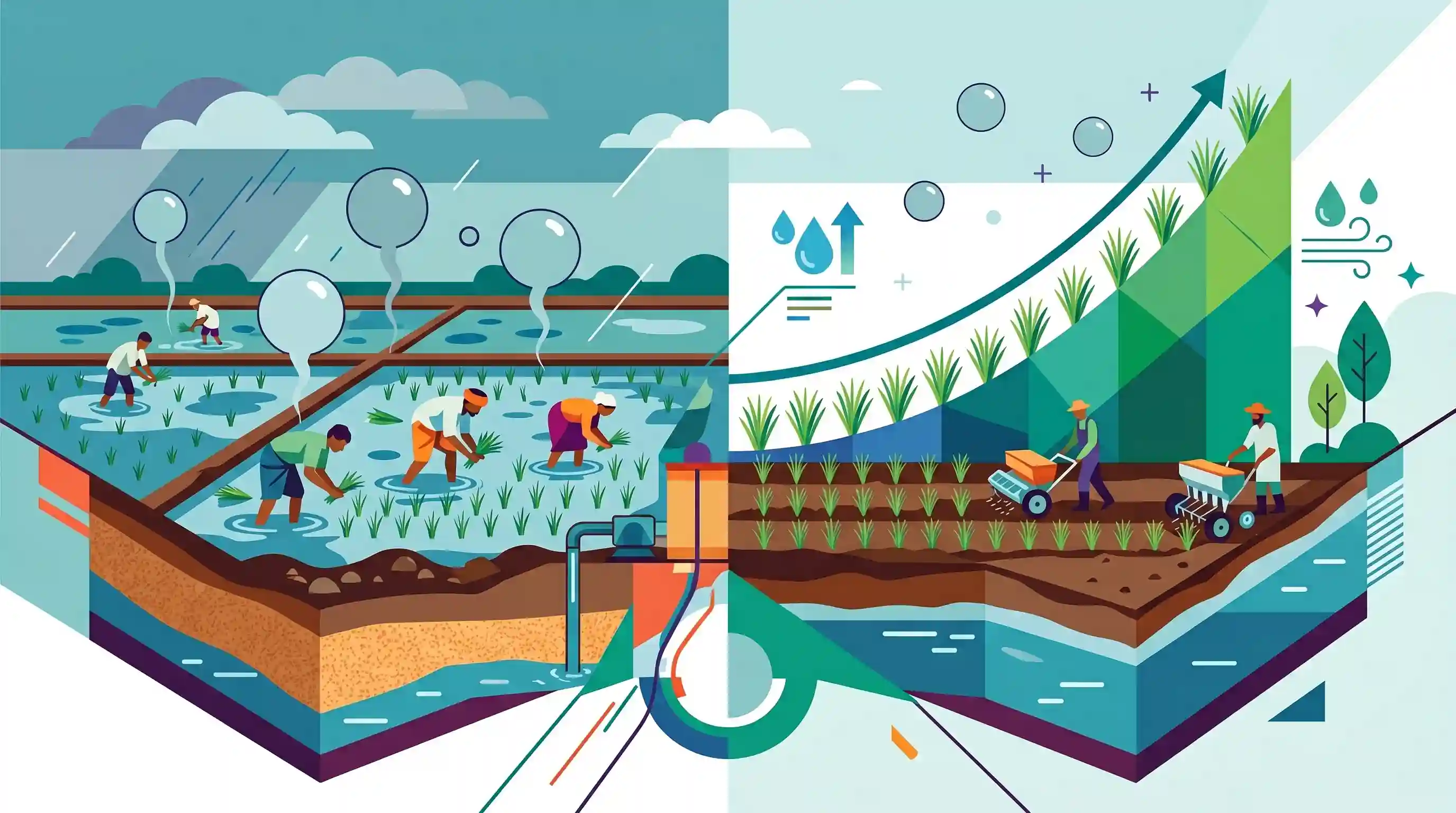
The acreage under Direct Seeding of Rice (DSR) in Punjab has increased by 16%, marking a slow but steady shift among farmers toward this sustainable alternative to traditional paddy transplanting. DSR saves significant amounts of water by eliminating nursery preparation and field puddling, directly addressing the severe groundwater depletion crisis in the state. Furthermore, by avoiding continuous flooding, DSR reduces anaerobic conditions in the soil, thereby curbing methane emissions associated with conventional rice cultivation.
Key Points
- The area under Direct Seeding of Rice (DSR) in Punjab has grown by 16%, signaling a gradual transition by farmers towards more sustainable agricultural practices.
- DSR involves sowing paddy seeds directly into the field, bypassing the water-intensive nursery preparation and field puddling required in traditional transplanting.
- The shift is crucial for addressing Punjab's critical groundwater depletion, which has been exacerbated by decades of intensive, traditional paddy cultivation.
- By eliminating continuous flooding, DSR also mitigates the anaerobic soil conditions that make traditional rice farming a major anthropogenic source of methane emissions.
Prelims Trap
"Direct Seeding of Rice (DSR) reduces both methane and nitrous oxide emissions from paddy fields."
DSR reduces methane by eliminating flooded, anaerobic conditions. However, the resulting aerobic soil conditions actually INCREASE nitrous oxide (N2O) emissions, which is another potent greenhouse gas.
Static Concepts Connected
Why do rice fields emit both Methane and Nitrous Oxide?
- Methane (Anaerobic): Standing water creates anaerobic (oxygen-deprived) conditions in the soil, allowing methanogenic bacteria to break down organic matter and release methane.
- Nitrous Oxide (Aerobic): When soil is aerated and moist (as in DSR), applying nitrogen fertilizers leads to enhanced nitrification and denitrification processes, releasing nitrous oxide (N2O).
How does DSR differ from the System of Rice Intensification (SRI)?
- DSR (Direct Seeding): Sows seeds directly into the main field without a nursery. It lacks standing water, so it relies heavily on chemical herbicides to control severe weed infestations.
- SRI (Intensification): Involves transplanting very young single seedlings with wider spacing, keeping soil moist but not flooded. It relies heavily on organic manure and manual/mechanical weeding.
Cross-Topic Patterns
DSR + Delhi Air Pollution
Because DSR crops mature 7-10 days earlier, farmers gain a wider time-window to manage paddy straw before Rabi sowing, indirectly curbing stubble burning and Delhi NCR winter pollution.
DSR vs Groundwater Economics
DSR treats the symptom of Punjab's water depletion. The root cause remains MSP-driven procurement policies that disincentivize shifting to less water-intensive crops like millets or pulses under crop diversification schemes.

Expect a multi-statement question contrasting DSR and SRI, specifically targeting weedicide dependence and the methane vs N2O trade-off.
Linked PYQs · 5
Linked PYQs · 5
- 2020PrelimsGS1
What is/are the advantage/advantages of zero tillage in agriculture ? 1. Sowing of wheat is possible without burning the residue of previous crop. 2. Without the need for nursery of rice saplings, direct planting of paddy seeds in the wet soil is possible. 3. Carbon sequestration in the soil is possible. Select the correct answer using the code given below:
- 2022PrelimsGS1
"System of Rice Intensification" of cultivation, in which alternate wetting and drying of rice fields is practised, results in : 1. Reduced seed requirement 2. Reduced methane production 3. Reduced electricity consumption Select the correct answer using the code given below:
- 2025MainsGS3
Examine the factors responsible for depleting groundwater in India. What are the steps taken by the government to mitigate such depletion of groundwater?
- 2010PrelimsGS1
Due to their extensive rice cultivation, some regions may be contributing to global warming. To what possible reason/reasons is this attributable ? 1. The anaerobic conditions associated with rice cultivation cause the emission of methane. 2. When nitrogen based fertilizers are used, nitrous oxide is emitted from the cultivated soil. Which of the statements given above is/are correct ?
- 2022PrelimsGS1
Among the following crops, which one is the most important anthropogenic source of both methane and nitrous oxide?
