Global Pandemic Treaty Negotiations and Health Equity Challenges
Source:Indian Express ↗
Why It Matters
It connects global governance (WHO), international negotiations, and health security with critical issues of intellectual property, technology transfer, and equity between the developed and developing world, forming a potent topic for both GS2 (International Institutions) and GS3 (IPR and Science & Tech).
Summary
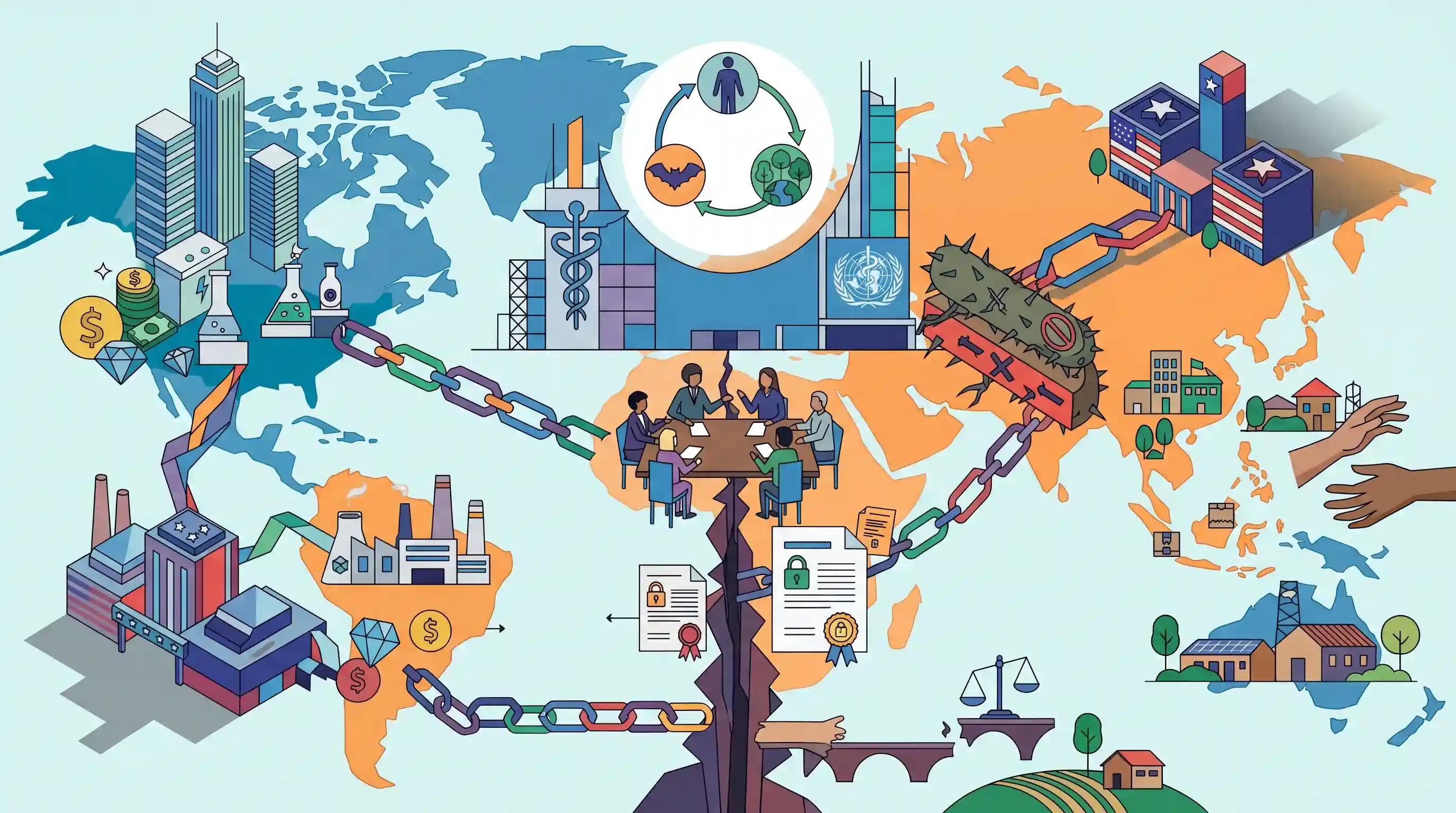
The WHO's proposed Draft Pandemic Treaty aims to establish a robust, equitable global health architecture to counter future outbreaks, but it faces significant geopolitical hurdles. While it seeks to integrate a 'One Health' approach to manage zoonotic diseases, negotiations are stalled by disagreements between the Global South and developed nations. Central to this divide are disputes over intellectual property rights (IPR), equitable access to medical countermeasures, technology transfer, and the sharing of scientific data. The potential non-participation of the US further threatens the treaty's objective of global multilateral health security.
Key Points
- The WHO is preparing to present a Draft Pandemic Treaty at the upcoming World Health Assembly to address systemic inequalities exposed during the COVID-19 crisis.
- The treaty emphasizes a 'One Health' approach, recognizing the critical link between human and animal health to prevent zoonotic pathogen spillover.
- A major fault line has emerged between the Global South and developed nations over sharing pathogen samples in exchange for equitable access to diagnostics, therapeutics, and vaccines.
- The Global South is advocating for automatic waivers on Intellectual Property Rights (IPR) and mandatory technology transfer during health emergencies, which is resisted by developed countries protecting their pharmaceutical industries.
- The likely abstention of the United States poses a significant challenge to the treaty's universal implementation and effectiveness.
Important Terms
WHO Pandemic Agreement

A legally binding international instrument adopted by the World Health Assembly in 2025 to strengthen global preparedness and equitable response to future pandemics through multilateral cooperation and shared surveillance.
UPSC context
GS Paper 2: International Relations and Global Governance; tests understanding of multilateralism and global health security frameworks.
One Health Approach
An integrated framework that recognizes the health of humans, animals, and ecosystems is interdependent, aiming to optimize health outcomes by collaborating across these sectors to counter zoonotic threats.
UPSC context
GS Paper 3: Environment and Science & Technology; relevant for zoonotic disease management and biodiversity-linked health risks.
World Health Assembly (WHA)
The supreme decision-making body of the World Health Organization, composed of delegates from all 194 member states, responsible for setting global health policies, appointing the Director-General, and approving budgets.
UPSC context
GS Paper 2: Important International Institutions; tests knowledge of the governance structure of United Nations specialized agencies.
Pathogen Access and Benefit-Sharing (PABS)
A mechanism within the Pandemic Agreement designed to ensure that countries sharing pathogen data receive fair and equitable access to resulting medical countermeasures like vaccines and diagnostics.
UPSC context
GS Paper 2: Issues relating to Health and the Global South; focuses on equity and North-South divides in global health.
Zoonotic Diseases
Infectious diseases that jump from animals to humans, representing approximately 60-75% of emerging infectious diseases and a primary target of the One Health surveillance model.
UPSC context
GS Paper 3: Science and Technology (Public Health); critical for understanding the origins of modern pandemics and preventive health strategies.
Big Pharma
A collective term for large, influential multinational pharmaceutical corporations, often central to debates over Intellectual Property Rights (IPR) and the affordability of essential medicines in developing nations.
UPSC context
GS Paper 2: Government Policies and Interventions; tests awareness of corporate influence on global health equity and IPR regimes.
Prelims Trap
The WHO Pandemic Treaty is a legally binding framework currently in force for all member states.
It is currently a draft under negotiation. Even if adopted, international treaties only bind countries that formally sign and ratify them, not all WHO members automatically.
Static Concepts Connected
What is the 'One Health' approach in public health?
- Interconnectedness: Integrates human, animal, and ecosystem health into a single, unified collaborative approach.
- Zoonotic prevention: Aims to monitor and prevent the spillover of pathogens from wildlife and livestock to humans (e.g., Nipah, COVID-19).
- AMR management: Crucial for tackling Anti-Microbial Resistance (AMR) caused by antibiotic misuse across veterinary, agricultural, and human medicine.
How does the WTO TRIPS agreement address public health emergencies?
- Doha Declaration: Affirmed in 2001 that TRIPS should not prevent members from taking measures to protect public health and promote access to medicines.
- Compulsory Licensing: Allows governments to authorize the production of a patented product without the patent owner's consent during national emergencies.
- Parallel Importing: Permits countries to import cheaper, legally produced patented drugs from other countries without the patent holder's permission.
Cross-Topic Patterns
TRIPS waivers + North-South divide
The deadlock mirrors WTO negotiations on climate technology transfer. Developed nations protect corporate IP, while the Global South demands equitable access, reflecting a broader crisis in global governance and equity.
Deforestation + Zoonotic spillover
The 'One Health' mandate links environmental conservation directly to global economic stability, acknowledging that habitat destruction drives the zoonotic spillovers the treaty aims to prevent.

Expect a 2026 Prelims question blending TRIPS flexibilities (compulsory licensing) with WHO's Pathogen Access and Benefit-Sharing (PABS).
Linked PYQs · 4
Linked PYQs · 4
- 2020MainsGS2
Critically examine the role of WHO in providing global health security during the Covid-19 pandemic.
- 2016MainsGS2
The broader aims and objectives of WTO are to manage and promote international trade in the era of globalization. But the Doha round of negotiations seem doomed due to differences between the developed and the developing countries." Discuss in the Indian perspective.
- 2014MainsGS3
In a globalized world, Intellectual Property Rights assume significance and are a source of litigation. Broadly distinguish between the terms-Copyrights, Patents and Trade Secrets.
- 2024MainsGS3
What is the present world scenario of intellectual property rights with respect to life materials? Although, India is second in the world to file patents, still only a few have been commercialized. Explain the reasons behind this less commercialization.
