Shanghai Cooperation Organisation Expansion and Regional Strategy
Source:The Hindu ↗
Why It Matters
The SCO is a major Eurasian grouping central to India's strategic interests in energy security, regional connectivity, and counter-terrorism. Understanding the SCO's changing dynamics is crucial for GS-2 (International Relations), as it highlights India's challenge in balancing its 'multi-aligned' foreign policy amidst growing China-Russia proximity.
Summary
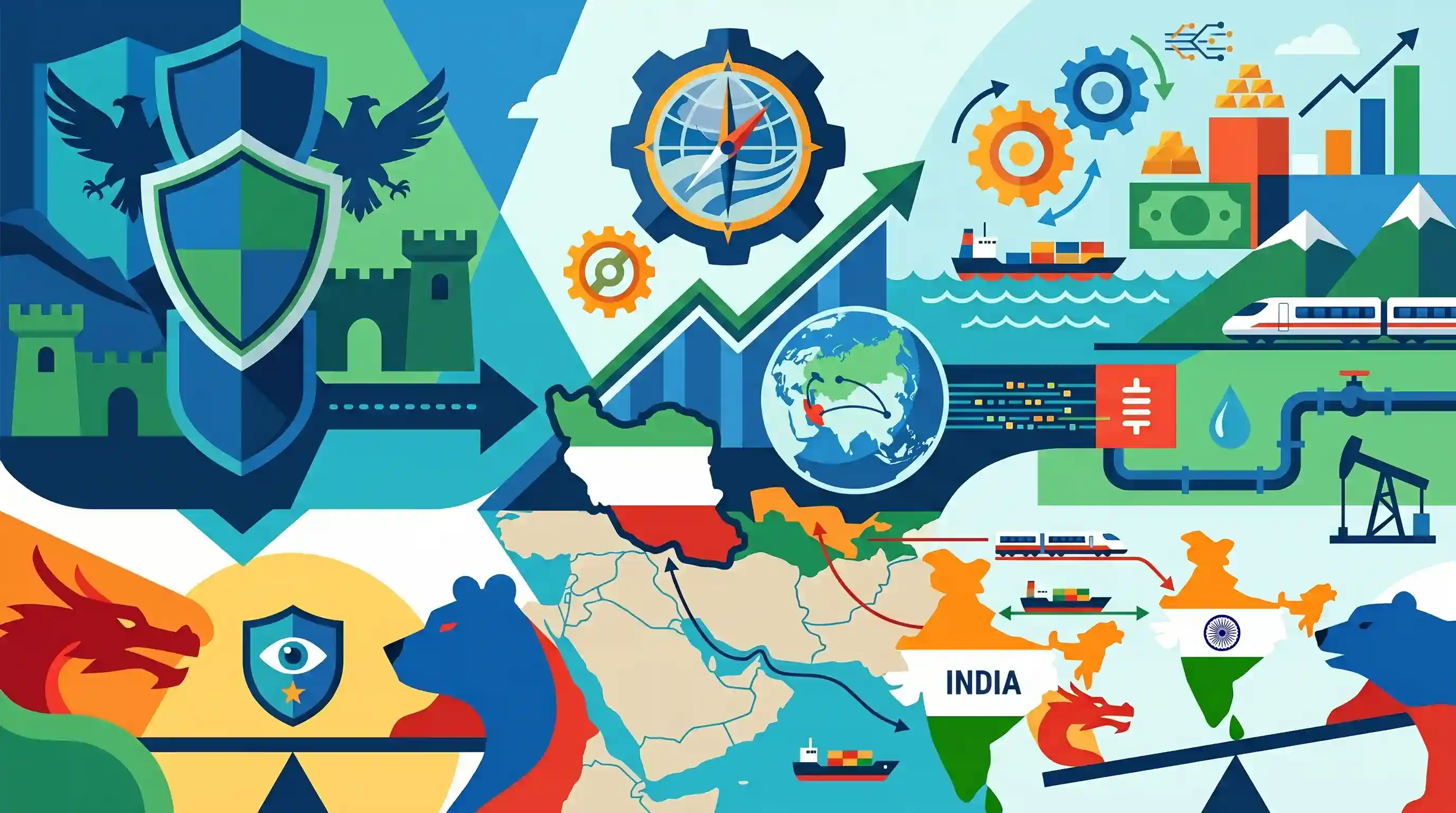
The article explores the evolving trajectory and strategic expansion of the Shanghai Cooperation Organisation (SCO) as it charts a 'new journey' in an increasingly multipolar world. Originally anchored in regional security and counter-terrorism, the SCO is steadily shifting focus toward robust economic cooperation, trade interconnectivity, and alternate financial frameworks across Eurasia. The inclusion of new members like Iran underscores the bloc's growing geopolitical footprint. For India, the SCO represents a vital diplomatic platform to secure its connectivity and energy interests in Central Asia, advance projects like the International North-South Transport Corridor (INSTC), and delicately balance its strategic autonomy amid the dominant presence of China and Russia within the organization.
Key Points
- The expansion of the SCO (with recent additions like Iran and Belarus) reflects a strategic pivot towards building a cohesive and multipolar Eurasian geopolitical architecture.
- The organization seeks to broaden its mandate beyond its foundational focus on regional security and counter-terrorism (via RATS) to encompass deeper economic integration and trade connectivity.
- There is a growing emphasis within the SCO to establish alternative financial frameworks and connectivity pathways, reducing reliance on Western-dominated systems.
- For India, the SCO is a critical platform to engage with Central Asian Republics (CARs), advance strategic connectivity initiatives (like INSTC and Chabahar), and counterbalance expanding Chinese influence in the region.
- The SCO serves as a key pillar in India's pursuit of strategic autonomy, enabling it to balance its engagements between Western alliances (like the Quad) and Eurasian multilateralism.
Important Terms
Shanghai Cooperation Organisation (SCO)

A Eurasian political, economic, and security alliance founded in 2001. Its 10 members include India, Pakistan, China, Russia, and Iran, focusing on regional stability and counter-terrorism.
UPSC context
GS Paper II (International Relations); tests India's strategic balancing in Eurasia and regional connectivity goals.
International North-South Transport Corridor (INSTC)
A 7,200 km multimodal transport network connecting India to Russia and Europe via Iran. It utilizes sea, rail, and road routes to reduce transit time and costs.
UPSC context
GS Paper II & III (IR/Infrastructure); tests India's 'Connect Central Asia' policy and trade diversification.
Regional Anti-Terrorist Structure (RATS)
A permanent SCO body headquartered in Tashkent, Uzbekistan, established to coordinate member states' efforts against the 'three evils': terrorism, separatism, and religious extremism.
UPSC context
GS Paper II (Security); tests understanding of multilateral counter-terrorism mechanisms and regional intelligence cooperation.
Prelims Trap
"The Regional Anti-Terrorist Structure (RATS) is headquartered in Beijing along with the main SCO Secretariat."
While the SCO Secretariat is located in Beijing, China, the Executive Committee of RATS is a permanent organ headquartered in Tashkent, Uzbekistan.
Static Concepts Connected
What is the membership and institutional structure of the SCO?
- Origin: Evolved from the 'Shanghai Five' (1996) with the inclusion of Uzbekistan in 2001.
- Membership: Currently 10 members: China, Russia, Kazakhstan, Kyrgyzstan, Tajikistan, Uzbekistan, India (2017), Pakistan (2017), Iran (2023), and Belarus (2024).
- Permanent Organs: Comprises two permanent bodies: the SCO Secretariat in Beijing and the Executive Committee of the Regional Anti-Terrorist Structure (RATS) in Tashkent.
What is the International North-South Transport Corridor (INSTC)?
- Objective: A 7,200-km multi-mode network of ship, rail, and road routes moving freight between India, Iran, Azerbaijan, Russia, and Europe.
- Strategic Value: It bypasses Pakistan to provide India direct access to Central Asia and Russia, significantly reducing carriage costs and transit times compared to the Suez Canal route.
Cross-Topic Patterns
Balancing Continental and Maritime Geopolitics
India's simultaneous membership in the Eurasian, China-dominated SCO and the Indo-Pacific, US-led Quad perfectly illustrates its 'multi-alignment' doctrine, balancing continental security with maritime strategic interests.
De-dollarisation and Alternate Financial Architectures
The SCO’s push for non-Western financial frameworks (like the SCO Interbank Consortium) mirrors BRICS initiatives, reflecting a broader Global South trend towards de-dollarisation and sanction-proof trade.
INSTC, Chabahar, and Central Asian Access
With Pakistan blocking direct land access, India's SCO strategy is deeply intertwined with the Chabahar port and INSTC, linking economic diplomacy in Central Asia to border security challenges.

Expect a multi-statement Prelims question testing SCO's expanded membership (Iran, Belarus) alongside RATS headquarters and INSTC nodes.
Linked PYQs · 2
Linked PYQs · 2
- 2021MainsGS2
Critically examine the aims and objectives of SCO. What importance does it hold for India?
- 2022PrelimsGS1
Consider the following: 1. Asian Infrastructure Investment Bank 2. Missile Technology Control Regime 3. Shanghai Cooperation Organisation India is a member of which of the above?
