Western Disturbances Drive Winter Air Pollution in North India
Source:The Hindu ↗
આ શા માટે મહત્વનું છે
Provides critical insights into the meteorological drivers of north Indian winter smog, shifting the air pollution discourse toward integrating synoptic weather systems like western disturbances into regional mitigation strategies.
સારાંશ
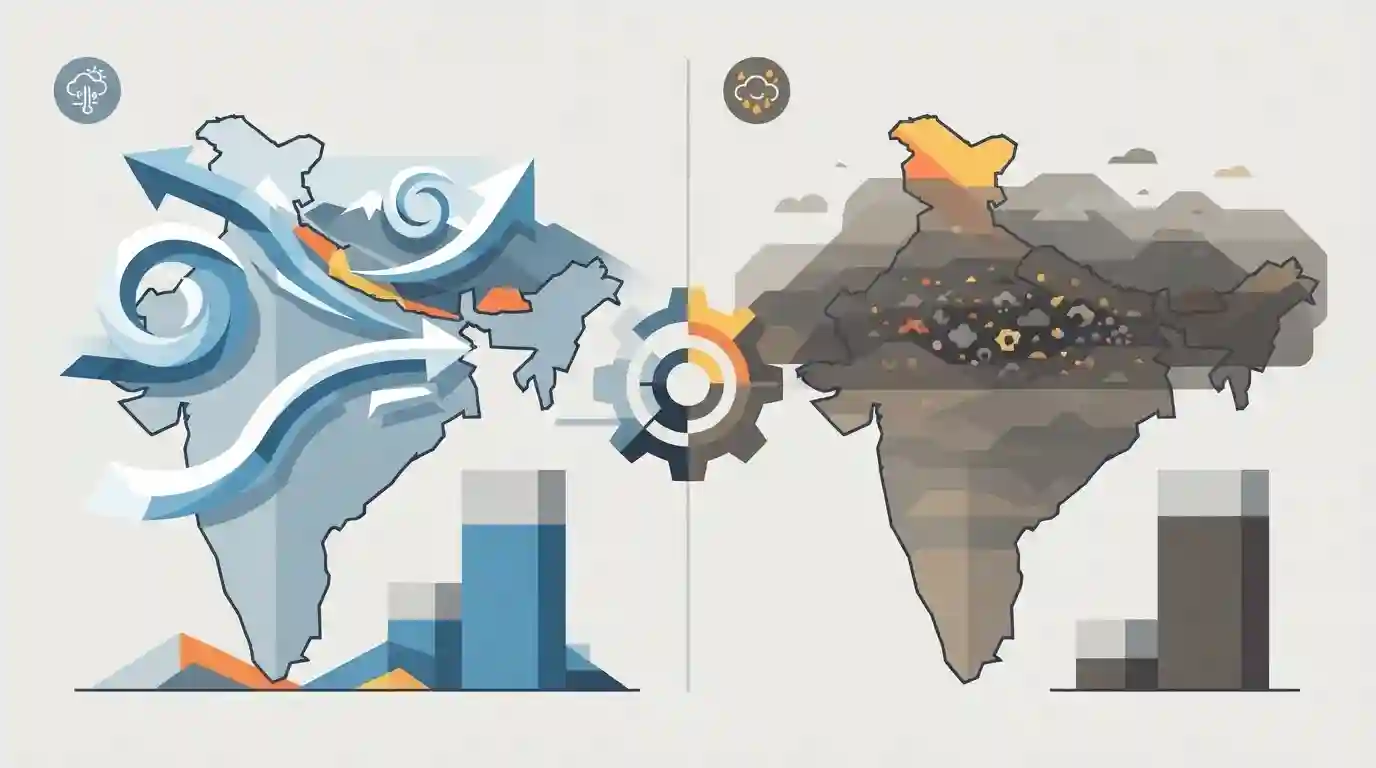
A recent scientific study highlights that western disturbances account for approximately 70% of the year-to-year variability in winter air pollution across northern India, underlining the profound role of meteorological synoptic systems in air quality management.
મુખ્ય મુદ્દા
- A recent study reveals that western disturbances explain about 70% of the yearly change in winter pollution levels in northern India.
- Western disturbances modulate meteorological conditions, wind patterns, and boundary layer dynamics, significantly impacting the dispersion or accumulation of particulate matter.
- Understanding the interaction between large-scale weather phenomena like western disturbances and local air pollution is crucial for dynamic and accurate forecasting and policymaking.
પ્રિલિમ્સ ટ્રેપ
winter air pollution variations in northern India are driven exclusively by local anthropogenic emissions
Aspirants often assume winter pollution in north India is solely driven by local stubble burning and vehicular emissions, ignoring synoptic weather drivers like WDs that control ventilation and dispersion.
સંલગ્ન સ્થિર ખ્યાલો
What are Western Disturbances and how do they impact the weather of the Indian subcontinent?
- Origin & Path: Extra-tropical storm systems originating in the Mediterranean region, bringing moisture eastward across West Asia and Iran to the Indian subcontinent.
- Mechanism: Coused by westerly jet streams steering Mediterranean weather systems toward the Himalayas, bringing winter rainfall to northwest India and snowfall to the hills.
- Agricultural Impact: Crucial for rabi crops (like wheat) in northwest India, while their associated cloud cover and moisture can cause cold wave conditions and fog.
આંતર-વિષય પેટર્ન
Climatology meets urban air quality management
Integrating extra-tropical weather systems into air quality models demonstrates how atmospheric climatology directly impacts urban environmental governance and public health frameworks.
Oceanic teleconnections and seasonal forecasting
Autumn ocean temperature patterns predicting winter storm frequency bridges seasonal oceanography with long-term agricultural and disaster management planning in northwest India.

Western disturbances + particulate dispersion dynamics likely to be tested via statement-based questions in Prelims.
સંલગ્ન PYQ · 2
સંલગ્ન PYQ · 2
- 2015PrelimsGS1
Consider the following statements: 1. The winds which blow between 30° N and 60° S latitudes through-out the year are known as westerlies. 2. The moist air masses that cause winter rains in North-Western region of India are part of westerlies. Which of the statements given above is/are correct?
- 2024PrelimsGS1
Consider the following description : 1. Annual and daily range of temperatures is low. 2. Precipitation occurs throughout the year. 3. Precipitation varies between 50 cm 250 cm. What is this type of climate?
