Delhi Government Launches ANMOL Scheme for Newborn Genetic Testing
Source:Indian Express ↗
Why It Matters
Early diagnostic screening for congenital and genetic disorders is a transformative public health intervention. State-led initiatives like the ANMOL scheme illustrate the practical application of accessible medical technology (such as dried blood spot testing) to improve neonatal care, strengthen the primary health structure, and reduce infant mortality.
Summary
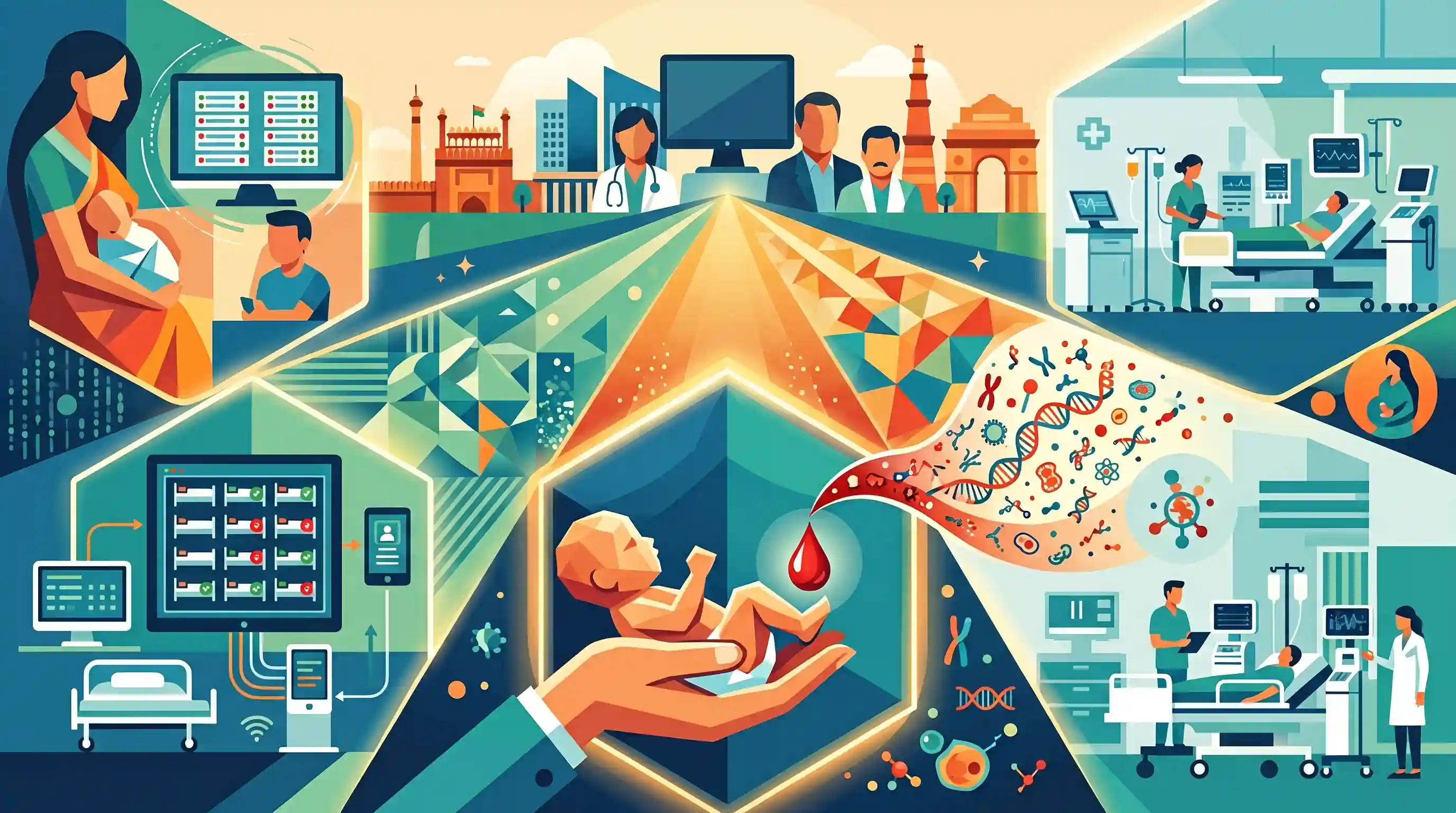
The Delhi government, under Chief Minister Rekha Gupta, has launched the ANMOL scheme as part of the Delhi Budget 2026. A focal point among five major health revamps, the initiative provides 56 free diagnostic tests for newborns using just a single drop of blood. This facilitates the crucial early detection and management of congenital and genetic disorders. In addition to neonatal screening, the health revamps include the implementation of a real-time bed tracking system in hospitals, aiming to modernize public healthcare infrastructure and improve patient service delivery in the capital.
Key Points
- The Delhi government introduced the ANMOL scheme in the 2026 budget to enhance neonatal public health care.
- The scheme provides 56 free tests for newborns using a single drop of blood, enabling early detection of genetic and congenital disorders.
- Chief Minister Rekha Gupta outlined five major health revamps, prominently featuring a real-time bed tracking system to improve hospital administration.
- Early diagnostic screening of newborns is critical for timely medical interventions, aiming to lower infant mortality and prevent long-term morbidities.
Important Terms
ANMOL Scheme

Advanced Newborn Monitoring for Optimal Lifecare; a Delhi government initiative providing 56 free genetic and metabolic diagnostic tests for newborns using a single drop of blood.
UPSC context
GS Paper II: Government schemes for vulnerable sections; GS Paper III: Science & Technology advancements in healthcare.
Neonatal Screening
A public health intervention involving the testing of infants shortly after birth to identify serious, treatable conditions before symptoms appear, aiming to reduce infant mortality.
UPSC context
GS Paper III: Science and Technology (Biotechnology/Genetics); critical for achieving Sustainable Development Goal 3 (Health).
Congenital Disorders
Structural or functional anomalies (birth defects) occurring during intrauterine life that can be identified prenatally, at birth, or later in infancy.
UPSC context
GS Paper II: Issues relating to development and management of Social Sector/Health.
Real-time Bed Tracking System
A digital governance initiative providing live data on hospital bed and ventilator availability to streamline emergency admissions and prevent patient distress.
UPSC context
GS Paper II: E-governance and its applications in public service delivery.
Delhi Budget 2026
The 2026 fiscal plan for Delhi which prioritized healthcare with a ₹13,034 crore allocation, introducing major revamps like the ANMOL scheme and digital health dashboards.
UPSC context
GS Paper III: Government Budgeting; highlights regional fiscal priorities in the social sector.
Genetic Disorders
Medical conditions caused by abnormalities in an individual's DNA, such as single-gene mutations (Mendelian) or chromosomal changes, often requiring specialized diagnostic testing.
UPSC context
GS Paper III: Science and Technology (Genetics and health issues).
Prelims Trap
"ANMOL is a Centrally Sponsored Scheme under the National Health Mission for digital tracking of maternal health."
While MoHFW runs a central 'ANMOL' (ANM Online) tablet app for health workers, Delhi's 2026 ANMOL scheme is a state-level initiative for neonatal genetic screening.
Static Concepts Connected
What are the key provisions of the National Policy for Rare Diseases (2021)?
- Categorization: Divides rare diseases into 3 groups based on treatability, availability of treatments, and requirement of lifelong therapy.
- Financial Support: Provides financial support up to ₹50 lakh per patient under Rashtriya Arogya Nidhi for treating diseases in Group 1 and Group 2.
- Crowdfunding Mechanism: Envisages a digital portal for voluntary corporate and individual donations to help fund high-cost treatments for rare genetic disorders.
What are inborn errors of metabolism (IEM) and why is early screening critical?
- Metabolic Errors: Rare genetic disorders (e.g., Phenylketonuria) where the body lacks specific enzymes to break down food into energy, leading to toxic build-up.
- Neonatal Screening: Testing newborns via a heel-prick blood sample within the "golden hour" (24-72 hours) allows immediate dietary/medical intervention.
- Prevention of Morbidity: Without timely detection and intervention, IEMs can cause irreversible physical disabilities, severe brain damage, or infant mortality.
Cross-Topic Patterns
State screening feeding Central Rare Disease Policy
Early state-level screening (like ANMOL) serves as a critical prerequisite for patients to discover disorders and subsequently access central financial assistance under the Rashtriya Arogya Nidhi for rare disease treatments.
E-Governance in Public Health Infrastructure
Delhi's real-time bed tracking aligns with the broader Ayushman Bharat Digital Mission (ABDM), emphasizing the integration of Hospital Management Information Systems (HMIS) for transparent healthcare resource allocation.

Expect a multi-statement question linking newborn genetic screening tech (mass spectrometry) to the National Policy for Rare Diseases 2021.
Linked PYQs · 3
Linked PYQs · 3
- 2024MainsGS2
In a crucial domain like the public healthcare system the Indian State should play a vital role to contain the adverse impact of marketisation of the system. Suggest some measures through which the State can enhance the reach of public healthcare at the grassroots level.
- 2021MainsGS2
“Besides being a moral imperative of a Welfare State, primary health structure is a necessary precondition for sustainable development.” Analyze.
- 2021PrelimsGS1
In the context of hereditary diseases, consider the following statements : 1. Passing on mitochondrial diseases from parent to child can be prevented by mitochondrial replacement therapy either before or after in vitro fertilization of egg. 2. A child inherits mitochondrial diseases entirely from mother and not from father. Which of the statements given above is/are correct?
